Human Rights
Abortion Should Not Be A Crime
Punitive abortion laws - like in South Korea - violate human rights. In recent weeks, the government has threatened to toughen penalties on medical providers who perform abortions illegally. Women's groups and experts are fighting to make the government back down on this threat.
- Read more
- 504 reads
World Bank Group: India Tea Investment Tramples Rights
A World Bank Group compliance investigation into an investment in Indian tea plantations reinforces the need for human rights risk analysis and oversight of the bank’s investments. The investigation report, released on November 7, 2016, concerned an investment by the bank’s private sector lending arm, the International Finance Corporation (IFC), in India’s tea plantations. India’s tea sector has raised numerous issues related to living and working conditions, freedom of association, and access to health and education.
- Read more
- 579 reads
Australia: Protests Prompt Ethiopia Reprisals
The Ethiopian government has arrested and detained dozens of relatives of Ethiopians who participated in a Melbourne protest in June, 2016, and is still holding many of them four months later, Human Rights Watch said on Nov 07.
- Read more
- 576 reads
India: Foreign Funding Law Used to Harass 25 Groups
The Indian central government’s refusal to renew foreign funding licenses of 25 nongovernmental organizations (NGOs) without valid reasons violates their rights to freedom of expression and association, Amnesty International India and Human Rights Watch said on NOv 08.
- Read more
- 650 reads
Syria/Russia: School Attack a Possible War Crime
Airstrikes by the joint Russian-Syrian military operation that killed dozens of civilians, mostly schoolchildren, in the northern, opposition-controlled Syrian governorate of Idlib on October 26, 2016, could constitute a war crime, Human Rights Watch said on Nov 06.
- Read more
- 634 reads
China: Abusive Cybersecurity Law Set to be Passed
The Chinese government is set to adopt the Cybersecurity Law, a regressive measure that strengthens censorship, surveillance, and other controls over the Internet, Human Rights Watch said on Nov 06. China’s top legislative body, the National People’s Congress Standing Committee, held a third and final reading on the law on October 31, 2016, and is expected to pass the law by the end of its October 31-November 7 session.
- Read more
- 612 reads
Burma: Farmers Targets of Land Grabs
Burma’s government should urgently act to end the unlawful seizure of land in Karen State, Human Rights Watch said in a report released on Nov 03. Officials regularly charge villagers with criminal trespass if they refuse to leave land, and in one case, police torched a village. Militia commanders have also used threats, force, and arbitrary arrests to intimidate farmers and take land, particularly in areas still contested by ethnic Karen armed groups.
- Read more
- 615 reads
India: Investigate Police Killing of 8 Escapees
Indian authorities should promptly and impartially investigate the killing of eight prisoners who had escaped a high security prison in Madhya Pradesh state, Human Rights Watch said on Nov 04. Contradictory reports and cell phone videos raise doubts over the police account that the prisoners were shot in an armed exchange after they resisted arrest.
- Read more
- 625 reads
9,700 children displaced since start of Mosul operation – UNICEF
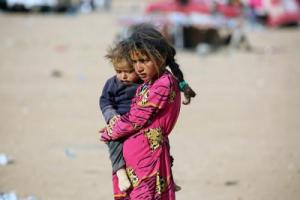
On 26 October 2016, following the on-going hostilities in the northern Iraqi city of Mosul, newly arrived refugees on the way to the Al-Hol camp, close to the Iraqi border in Syria’s north-eastern Hasakeh Governorate.
- Read more
- 516 reads
Children and pregnant women among those lost at sea in latest tragedy on the Mediterranean – UNICEF
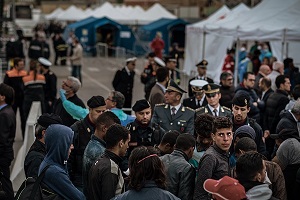
Refugees and migrants disembark a Spanish coast guard vessel at the port of Palermo, Sicily, Italy on May 13, 2016. In 2015, Italy received 150,000 asylum seekers, and the country is on track to receive a higher number in 2016.
- Read more
- 477 reads
Human Rights
Fostering a More Humane World: The 28th Eurasian Economic Summi
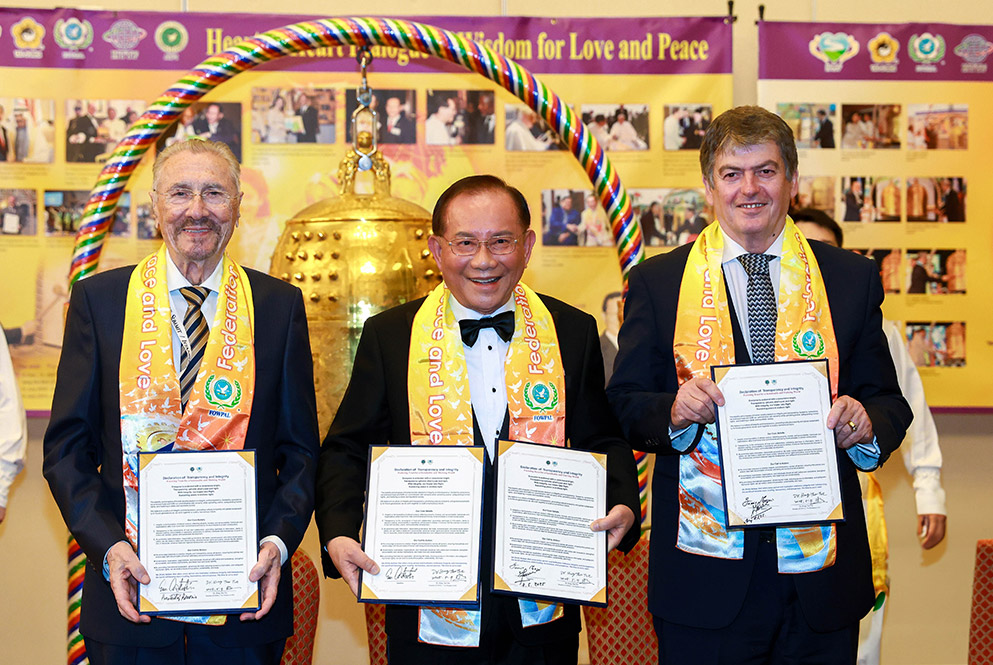
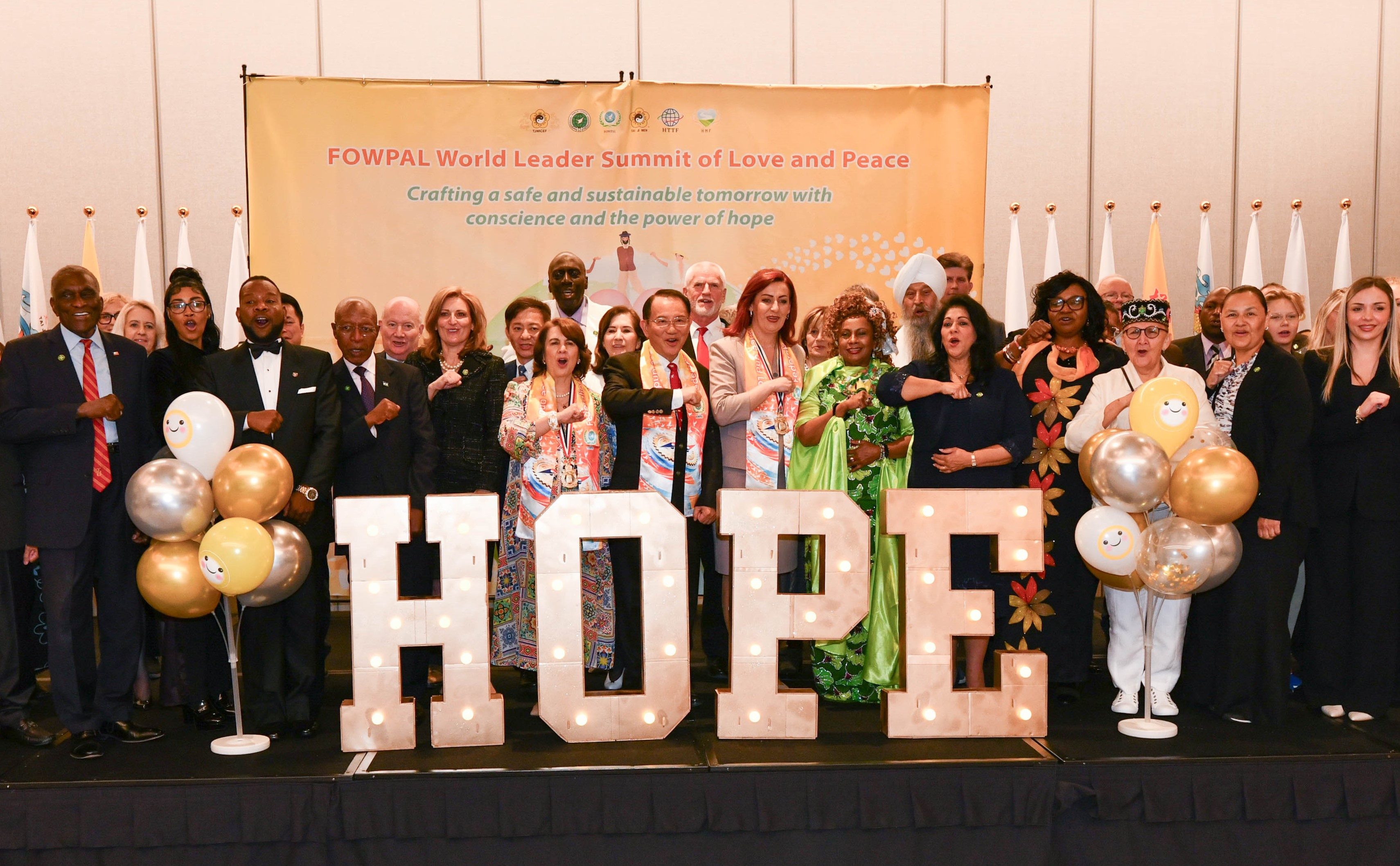
Conscience, Hope, and Action: Keys to Global Peace and Sustainability
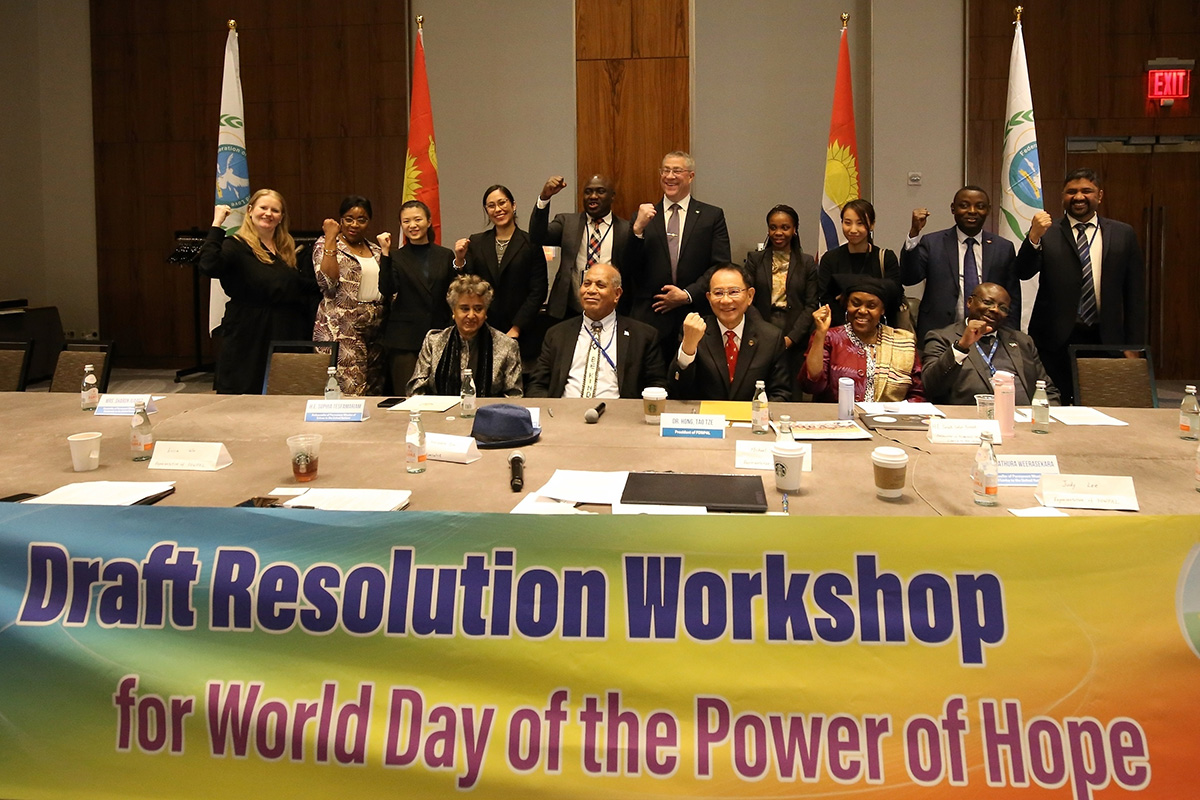
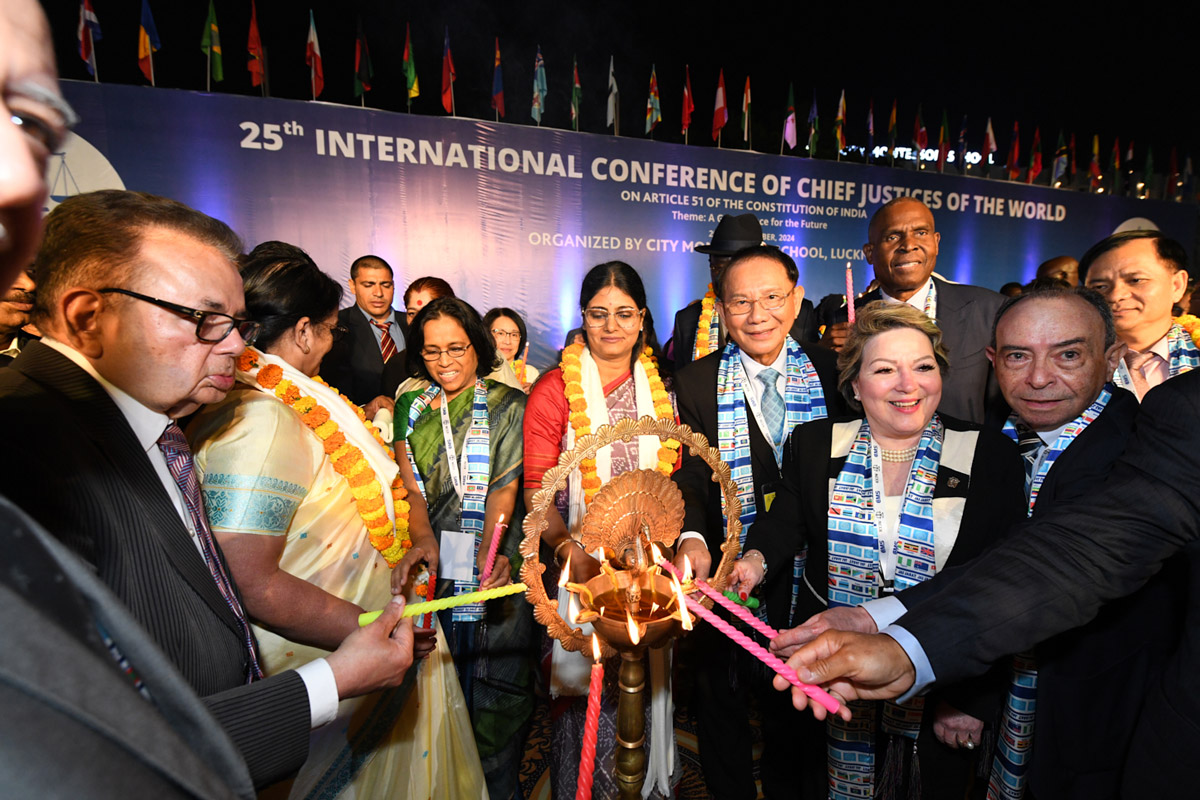
Ringing FOWPAL’s Peace Bell for the World:Nobel Peace Prize Laureates’ Visions and Actions

Protecting the World’s Cultural Diversity for a Sustainable Future
Puppet Show I International Friendship Day 2020