World
Explosion Reported at AEON Mall Following Powerful Kumamoto Earthquake in Japan; Multiple Deaths Feared
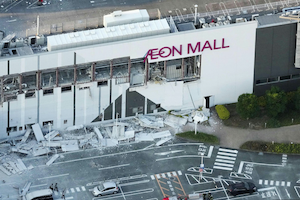
A powerful magnitude 7.1 earthquake struck Kumamoto Prefecture, Japan, at 4:27 p.m. on the 28th. The quake had a shallow focal depth of just 10 kilometers, with the highest seismic intensity of 7 recorded in Uki City and Hikawa Town.
The earthquake caused severe damage to transportation networks and critical infrastructure. Runways at Aso Kumamoto Airport were immediately closed, while all Shinkansen and conventional railway services within the prefecture were suspended. On the Kyushu Expressway, sections of the road buckled and several bridges collapsed. In Yatsushiro City, a freight train reportedly derailed and overturned. Several major companies, including Toyota, Bridgestone, and Nippon Paper Industries, were also forced to halt operations.
One of the hardest-hit locations was AEON Mall Kumamoto, where a loud explosion was reportedly heard, followed by white smoke rising from the building. Part of the second floor collapsed, trapping numerous people inside. Initial reports indicate that several people have died, while dozens of employees remain unaccounted for. Police and Japan's Self-Defense Forces have launched a full-scale search and rescue operation.
At TSMC's JASM semiconductor plant in Kikuyo Town, emergency response procedures have been activated to account for and evacuate personnel.
In response to the disaster, Japanese Prime Minister Sanae Takaichi convened an emergency meeting and directed all available resources toward rescue and relief efforts. The Fire and Disaster Management Agency has also mobilized its specialized urban search and rescue teams. Although the tsunami advisory has been lifted, the Japan Meteorological Agency has warned that aftershocks with a maximum seismic intensity of 7 remain possible over the coming week and has urged residents to remain vigilant.
- 96 reads
Yoon Suk Yeol Given 18-Month Prison Term, Suspended for Three Years in Election Law Case
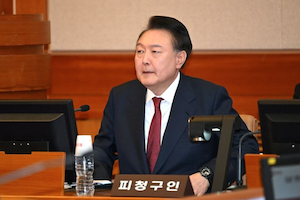
On July 27, the Seoul Central District Court found former South Korean President Yoon Suk Yeol guilty of violating the Public Official Election Act by making false statements during the 2022 presidential election concerning Jeon Seong-bae, better known as the "Geonjin Monk," and related allegations. The court sentenced Yoon to 18 months in prison, suspended for three years, in its first-instance ruling. The court said that false information disseminated by a presidential candidate during televised debates and media interviews could significantly influence voters' judgment and therefore warranted criminal liability. Yoon's legal team immediately filed an appeal following the verdict.
Under South Korea's Public Official Election Act, a candidate who receives a final conviction resulting in a fine of 1 million won (about NT$22,000) or more, or a prison sentence, for election-related offenses may lose his or her elected office. If Yoon ultimately loses all appeals, his victory in the 2022 presidential election could be invalidated, marking the first such case in South Korea's constitutional history. In addition, his party, the People Power Party (PPP), would be required to return approximately 39.7 billion won (about NT$850 million) in state election subsidies, dealing a major blow to the party's finances.
The court accepted prosecutors' arguments that Yoon, through his wife Kim Keon Hee, had maintained long-term ties with Jeon Seong-bae and had made false statements regarding the controversy during the election campaign. Earlier, on July 9, Yoon had already received a final seven-year prison sentence on charges including obstruction of arrest and abuse of power. The latest conviction further increases the legal and political pressure facing the former president.
Political observers say the final outcome of the election law case will not only determine Yoon's political future but could also reshape the prospects of the People Power Party and the broader landscape of South Korean politics.
- 66 reads
Exam Leak Sparks Nationwide Protests as "Cockroach People's Party" Forces Education Minister Out
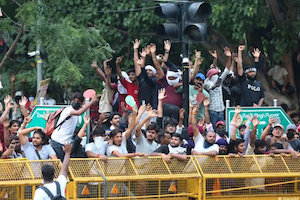
India's nationwide National Eligibility cum Entrance Test (NEET) paper leak scandal, which erupted in May, triggered a youth-led protest movement known as the Cockroach Movement, with demonstrators demanding the resignation of Education Minister Dharmendra Pradhan. After weeks of large-scale protests, Pradhan announced his resignation on July 25, becoming the first senior cabinet minister in Prime Minister Narendra Modi's 12 years in office to step down as a direct result of sustained public demonstrations. Following the announcement, tens of thousands of people gathered at Jantar Mantar in New Delhi to celebrate, singing the national anthem and chanting, "Long Live India."
The political crisis began after the NEET examination papers were leaked. Authorities canceled the exam results and ordered a retest, affecting around 2 million candidates. More than a dozen students were reportedly driven to suicide due to the immense pressure. Public outrage intensified as the government refused to hold senior officials accountable. Anger further escalated after the Chief Justice of India reportedly referred to some unemployed young people as "cockroaches," prompting many youths to reclaim the label and launch a nationwide protest movement. A symbolic political group, the Cockroach People's Party (CJP), soon emerged.
The CJP was founded by Abhijeet Dipke, a 30-year-old master's student at Boston University. Frustrated by what he saw as the government's and judiciary's dismissive attitude toward young people, Dipke posted on social media, "What if all the cockroaches united?" The post unexpectedly went viral. Young Indians embraced memes, AI-generated cockroach mascots, and online campaigns, rapidly expanding the movement. Its demands soon grew beyond education reform to include employment opportunities, economic justice, and greater government accountability.
Demonstrations spread across major Indian cities. Police used tear gas and batons to disperse protesters, but the crackdown failed to quell public anger. Although Modi pledged to severely punish those responsible for the exam leak, his assurances did little to ease the growing unrest. Pradhan eventually resigned, saying he respected the demands of young people and wanted to prevent the situation from being exploited by what he described as "anti-national forces."
The Indian government later accepted several of the protesters' key demands, including reforming the national examination system, dropping criminal charges against student protesters, and providing compensation to the families of students who died in connection with the scandal. The CJP subsequently declared an end to the demonstrations but stressed that it would continue advocating for education reform and democratic accountability.
International media have described the youth-led Cockroach Movement as a major blow to Modi's image as a strongman leader, highlighting widespread frustration among India's younger generation over educational fairness, unemployment, and government accountability. Analysts say the episode represents one of the rare occasions in recent years that the Modi government has backed down in the face of sustained street protests, underscoring the growing political influence of India's Generation Z.
- 86 reads
Switching to Revenge Mode: Trump Signals Massive Strike on Iran
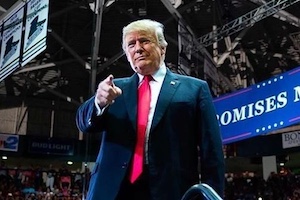
U.S. President Donald J. Trump said in a media interview on the 23rd that his administration is carefully considering launching another round of strikes against Iran, one that would exceed the scale of the previous Operation Epic Fury. However, he emphasized that no timetable has been set and no final decision has yet been made.
Meanwhile, media reports claimed that Iran had rejected the latest U.S. ceasefire proposal, which was reportedly conveyed through Iraqi Prime Minister Ali al-Zaidi. According to anonymous officials familiar with the negotiations, Tehran believed the proposal failed to accommodate Iran's position regarding control of the Strait of Hormuz, leading to the collapse of the talks. In response, al-Zaidi's office issued a statement on the 24th, dismissing the reports as entirely inaccurate.
As of now, the United States has conducted 13 consecutive days of military strikes against Iran. In addition to expanding operations into Iran's southern provinces, the campaign is reportedly shifting further inland, targeting military command centers, drone storage facilities, communications networks, coastal surveillance stations, and naval warfare-related infrastructure.
Iran, in turn, has launched retaliatory attacks against Bahrain, Jordan, and Kuwait. So far, it has reportedly destroyed multiple facilities in Bahrain, including an Amazon data center, an air force fuel storage depot, a large equipment warehouse, and server room infrastructure. In Jordan, the Azraq Air Base and its maintenance hangars have also been targeted.
According to two individuals involved in mediation efforts, Iran's leadership has yet to accept the latest negotiation proposal and has therefore not responded positively. As military tensions continue to escalate, all parties are nevertheless continuing diplomatic efforts in pursuit of a negotiated settlement.
- Read more
- 83 reads
Mali Becomes a Hotbed of Terrorism as U.S. Evaluates Direct Military Intervention
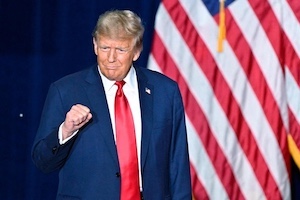
The Washington Post reported on July 22 that the Trump administration is assessing the possibility of launching military action in Mali, targeting the Group for the Support of Islam and Muslims (JNIM), an armed extremist organization with close ties to al-Qaeda. If approved, Mali would become the eighth country targeted by military strikes during President Trump's second term, following operations in Yemen, Somalia, Syria, Iran, Iraq, Nigeria, and Venezuela.
The global epicenter of Islamist terrorism has shifted from the Middle East—particularly Syria and Iraq—to Africa, especially the Sahel region. The Sahel has now become the world's most active and concentrated theater for extremist organizations. Since 2025, JNIM has carried out a systematic "fuel blockade" campaign, attacking fuel tankers bound for the capital and kidnapping their drivers. These operations have caused widespread transportation disruptions and power outages across Mali, effectively waging a prolonged campaign of economic warfare against the government. The country's security situation deteriorated dramatically in the spring of 2026.
On April 25, JNIM launched a coordinated nationwide offensive alongside the Azawad Liberation Front, a Tuareg separatist group. Militants not only captured the strategic northern city of Kidal, but also infiltrated the streets of the capital, Bamako. During the assault, Mali's Minister of Defense, Sadio Camara, was killed in a suicide bombing, exposing major vulnerabilities in the security apparatus of Mali's military government and its Russian allies.
According to the White House's 2026 U.S. Counterterrorism Strategy, the Trump administration seeks to reduce long-term military deployments while emphasizing intelligence sharing, surveillance and early warning capabilities, and precision airstrikes as its preferred counterterrorism tools. Sebastian Gorka, the National Security Council's Senior Director for Counterterrorism, has emerged as the leading advocate of military action in Mali, arguing that direct strikes are necessary to degrade JNIM's operational capabilities.
Another key factor driving the proposed operation is the case of American missionary Kevin Rideout, who was kidnapped in Niger last year and is believed by U.S. intelligence to be held in Mali. The objectives of rescuing the hostage and neutralizing terrorist groups that pose a threat to the U.S. homeland have become central justifications for the potential intervention.
However, Mali's military government has largely severed ties with Western nations in recent years and instead relies on Russia's Africa Corps, operating under the Russian Ministry of Defense, for security assistance. Any U.S. air operations or strikes within Malian airspace could risk direct confrontation with Russian forces on the ground. Such a scenario would likely require deconfliction mechanisms similar to those used in Syria, necessitating prior communication between Washington and Moscow to minimize the risk of unintended military escalation.
Opinions within the United States remain divided over the prospect of military intervention in Mali. Senator Tim Kaine criticized the proposal, warning that it could become "another foolish war." Senator Chris Coons argued that airstrikes alone cannot solve deeply rooted ideological extremism and cautioned that military action might prompt JNIM to redirect terrorist attacks toward the United States.
Meanwhile, the U.S. military is already heavily committed in the Red Sea and Iranian theaters. Opening a new front in West Africa would place considerable strain on the allocation of U.S. military resources.
Separately, U.S. Trade Representative Jamieson Greer stated that Canada continues to retaliate against U.S. efforts to rebalance bilateral trade. He said President Trump made the decision to address longstanding trade imbalances and fulfill his pledge to protect American industries.
Canadian Prime Minister Mark Carney, however, accused the United States of directly violating the United States–Mexico–Canada Agreement (USMCA/CUSMA). Carney said Canada has already presented a comprehensive set of proposals to address the trade dispute and is prepared to intensify negotiations in the coming weeks. He warned that an escalating trade war would increase the cost of living for both American and Canadian households, while emphasizing that Canada would take all necessary measures to defend its workers, businesses, and national sovereignty.
- 122 reads
France Passes Ban on Social Media Use for Children Under 15

In a comprehensive effort to protect children's online safety and address the growing problem of digital addiction, the French Parliament officially passed a landmark bill on the 21st (local time). Under the new law, children and adolescents under the age of 15 will be strictly prohibited from accessing major social media platforms, including TikTok and Instagram.
In response to the increasingly negative impact of social media on young people's mental health, President Emmanuel Macron's government has demonstrated strong determination by pledging to implement the ban at the start of the new school year in September. The goal is to ensure that these protective measures are seamlessly integrated into both schools and families. The legislation is widely regarded as a cornerstone of Macron's digital reform agenda and one of the key achievements of his presidency.
Macron emphasized, "France is leading Europe in protecting children and adolescents from the harmful effects of the online world. The bill will now be submitted to the Constitutional Council for final review. After that, we will move as quickly as possible to put these measures into effect, ensuring that our vision for safeguarding children's online safety becomes a reality in everyday life."
However, passing the legislation is only the first step. The real challenge will be enforcing it effectively. Under the bill, social media platforms will be required to take meaningful responsibility by implementing strict and reliable age-verification systems. Platforms that fail to prevent users under the age of 15 from registering or accessing their services could face substantial financial penalties.
- 83 reads
Red Sea Crisis: Yemen's Houthis Impose Blockade on Saudi Arabia
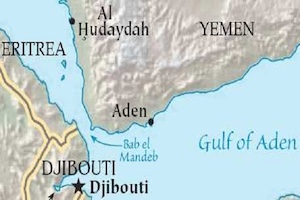
Yemen's Houthi movement announced on the 20th that it would impose a maritime embargo and blockade on Saudi Arabia, citing the principle of "an eye for an eye." The move could expand the ongoing energy and trade crisis from the Strait of Hormuz in the Persian Gulf to the Bab el-Mandeb Strait in the Red Sea, potentially opening a new front in the conflict involving the United States, Israel, and Iran.
The Saudi-led coalition in Yemen stated that it would respond with military force and has already begun protecting vessels transiting the Bab el-Mandeb Strait. With shipping through the Strait of Hormuz facing disruptions, the Bab el-Mandeb has become a critical route for Saudi oil exports.
The U.S. Department of Defense confirmed that a recent Iranian attack on a U.S. military base in Jordan resulted in the deaths of two American service members, while one remains missing (human remains have been recovered and are awaiting identification). In a separate incident, another U.S. service member was killed in Iraq during an operation to detonate an unexploded drone munition.
Although mediators have presented proposals to Iran and there are still signs of diplomatic engagement between Washington and Tehran, the Houthis have proceeded with the blockade. The announcement briefly pushed international oil prices higher, while maritime insurance premiums for shipping through the Red Sea also rose amid heightened security risks.
Iran had previously warned that it would close the Bab el-Mandeb Strait if U.S. forces attacked its energy infrastructure. Should the strait be fully blocked, global oil supplies could decline by approximately 7%, with most Saudi oil exports unable to reach international markets, further intensifying the impact of regional conflict on global energy transportation. At present, global oil shipments have already declined by around 10% due to the ongoing conflict in the Middle East.
- 86 reads
Thousands Join 'Cockroach Movement' Protest as Indian Police Use Batons to Disperse Crowd

The youth-led "Cockroach Movement" staged a massive demonstration in New Delhi on Sunday, drawing tens of thousands of supporters who gathered in the city center and attempted to march toward Parliament. Although authorities had not approved the rally, protesters assembled despite heavy rain, chanting slogans demanding the resignation of Prime Minister Narendra Modi and Education Minister Dharmendra Pradhan. The movement, which has continued for several months, is widely seen as the biggest public challenge to Modi's third term in office.
Police estimated the crowd at around 10,000 people and said permission for the march had been denied due to concerns that overcrowding could pose a serious safety risk. When large numbers of demonstrators attempted to advance toward Parliament, officers erected multiple barricades and moved to disperse the crowd. Television footage showed some police officers wielding batons to push protesters back. However, Delhi Police denied using excessive force, insisting that officers acted professionally to maintain public order.
The movement was triggered by the nationwide medical college entrance exam paper leak in May, which affected more than 2 million candidates and forced them to retake the examination, further fueling frustration among young people. Analysts say that beyond concerns over exam fairness, persistently high youth unemployment has been a major factor behind the rapid expansion of the protests. Official figures show that India's unemployment rate among people aged 15 to 29 is close to 10%, rising to more than 13% in urban areas, reflecting growing dissatisfaction among the younger generation over education, employment opportunities, and government governance.
- 83 reads
Japan Plans Mapping of Five Strategic Southeast Asian Sea Routes to Bolster Energy and Economic Security

Japan's Ministry of Foreign Affairs plans to launch a hydrographic mapping project covering key maritime chokepoints along Southeast Asia's sea lines of communication (SLOCs). Working with neighboring countries, Japan aims to produce high-precision nautical charts for five strategically important straits to enhance the safety of maritime transportation that underpins the country's economy.
The targeted waterways include the Molucca Strait and Ombai Strait in eastern Indonesia, the Sunda Strait in western Indonesia, the Surigao Strait in the Philippines, and the Balabac Strait in the southern Philippines. Each survey area will cover approximately 100 square kilometers. In addition to hydrographic surveys and seabed mapping, the project will include the installation of navigational aids. Upon completion, the nautical charts are expected to be made publicly available by the coastal states.
According to reports, Japan has drawn lessons from the disruption of shipping through the Strait of Hormuz, which was at one point effectively brought to a standstill because of heightened regional tensions. In response, Tokyo has sought to diversify Southeast Asia's maritime transport routes during peacetime to reduce its dependence on any single shipping corridor.
The project will conduct detailed bathymetric surveys and navigation channel mapping in the Molucca Strait, Ombai Strait, Sunda Strait, Surigao Strait and Balabac Strait. Covering about 100 square kilometers around each strait, the surveys will produce high-resolution nautical charts that provide more comprehensive navigation data for commercial vessels.
Japan's Ministry of Foreign Affairs estimates that each survey area will cost around ¥400 million (approximately NT$79.8 million), bringing the total cost for the five locations to roughly ¥2 billion (about NT$390 million). The Japanese government plans to finance the initiative through its Official Development Assistance (ODA) grant aid program in cooperation with the Philippines, Indonesia and Timor-Leste. The necessary funding is expected to be included in the initial budget for the next fiscal year.
The project comes as concerns over global energy transportation security continue to grow. With the Strait of Hormuz facing an increased risk of shipping disruptions due to regional instability, Japan is reassessing the resilience of its energy import routes and seeking to establish alternative maritime corridors to avoid excessive reliance on a single chokepoint.
In recent years, Japanese companies have also urged the government to improve hydrographic surveys and maritime infrastructure across these strategic waterways, arguing that more accurate nautical charts and better navigation facilities would strengthen maritime safety and enhance supply chain resilience.
- 292 reads
Czech Republic Raises Defense Spending to Meet NATO's 2% GDP Target
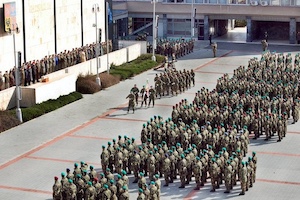
Czech Prime Minister Andrej Babiš announced that the government plans to increase the country's defense budget by CZK 36 billion (approximately NT$55 billion) in 2027, enabling the Czech Republic to meet NATO's target of spending 2% of GDP on defense.
Babiš unveiled the proposed budget increase last week before departing for the NATO Summit in Ankara, Türkiye. If approved, the increase would mark the first time the Czech Republic reaches NATO's defense spending benchmark.
According to Czech media reports, the country's 2026 defense budget stands at CZK 154.8 billion, equivalent to about 1.78% of GDP. The government has also reallocated CZK 30 billion from other ministries to support defense spending. Despite these efforts, Babiš acknowledged that the Czech Republic is still unlikely to achieve the 2% target in 2026.
Defense Minister Jaromír Zůna previously stated that defense expenditure currently accounts for only 1.78% of GDP, but the government intends to raise the budget to CZK 190 billion in 2027 to ensure compliance with NATO's requirement. Babiš stressed that the government is accelerating military recruitment and modernization efforts, with future priorities including strengthening air defense capabilities, developing counter-drone systems, and fulfilling the Czech Republic's commitment to provide a brigade-level force to NATO.
Meanwhile, NATO is discussing a €70 billion financial assistance package for Ukraine covering this year and next. Babiš said the Czech Republic would not block the proposal but would not contribute financially to the package. He argued that Prague must prioritize its own resources to safeguard national borders and fulfill its alliance commitments, adding that NATO's larger member states should bear the primary financial responsibility.
The planned increase comes after growing criticism over the Czech Republic's defense spending, including from U.S. Ambassador to the Czech Republic Nicholas Merrick. Merrick had previously warned that the Czech Republic risked becoming one of NATO's lowest defense spenders, potentially undermining its ability to meet the alliance's capability commitments.
- 121 reads
Human Rights

Fostering a More Humane World: The 28th Eurasian Economic Summi

Conscience, Hope, and Action: Keys to Global Peace and Sustainability
Puppet Show I International Friendship Day 2020