World
Torrential Rains Batter Nagoya; Landslide Warnings Issued

Nagoya in Aichi Prefecture, Japan, was slammed by torrential rainfall on the 8th, causing widespread flooding across roads and homes. Rivers briefly overflowed their banks, with floodwaters sweeping vehicles away. Driven by an active autumn rain front and a low-pressure system, storm damage has continued to spread. The Japan Meteorological Agency (JMA) urged the public to stay on high alert for landslides, overflowing rivers, and flooding in low-lying areas.
On the afternoon of the 8th, rainfall in Nagoya reached an astonishing 104.5 mm in just one hour. This not only shattered the local record set when meteorological records began in 1890, but also surpassed the catastrophic 2000 Tokai Heavy Rain disaster. As many as 410 municipal schools in Nagoya announced emergency closures for the 9th. The JMA briefly issued a Level 5 Emergency Flood Warning—its highest alert level—for the Shonai River, while the city issued evacuation instructions to around 2 million residents.
The torrential downpours led to severe street inundation, collapsed riverbanks, and flooded residences, severely disrupting public transit including JR trains, subways, and buses. Meteorological authorities cautioned that the storm threat has not passed, warning that if linear precipitation bands form, local rainfall could intensify even further. Officials continue to advise residents to watch closely for surging rivers, inundation, and landslide hazards.
- 65 reads
German State Election: Far-Right Sweeps to Victory, Shocking the Chancellor

On the 6th, the eastern German state of Saxony-Anhalt held its state parliamentary elections, where the far-right Alternative for Germany (AfD)—which advocates a return to traditional values and strict curbs on immigration—dropped a political bombshell. The AfD took a commanding lead with approximately 44% of the vote, projected to win 39 of the 83 parliamentary seats. By contrast, the Christian Democratic Union (CDU), which governs at the federal level, suffered a crushing defeat, securing just 17.23% (15 seats).
Amid cheers, AfD lead candidate Jan Wenzel Schmidt proclaimed: 'Tonight, we made history—taking our country back starting from Saxony-Anhalt!' According to international media reports, analysts pointed out that the outcome reflects intense dissatisfaction with the federal government among nearly 90% of local voters, fueling the surge of ballots toward the AfD. The party champions traditional values and stringent restrictions on immigration.
However, the AfD's path to power remains fraught with uncertainty. Classified by intelligence authorities as a 'right-wing extremist organization,' the AfD faces a firm refusal to cooperate from all mainstream German parties, making the formation of a coalition government exceptionally difficult. Falling three seats short of an outright majority, the party faces a deadlock in attempting to govern alone due to its uncompromising stance and lack of allies. Because state governments hold policing authority, scholars have raised concerns that placing border security under AfD control could offer Russia opportunities to access sensitive security intelligence.
Under the constitution of Saxony-Anhalt, if the parliament fails to elect a state premier to form a government after convening, it will face dissolution and fresh elections. All of Germany is now watching closely to see whether this historic victory will lead to actual governance or a deadlocked repeat vote.
- 44 reads
Solomon Islands Parliament Suspended Indefinitely as PM Wale Survives No-Confidence Vote
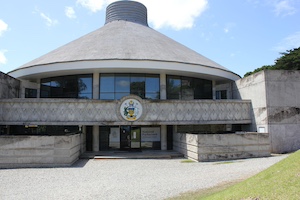
Solomon Islands Prime Minister Matthew Wale has survived a no-confidence motion and announced in Parliament that it would go into recess indefinitely, temporarily easing the political crisis facing his government. Amid the recent political turmoil, Wale even cut short his attendance at the Pacific Islands Forum summit and returned home to confront the no-confidence challenge. However, after former Home Affairs Minister Manasseh Maelanga withdrew the motion on September 6 and more lawmakers shifted their support to the ruling coalition, Wale successfully retained his position as prime minister.
The political turmoil has drawn considerable international attention, coming at a time when the United States and China are competing for influence in the South Pacific. Since taking office in May, Wale has moved to review the security agreement Solomon Islands signed with China in 2022, while actively seeking to deepen cooperation with the United States and Australia. U.S. Deputy Secretary of State Christopher Landau recently visited Solomon Islands, pledging to resume operations of the Peace Corps. The two sides are also discussing potential U.S. investment in port development and expanded cooperation on coastal security and defense.
Following Parliament's recess, the Wale government is likely to avoid another no-confidence challenge in the short term. Wale said he hopes Parliament can resume sitting and complete its budget deliberations before Christmas, while using the recess to push ahead with major policy reforms, including reforms to the mining sector and a free education policy.
Diplomatic observers say Wale's success in weathering the political test just three months after taking office will not only shape the future direction of Solomon Islands' foreign policy, but could also have broader implications for security and strategic alignments across the South Pacific.
- 188 reads
Iran Plots to Unite Regional Allies in Four-Pronged Attack on Israel
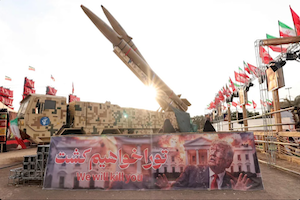
Iran is coordinating with regional allies, including Hezbollah, Hamas and the Houthis, in a plan to launch a joint attack on Israel. Tehran is reportedly seeking to consolidate all forces aligned with Iran and coordinate simultaneous action across multiple fronts, in an effort to avoid the poor coordination that characterized the Oct. 7, 2023 attacks.
Iran is attempting to bring Lebanon’s Hezbollah, the Palestinian Islamist group Hamas, Yemen’s Houthi movement and pro-Iranian militias in Iraq into a unified military campaign. Israel has found that members of the so-called “Axis of Resistance” have not only continued to conduct joint military exercises, but have also developed closer operational and personal ties, while improving coordination in political and military decision-making.
Internal Hamas documents seized by Israel in the Gaza Strip show that the late Hamas leader Yahya Sinwar had sought to expand the conflict by drawing additional battlefronts, including Lebanon, Syria and the Sinai Peninsula, into the fighting. The documents stressed the need to link the various fronts and prepare in advance for external battlefronts, including establishing communication mechanisms for both peacetime and wartime.
Hamas’ leadership transition has also played an important role in Iran’s efforts to wage a multi-front war against Israel. Khalil al-Hayya, who was elected Hamas’ new leader in July, has close ties with Iran and for years has been a key figure in maintaining Hamas’ relationship with Tehran. Al-Hayya has also strengthened the faction within Hamas’ leadership that seeks to maintain close strategic ties with Iran.
There are also signs that Iran is working to rebuild the military alliance known as the “Axis of Resistance” and restore coordination mechanisms among its various fronts. A report in August indicated that, with Iran’s assistance, Hamas and Hezbollah had stepped up coordination while increasing pressure on Israel from both the south and the north. With Iranian support, Hamas and Hezbollah have recently begun coordinating increased activities against Israel.
Meanwhile, Iran has accelerated the production of missiles and drones as it works to rebuild military capabilities damaged in previous attacks. The balance of power within Iran’s network of allied forces has also shifted. With Hezbollah severely weakened and the fall of Bashar al-Assad’s regime in Syria, Iranian-backed militias in Iraq and the Houthi movement in Yemen have taken on greater importance within Tehran’s regional network.
- 82 reads
UN Backs “Corrected” World Map Showing Africa’s True Size; U.S. Sole Opponent
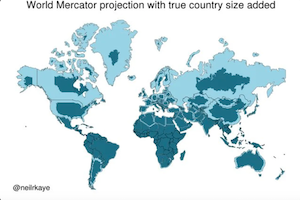
The United Nations General Assembly on the 4th adopted a symbolic resolution supporting the gradual adoption of world maps that more accurately represent the actual land areas of different regions, challenging the centuries-old Mercator projection. The initiative, led by the African nation of Togo and backed by the African Union, passed with 164 votes in favor, one against and six abstentions, making the United States the only country to vote against the resolution.
At the heart of the “correct the map” campaign is an effort to change the way people have long perceived the relative sizes of continents around the world. The Mercator projection, first introduced in 1569, was primarily designed for maritime navigation. While it does a good job of preserving directions, distortion of land areas becomes increasingly severe toward the North and South Poles, making regions at higher latitudes appear far larger than they actually are.
One of the most striking examples is the comparison between Greenland and Africa. On traditional Mercator world maps, Greenland appears almost as large as Africa. In reality, however, Africa covers roughly 30 million square kilometers, compared with about 2.16 million square kilometers for Greenland, meaning Africa is approximately 14 times larger. South America and India, both located closer to the equator, also appear relatively smaller under the Mercator projection.
The alternative projection supported by the United Nations is the “Equal Earth” projection, introduced in 2018. Designed primarily to preserve the relative areas of continents, it provides a more accurate representation of the actual size of different regions while minimizing distortion of their shapes. The resolution encourages governments, schools, international organizations and other institutions to gradually adopt maps based on such projections. However, it does not legally require countries to ban or phase out the Mercator projection.
The Togolese government has argued that maps are not merely geographical tools, but can also influence how people perceive the importance of different countries and regions. Before the vote, Togo’s Foreign Minister Robert Dussey emphasized that “a fair world begins with a fair map.” He said Togo plans to begin updating geography textbooks in schools by the end of this year and intends to work with the African Union, other countries, technology companies and mapping services to promote wider adoption.
African proponents argue that the long-standing use of world maps involves not only technical distortions of land area but also a global perception shaped by the legacy of the colonial era. Supporters say that when Africa is visually “shrunk” on maps, it could influence perceptions of the continent’s population, resources, economy and geopolitical importance. The “Correct the Map” movement therefore seeks to use map reform to present Africa’s true geographical scale more accurately.
The United States, however, took a completely different position on the resolution, becoming the sole country among the 164 nations that supported it to vote against the measure. Washington argued that the initiative carries an “ideological agenda” and said that debating map projections distracts the international community from what it considers more pressing issues, including global peace, prosperity and international relations.
It is important to note that the Mercator projection is not an “incorrect map,” but rather a map projection designed for specific purposes. Because it preserves angles and directions, it remains useful for maritime and aviation navigation. Togo has therefore stressed that the initiative is not intended to completely eliminate the Mercator projection, but rather to encourage greater use of projections that accurately reflect land areas in education, media and general-purpose world maps.
What may appear to be a simple debate over whether to “change a world map” actually reflects a broader global reassessment of history, the legacy of colonialism and geographical perceptions. Although the UN resolution is not legally binding, its overwhelming support from 164 countries has opened a new debate over how the world should be represented on maps and could eventually encourage schools, media organizations and digital mapping services to change the way people visualize the world.
- 93 reads
Falkland Islands Dispute Escalates: Argentina Announces Sanctions Against Oil Companies

Argentine President Javier Milei stated on the 3rd that oil companies currently exploring the waters near the Falkland Islands pose a threat to Argentina's interests. He announced plans to submit a bill to Congress to impose sanctions on these extraction firms, reigniting the sovereignty dispute between Argentina and the United Kingdom.
Currently, the UK’s Rockhopper Exploration and Israel’s Navitas Petroleum are planning an offshore development project known as "Sea Lion." Located approximately 224 kilometers north of the Falkland Islands, the project is scheduled to begin production in 2028, aiming to ship an estimated 1.7 billion barrels of extracted oil back to the UK and Europe.
Consequently, Milei stated that he will sign executive orders to prevent foreign nations from exploiting Argentine resources and infringing upon national security. In addition, he plans to issue an emergency decree to construct a naval base and bolster telecommunications capabilities in the province of Tierra del Fuego, thereby strengthening Argentina’s presence in the South Atlantic.
Furthermore, an urgent national defense and sovereignty protection bill will be submitted to Congress to impose harsher penalties on unauthorized operations around the Falkland Islands. The scope of these sanctions will extend to suppliers and broaden the legal framework to cover other activities that could impact Argentina's natural resources.
Located in the South Atlantic roughly 500 kilometers off the mainland coast of Argentina, the Falkland Islands are a British Overseas Territory claimed by Argentina. In 1982, Argentine forces occupied the islands before British troops moved to regain control. The 74-day conflict resulted in 907 deaths and concluded with Argentina's defeat and withdrawal. While the UK regained control of the islands, the sovereignty dispute between the two nations remains unresolved.
- Read more
- 87 reads
G20 Finance Chiefs Outside China Unite Against Non-Market Government Economic Intervention
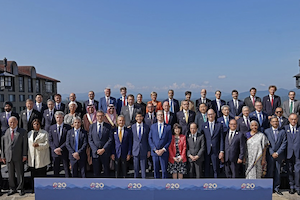
A two-day meeting of G20 finance ministers and central bank governors began on August 31 in Asheville, North Carolina. The meeting concluded without a joint communiqué due to objections from China. Instead, host U.S. Treasury Secretary Scott Bessent issued a Chair's Statement, noting that 19 nations—excluding China—reached a strong consensus to take action against "non-market" government intervention policies.
The criticism of government economic intervention was aimed primarily at China, encompassing distortive policies that suppress domestic consumption and foster an overreliance on exports, resulting in massive trade surpluses. Driven by industrial overcapacity, a relentless influx of cheap exports—such as electric vehicles and semiconductors—has stalled manufacturing momentum and job growth in other nations. Furthermore, state subsidies for specific industries have created unfair competition, while the renminbi remains artificially undervalued. Similar measures, such as prior export controls on rare earths leveraging China's monopoly power, have also imposed asymmetric trade restrictions.
Following the meeting, Bessent urged G20 partners to adopt protective measures such as tariffs to counter the issue. He pointed out that steep U.S. tariffs on China had redirected Chinese exports toward other global markets; consequently, other nations should also act to safeguard domestic jobs and their manufacturing base to prevent entire industries from being hollowed out. He also called on Beijing to dismantle the distortive policies that suppress domestic consumption and drive an overreliance on exports.
Chinese Foreign Ministry spokesperson Guo Jiakun expressed "deep regret," emphasizing that the G20 should coordinate on key global economic issues in an objective, fair, and balanced manner grounded in consensus and equal participation. Notably, the meeting brought private-sector leaders alongside finance chiefs to discuss strategies for boosting private enterprise growth. Russian Finance Minister Anton Siluanov also attended, drawing discontent from Western allies. Bessent, however, underscored the importance of using the forum to establish communication channels among conflicting parties.
- Read more
- 190 reads
To Avert Government Shutdown, US House Prioritizes Review of Funding Bill
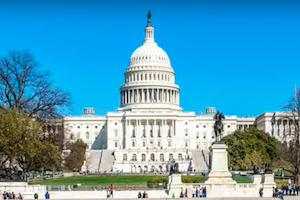
The US House of Representatives ultimately passed a temporary spending bill by a 370-to-48 vote, extending federal government operations until December 11. US Republicans and Democrats temporarily put aside their budget differences, joining forces to eliminate the risk of a federal government shutdown in October. The legislation has been sent to President Donald Trump for his signature.
Since Trump's second term began, fierce confrontations between the Republican-controlled Congress and the Democratic minority have resulted in three partial government shutdowns, totaling a historic record of 161 days. Neither party intends to plunge into another shutdown before the mid-November elections to avoid angering voters who are already dissatisfied with high prices, the war with Iran, and tariff issues.
However, the stopgap measure does not resolve America's major fiscal issues. The national debt surpassed $40 trillion last month, and the bill merely postpones spending decisions by 15 weeks. In December, Congress will still face the daunting task of drafting and passing 12 full-year spending bills. Which party gains control of Congress after the November 3 midterm elections will directly influence the direction of these negotiations.
- Read more
- 84 reads
Lee's Approval Drops Below 40% Amid Four Controversies
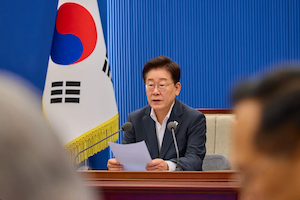
According to the latest poll by the South Korean polling agency Realmeter, President Lee Jae-myung’s job approval rating has dropped to 38.9%, down 1.3 percentage points from the previous week. This marks a seven-week consecutive decline and the first time his approval rating has fallen below the 40% mark, hitting a record low since he took office in June last year. Meanwhile, his disapproval rating rose to 58.7%, remaining outside the margin of error for the fifth consecutive week. Regionally, the most significant drop was seen in the Daejeon, Chungcheong, and Sejong areas, plummeting by 8.5 percentage points in a single week. The loss of support among the 40-to-50 age demographic was also highly notable.
Analysts point out that the Lee administration is currently grappling with four major controversies converging simultaneously. First, real estate policies and housing price issues continue to fuel public discontent. Second, judicial and constitutional disputes have emerged due to the blocked appointments of Supreme Court justice nominees. Third, a major missing person case on Jeju Island has exposed public distrust in the police and the public security system. Finally, internal conflicts have arisen within the ruling bloc, triggered by politicians' gaffes and ideological divisions. The intertwining of these multiple negative factors has been a primary driver of the continued slump in Lee's approval ratings.
In terms of political party support, the ruling Democratic Party of Korea garnered a 43.1% approval rating, a slight increase of 1.2 percentage points from the previous week, while the main opposition People Power Party held steady at 37.7%. Analysts believe that although the Democratic Party has temporarily stabilized its base by consolidating its political platform and focusing on livelihood issues, the continuous decline in Lee’s personal approval indicates that public doubts regarding the government's performance have yet to be dispelled. Whether the administration can effectively address the controversies surrounding housing prices, the judiciary, and public security will be a crucial test in salvaging its reputation.
- Read more
- 76 reads
U.S. Strategic Oil Reserves Hit Critical Low; Trump Announces Major U.S.-Venezuela Oil Deal
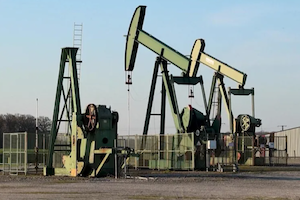
U.S. President Donald Trump announced on the 28th that the United States has reached a major oil agreement with Venezuela. The deal will secure majority control of over 65 billion barrels of Venezuela's proven oil reserves through a public-private partnership. Trump called it "the largest oil deal in history," which is expected to boost U.S. oil reserves and drive down domestic gasoline prices.
Trump stated that he had directed Secretary of State Marco Rubio and Secretary of War Pete Hegseth to negotiate closely with Venezuela's Acting President Delcy Rodríguez. This ultimately led to a partnership between the U.S. government and Venezuelan private operators to develop 17 oil fields. The agreement involves over 65 billion barrels of oil reserves and is expected to attract approximately $100 billion in investment.
The White House stated that the deal will help rebuild Venezuela's aging oil infrastructure and increase crude oil supplies. The Venezuelan government estimates that the oil field development could significantly boost oil production and generate around $209 billion in tax revenue for the government. Trump emphasized that the agreement will more than double the oil reserves controlled by the United States and help replenish the Strategic Petroleum Reserve. The U.S. also hopes that by increasing the supply of Venezuelan crude, it can alleviate the impact of recent high oil prices on the American public.
However, the specific legal and financial framework of the agreement has not yet been fully disclosed. Analysts point out that due to years of underinvestment and aging infrastructure in Venezuela's oil industry, it may still take years for the implementation of the agreement to translate into actual production increases.
- 62 reads
Human Rights

Fostering a More Humane World: The 28th Eurasian Economic Summi

Conscience, Hope, and Action: Keys to Global Peace and Sustainability
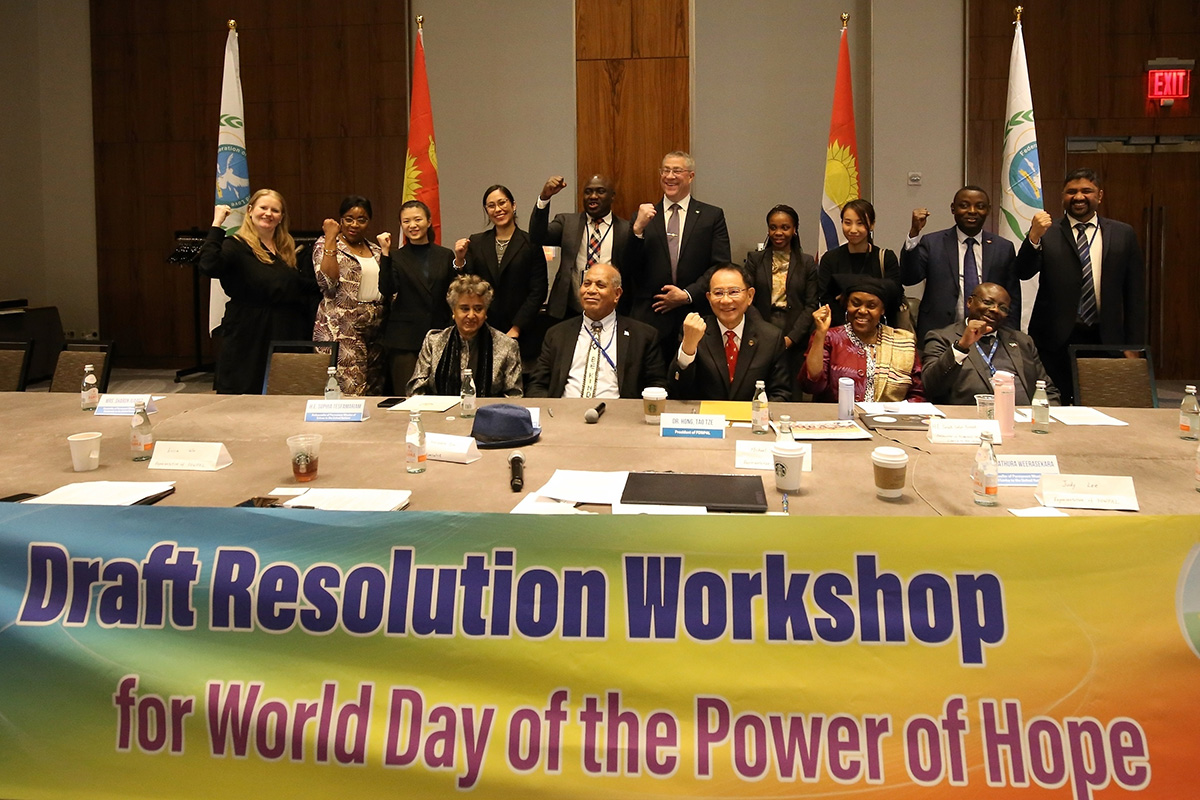

Puppet Show I International Friendship Day 2020