Science
Nanocomposites Help Researchers to Take Samples from Pollutants Released in Air

- Read more
- 425 reads
Synaptic transistor learns while it computes: First of its kind, brain-inspired device looks toward highly efficient and fast parallel computing
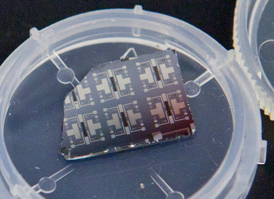
Several prototypes of the synaptic transistor are visible on this silicon chip.
- Read more
- 473 reads

New hydrogel from IBN and INM improves delivery of anti-cancer drug
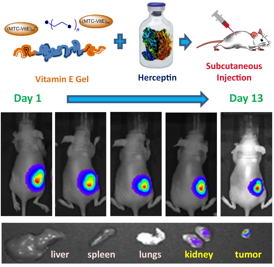
Herceptin was loaded into Vitamin E gel by convenient mixing. The Herceptin-loaded hydrogel was tested in mice bearing breast cancer. Herceptin was preferably accumulated in the tumor tissues as compared to the healthy animal organs.
- Read more
- 459 reads
Something Flare-y This Way Comes: The mini-Halloween Storms of 2013

Blood-red auroras over Maryland on Halloween 2003.
- Read more
- 442 reads
Galaxy Growth Examined Like Rings of a Tree

New evidence from NASA's Wide-field Infrared Survey Explorer (WISE) and Galaxy Evolution Explorer (GALEX) missions provide support for the "inside-out" theory of galaxy evolution, which holds that star formation starts at the core of the galaxy and spreads outward.
- Read more
- 458 reads
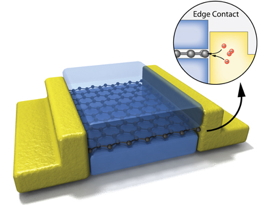
Columbia Engineers Develop New Device Architecture for 2D Materials, Making Electrical Contact from the 1D Edge: New Approach Produces Cleanest Graphene Yet, with Previously Unrealized Performance
- Read more
- 482 reads
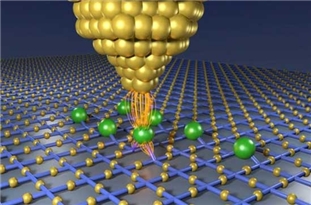
Significant Improvement in Weld Mechanical Properties Using Nanoparticles
- Read more
- 446 reads
NASA's Curiosity Mars Rover Approaches 'Cooperstown'

The low ridge that appears as a dark band below the horizon in the center of this scene is a Martian outcrop called "Cooperstown," a possible site for contact inspection with tools on the robotic arm of NASA's Mars rover Curiosity. The ridge extends roughly 100 feet (about 30 meters) from left to right, and it is about 260 feet (about 80 meters) away from the location from which Curiosity captured this view.
- Read more
- 427 reads
'Molecular Velcro' may lead to cost-effective alternatives to natural antibodies: Berkeley Lab researchers take cues from nature in designing a programmable nanomaterial for biosensing
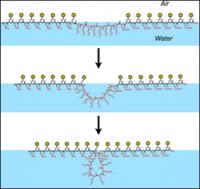
Long organic molecules called peptoids self-assemble into a molecular film on the surface of a water solution. As this film gets folded into a nanosheet, segments of the peptoid get pushed out into loops, which eventually decorate the surface of the nanosheet.
- Read more
- 422 reads
Human Rights

Fostering a More Humane World: The 28th Eurasian Economic Summi

Conscience, Hope, and Action: Keys to Global Peace and Sustainability


Puppet Show I International Friendship Day 2020