World
Ukraine Uncovers Drone Procurement Scandal, 4 Arrested
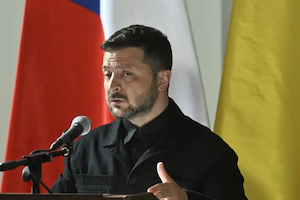
Just two days after the Ukrainian parliament passed legislation to restore the independence of its anti-corruption institutions, the National Anti-Corruption Bureau of Ukraine (NABU) and the Specialized Anti-Corruption Prosecutor’s Office (SAPO) uncovered a major corruption case involving military procurement. The case centers on contracts for military drones and electronic warfare systems, in which prices were deliberately inflated to extract kickbacks of up to 30%. Four individuals have already been detained, including a sitting member of parliament, two local government officials, and several members of the National Guard. The investigation is ongoing and continues to expand.
According to CNN, NABU and SAPO issued a joint statement on social media, revealing that the procurement contracts were signed with suppliers at deliberately inflated prices, allowing officials to skim kickbacks from the funds. The statement noted: “At the core of this corruption scheme was the signing of government contracts with suppliers at intentionally inflated prices.” While the names of those involved have not been publicly disclosed, Ukraine’s Ministry of Internal Affairs has confirmed that the implicated National Guard personnel have been suspended.
Ukrainian President Volodymyr Zelensky stated on Telegram that there will be “zero tolerance” for any form of corruption and emphasized the need for government agencies to work together to uncover and prosecute wrongdoing fairly and in accordance with the law. Zelensky had previously sparked controversy and protests for attempting to place anti-corruption agencies under the control of the Prosecutor General. He later withdrew the proposal and supported revised legislation to restore their independence — a move welcomed by the European Union. EU officials have reiterated that preserving the independence of anti-corruption bodies is a key requirement for Ukraine’s bid to join the bloc.
- 240 reads
FOWPAL Delegation Visits Saint Vincent and the Grenadines to Promote Love and Peace

The journey began at Fort Charlotte, a historic fortress perched atop a mountain, offering sweeping views of Kingstown and the majestic Caribbean Sea.
- Read more
- 311 reads
Trump Responds to Former Russian President’s Provocation by Deploying Two Nuclear Submarines

Tensions between the United States and Russia have escalated once again. This week, U.S. President Donald Trump ordered the deployment of two nuclear-armed strategic submarines to key regions in the Atlantic and Pacific Oceans. The move is widely seen as a direct response to recent provocative remarks by former Russian President and current Deputy Chairman of the Russian Security Council, Dmitry Medvedev.
Medvedev had recently posted on social media, warning that if the United States "continues arming Ukraine and undermining global strategic balance," Russia may consider the use of strategic nuclear weapons. He further claimed that "the West should not underestimate Russia's resolve to defend its national interests."
In response to Medvedev’s comments—which sparked international concern—Trump convened a National Security Council meeting at the White House and promptly signed an order instructing U.S. Strategic Command to deploy two Ohio-class submarines, both equipped with nuclear strike capabilities. One was sent to Atlantic waters near Europe, and the other to strategic waterways in the Indo-Pacific region, in a move meant to signal America's "strong deterrence and full readiness."
A White House spokesperson stated that the deployment is not a signal of war but aims to "ensure global strategic stability and uphold commitments to allies," while also warning Moscow to "cease nuclear threats and provocative behavior."
The Pentagon confirmed that the submarines have completed necessary preparations and are ready to execute orders at any time. Chairman of the Joint Chiefs of Staff, General Eric Michaels, emphasized: "This is a defensive deployment, intended to prevent miscalculation and escalation."
The international community is closely monitoring the latest developments. NATO Secretary General Jens Stoltenberg expressed support for the U.S. action and urged Russia to "stop dangerous escalation." Meanwhile, China’s Ministry of Foreign Affairs called on all parties to "exercise restraint" and avoid further conflict escalation.
At present, military communication hotlines between the U.S. and Russia remain inactive, raising concerns that the lack of strategic dialogue could lead to miscalculations—or even a worsening nuclear crisis.
- Read more
- 183 reads
Trump Issues "Price-Cut Order" to 17 Major Pharmaceutical Companies, Sets 60-Day Deadline for Response

On the 31st, U.S. President Donald Trump sent letters to the CEOs of 17 pharmaceutical companies, including Pfizer, Sanofi, and Johnson & Johnson, demanding they lower the prices of prescription drugs in the U.S. Trump stipulated that drug prices should not exceed those in other advanced countries and set a 60-day deadline for compliance. Following the announcement, pharmaceutical company stock prices dropped sharply.
The 17 major pharmaceutical companies include AbbVie (ABBV-US), AstraZeneca (AZN-US), Amgen (AMGN-US), Boehringer Ingelheim, Eli Lilly (LLY-US), Bristol-Myers Squibb (BMY-US), Genentech, GlaxoSmithKline (GSK-US), Gilead (GILD-US), Johnson & Johnson (JNJ-US), Novartis (NVS-US), Merck (MRK-US), Novo Nordisk (NVO-US), Regeneron (REGN-US), Pfizer (PFE-US), and Sanofi (SNY-US).
According to statistics from the RAND Corporation, U.S. prescription drug prices are two to three times higher than in other developed countries, with some medications priced up to 10 times higher. As a result, Trump signed an executive order in May of this year requiring drugmakers to reduce prices to match the lowest prices available overseas. If companies refuse to comply, U.S. authorities may impose regulations to enforce price cuts or consider importing cheaper drugs from abroad.
Trump also urged pharmaceutical companies to offer "most-favored-nation" pricing for low-income patients under the Medicaid program and to ensure that newly developed drugs fall under the same pricing policy. Additionally, if pharmaceutical companies attempt to offset lower U.S. prices by raising prices in other countries, any resulting excess overseas profits must be returned to U.S. patients and taxpayers. The government intends to regulate this through negotiated agreements.
Industry representatives, however, argue that differences in healthcare systems and market conditions across countries influence final drug pricing, making uniform pricing unrealistic. They also warn that lowering drug prices could reduce funding for research and development, potentially doing more harm than good for the U.S.
- Read more
- 197 reads
The World’s Wish for Love and Peace Echoes
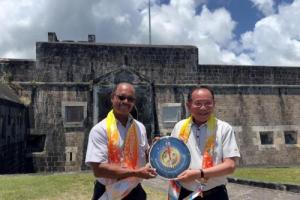
Dr. Hong Tao-Tze, President of FOWPAL, presented symbolic gifts—including the Conscience Scarf, the Compass Clock of Conscience, and the keychain with the "Smile of Conscience"—to Mr. Percival Hanley, General Manager of Brimstone Hill Fortress National Park.
- Read more
- 460 reads
Israel Obstructs Gaza Aid, Raising Risk of Widespread Famine
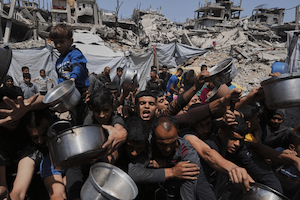
After enduring two years of war, Palestinian civilians in the Gaza Strip are now facing an even more dire situation. Severe food shortages could lead to a large-scale famine, with up to 500,000 people at risk of death. Although a ceasefire agreement was reached between Israel and Hamas in January, negotiations later failed, and Israel resumed its blockade of Gaza in March. It wasn’t until late May that limited supplies were allowed to enter again.
Currently, two main organizations are responsible for distributing aid. One is the United Nations. According to the Israeli military, even when UN aid enters Gaza, it ends up under Hamas control. On the 27th of last month, 55 UN aid trucks entering Gaza were emptied by crowds before reaching their destinations. Meanwhile, hundreds more UN food trucks remain stuck near the Kerem Shalom border crossing into southern Gaza, unable to enter. UN Secretary-General’s spokesperson Stéphane Dujarric blamed Israel for "massive bureaucratic obstacles and security issues" that are "preventing us from doing our job."
The other organization is the Gaza Humanitarian Foundation (GHF), established with support from the United States and Israel. GHF operates four food distribution stations in southern and central Gaza and claims its system prevents aid from being seized by Hamas. However, the number of distribution sites is too small, their schedules irregular, and it is questionable whether civilians can safely travel long distances to access them. GHF stations are often overcrowded and have even come under fire from Israeli soldiers. According to the UN human rights agency, hundreds of people have been killed near these GHF stations. GHF’s own Palestinian staff have also been killed by Hamas gunmen. This has prompted the UN and other aid groups to call for GHF's shutdown, condemning the foundation's methods as inefficient and dangerous.
Israeli Prime Minister Benjamin Netanyahu recently denied that anyone in Gaza is starving. However, former U.S. President Donald Trump disagrees. His Middle East envoy, Steve Witkoff, plans to visit the Gaza Strip to inspect the distribution of aid. Israel’s hardline stance is also shifting international perspectives. The European Union is considering suspending a major scientific research program, while France, the UK, and Canada are planning to formally recognize the State of Palestine in September.
Although Israeli society has long resisted the label of "genocide," a turning point came on the 29th when 31 prominent Israeli figures published an open letter in The Guardian, condemning Israel for causing famine in Gaza and calling for severe sanctions. Two major Israeli human rights organizations—B’Tselem and Physicians for Human Rights Israel—have also released reports accusing Israel of implementing a genocidal policy in Gaza.
- Read more
- 205 reads
UK and France Lead Calls to Recognize Palestinian State, Weakening US Opposition

On the evening of July 29, the foreign ministers of France and Saudi Arabia attended a special United Nations meeting in New York, where 15 countries issued a joint statement urging the international community to take steps toward recognizing Palestine as a sovereign state. This aligns with French President Emmanuel Macron’s recent announcement that France will officially recognize Palestinian statehood in September.
The countries endorsing the joint statement include Andorra, Australia, Canada, Finland, France, Iceland, Ireland, Luxembourg, Malta, New Zealand, Norway, Portugal, San Marino, Slovenia, and Spain.
France aims to create momentum for broader recognition of Palestine. On the same day, UK Prime Minister Keir Starmer called on Israel to take “concrete steps” toward a ceasefire in the Gaza Strip, warning that the UK would also officially recognize a Palestinian state in September if progress is not made. With both the UK and France—two G7 nations—leading the initiative and joined by 14 other countries, the coalition seeks to reinforce a shared commitment to a two-state solution.
During the meeting, 17 countries, along with the European Union and the Arab League, also urged Hamas to disarm and end its rule in Gaza to bring the war to a close. On July 30, Canadian Prime Minister Mark Carney stated that if the Palestinian Authority commits to holding elections in 2026 excluding Hamas and promises democratic reforms, Canada will also recognize Palestine at the UN General Assembly in September.
- Read more
- 235 reads
Trump Sets 12-Day Deadline for Russia and Ukraine to Reach Ceasefire Deal or Face Tariff Sanctions
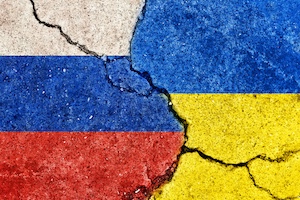
U.S. President Donald Trump recently announced a decision to shorten the original 50-day deadline for Russia and Ukraine to negotiate a ceasefire, expressing strong dissatisfaction with Russian President Vladimir Putin. According to a CNN report, Trump declared that starting from July 28, Russia would have only 12 days left to reach a ceasefire agreement with Ukraine, or the United States would impose secondary tariffs as punishment.
According to foreign media reports, during a July 14 meeting at the White House with NATO Secretary General Mark Rutte, Trump stated that the U.S. would provide Ukraine with a new round of military aid, including the urgently needed Patriot air defense systems. He emphasized that if Russia fails to reach an agreement within the 50-day period, the U.S. would impose harsher economic sanctions, including a 100% secondary tariff.
Despite the U.S. ultimatum, Russia has continued launching missile and drone attacks on multiple Ukrainian cities, including the capital Kyiv. During a visit to Scotland on July 28, Trump reiterated his disappointment with Putin and announced his decision to move the deadline forward.
Trump had previously issued a public warning in July, stating that if President Putin did not halt military actions, the U.S. would implement "secondary sanctions" and impose a 100% tariff on Russian goods. U.S. officials explained that the new "secondary tariff" mechanism is designed to penalize countries and companies that bypass existing sanctions and indirectly support the Russian economy.
- 164 reads
Thailand and Cambodia Agree to Ceasefire, Hold Talks in Kuala Lumpur

After five days of border conflict that resulted in at least 35 casualties, leaders from Thailand and Cambodia convened an emergency high-level meeting in Kuala Lumpur, Malaysia, on July 28, 2025, and announced that a ceasefire agreement had been reached. The meeting was mediated by U.S. President Donald Trump and hosted by Malaysian Prime Minister Anwar Ibrahim at his official residence in Putrajaya, Malaysia’s administrative capital. Ambassadors from both the United States and China in Malaysia were also present at the talks, underscoring the high level of international concern.
In a statement issued in the evening, Prime Minister Anwar announced: “Thailand and Cambodia have reached the following consensus: First, to immediately implement an unconditional ceasefire, effective at 12:00 midnight local time on July 28, 2025.” Following President Trump’s intervention, both sides agreed to swiftly end nearly five days of military conflict and to launch follow-up negotiations aimed at stabilizing the border situation and preventing future clashes.
President Trump posted on his social media platform “Truth Social,” stating: “I just had a meeting with Thailand’s Acting Prime Minister Puttan and Cambodian Prime Minister Hun Manet. Both parties have successfully reached a ceasefire and peace agreement. Congratulations to all!” He also announced that he had instructed the U.S. trade delegation to resume negotiations on trade agreements with both Thailand and Cambodia, aiming to avert tariff threats and promote regional stability.
- 132 reads
Large-Scale Protest Erupts in Kuala Lumpur: Nearly 20,000 Shout “Anwar Step Down”

A massive protest broke out in Kuala Lumpur, the capital of Malaysia, on the 26th, with police estimating around 18,000 people taking to the streets demanding the resignation of Prime Minister Anwar Ibrahim. Many demonstrators wore black clothing and black headbands, holding signs such as “Anwar Step Down” to protest against what they see as poor governance, worsening livelihoods, and broken reform promises.
According to a Reuters report, the main drivers of public anger include skyrocketing living costs and the government’s failure to deliver on reform pledges. Anwar came to power in 2022 as a reformist but has since implemented several controversial policies, such as raising the sales and service tax (SST) and cutting subsidies to increase government revenue. These measures have been criticized for pushing up prices and placing a heavier burden on ordinary citizens.
A 23-year-old protester, Nur Shahirah Leman, expressed concern over tax hikes and high electricity charges imposed on large corporations, believing the cost will ultimately be passed down to consumers.
In addition to economic and livelihood issues, the Anwar administration is also facing accusations of judicial interference and weak anti-corruption efforts. Recent decisions by prosecutors to drop corruption charges against ruling coalition allies, along with delays in appointing the Chief Justice of the Federal Court, have drawn criticism that Anwar is trying to manipulate the judiciary — allegations he has repeatedly denied.
Notably, former Prime Minister Mahathir Mohamad, who recently turned 100 years old, also made an appearance at the protest. Addressing the crowd, he accused Anwar of abusing his power to suppress dissent, saying, “Innocent people are prosecuted, while the guilty walk free.”
Mahathir and Anwar, once mentor and protégé, have had a long and tumultuous relationship that has defined Malaysian politics for nearly three decades. They briefly reunited in 2018 to defeat the long-ruling Barisan Nasional coalition, but their political alliance collapsed in less than two years due to internal strife, turning them back into rivals.
This protest highlights that Anwar is facing not only economic and governance challenges but also fierce resistance from veteran political opponents, suggesting that Malaysia’s political landscape may become even more volatile in the future.
- 168 reads
Human Rights

Fostering a More Humane World: The 28th Eurasian Economic Summi
Conscience, Hope, and Action: Keys to Global Peace and Sustainability
Puppet Show I International Friendship Day 2020