Human Rights Check on Peace Memorial Day: the 228 Tax Law Reveals the Truth
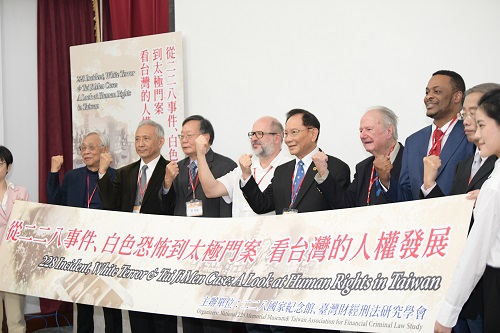
International experts and scholars come to Taiwan for in-depth research, examining Taiwan's human rights development from the 228 Incident to the Tai Ji Men case.
Welcoming the 228 Peace Memorial Day, let Taiwan return to that painful historical juncture,reflecting on state violence, the loss of control over power, and the powerlessness of the people in the face of the system. In today's Taiwan, systemic indifference, shirking responsibility, and inaction allow harm to continue in another form. The Tai Ji Men case, which scholars call the 228 Tax Law,is a typical example of this “bloodless state violence.” Tai Ji Men is a menpai of Qigong and martial arts cultivation. Since its founding in 1966 by Dr. Hong Tao-Tze, the contemporary leader, the Tai Ji Men Qigong Academy has never had any tax issues, yet it was framed. Former presidents, vice presidents, foreign ministers, and heads and vice heads of the five branches of government have all praised Tai Ji Men. The Supreme Court ruled on July 13, 2007, that Tai Ji Men was innocent, did not have to pay any taxes, and had not violated the Tax Collection Act. The Control Yuan's second investigation found that prosecutors and tax authorities committed multiple serious violations in this case, yet the administrative agencies persisted in using illegal tax invoices to continue the infringement. Is Taiwan's five-power constitutional system being used as a puppet? Commemorating the 228 Incident is not just a formality; it requires substantive institutional reform. The nation must be courageous enough to admit its mistakes, overturn false accusations, and establish mechanisms to prevent recurrence.
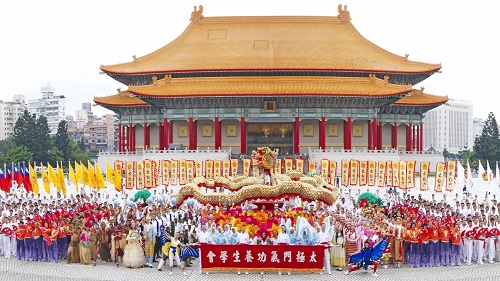
In the 2010 National Day performance, Tai Ji Men presented the blessing “A Prosperous and Healthy Nation Through Culture and Martial Arts, Surpassing the Pinnacle in a Golden Century.”
Presidents' View: Spreading the Power of Goodness with Conscience
Culture is the sum total of human life. Martial arts menpais are an important asset of China’s excellent culture. As early as 1979, Mrs. Miller, chairwoman of the “Chinese Culture Preservation Committee,” visited China and met with Dr. Hong Tao-Tze, the Zhang-men-ren of Tai Ji Men, inviting him to visit the United States to exchange ideas on Qigong and martial arts culture. In 1982,at the Sixth Sino-US Business Conference, chaired by Premier Sun Yun-Hsuan and Minister of Economic Affairs Chao Yao-Tung, Dr. Hong was invited to participate and shared his knowledge of Qigong and martial arts culture, receiving unanimous praise from dignitaries from various countries, including Anna Chennault. In the same year, Mr. Tai Yen-hui, former Presidential Advisor an former President of the Judicial Yuan, presented him with a plaque inscribed “Qi Piercing Heaven and Earth, Five Sacred Mountains; Gong Mastering the Six Arts of Humanity” to express his praise. Since 1985, Dr. Hong has been invited to visit, conduct research, lecture, and teach at universities and martial arts academies in the Netherlands and West Germany, gaining high recognition both domestically and internationally. In recent years, Dr. Hong has successfully persuaded Nations to designate April 5th as the “International Day of Conscience” and July 12th as the “International Day of Hope.”
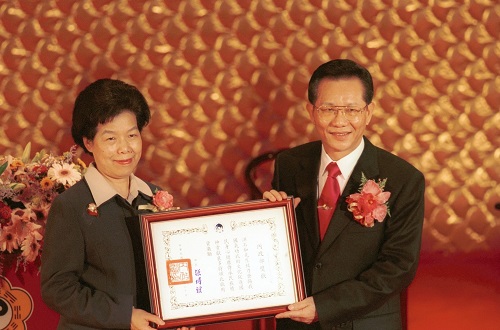
Minister of the Interior Chang Po-Ya presented Dr. Hong with the Ministry of the Interior Medal in recognition of his efforts in cultural preservation.
President Lee Teng-hui: “For 35 years since its establishment, your academy has upheld the principles of loyalty, filial piety, love for the country, and love for society. By uniting like-minded individuals, you have dedicated yourself to the study of traditional Chinese martial arts and the promotion of martial virtues. Your contributions to preserving our cultural heritage and establishing a positive social atmosphere are outstanding and admirable.”
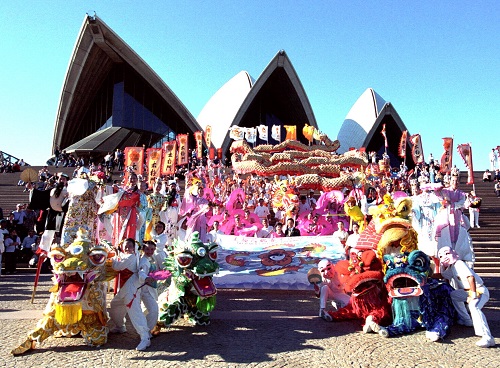
In 2000, at the Sydney Olympic Games, Tai Ji Men was invited to participate in cultural exchanges and performed at the Sydney Opera House, creating many groundbreaking achievements.
President Chen Shui-bian: “Tai Ji Men is an ancient menpai of Qigong and martial arts, passed down from shifu to dizi through generations, like a warm and loving family. All dizi are full of energy and in good physical and mental health. Under the guidance of Zhang-men-ren Dr. Hong, in addition to cultivating their minds and character, they uphold the spirit of universal benevolence, helping others and promoting love for the world through international cultural exchange, spreading the ideals of love and peace throughout the world, the five Continents.” “Ah-Bian would also like to take this opportunity to once again express the highest respect and gratitude on behalf of the government to everyone for your long-term efforts and contributions to the country and society.”
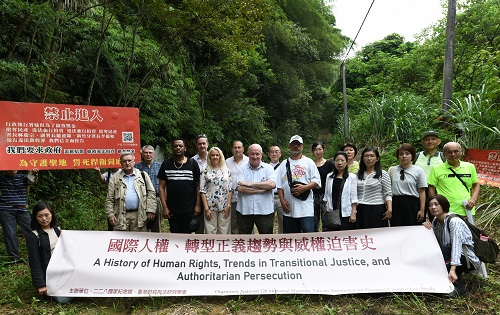
International experts and scholars personally visited the Tai Ji Men's cultivation site, which were forcibly auctioned off and confiscated.
President Ma Ying-jeou/then Mayor of Taipei: “Every time I see Tai Ji Men, I see vitality, warmth,and love. We deeply admire Dr. Hong Tao-Tze's compassionate spirit and hope that Tai Ji Men can uphold this principle throughout the world, allowing Taiwan to stand out and the world to come in.” (2000 Tai Ji Men Sydney Olympic Peace Culture Tour Flag Presentation Ceremony)
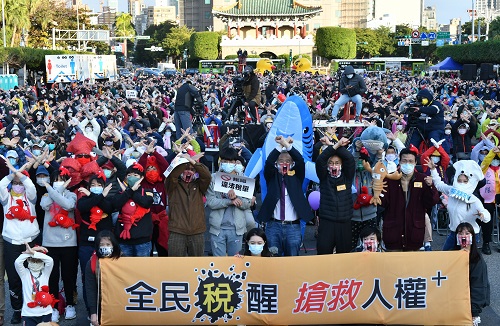
People from all over the country participated in the December 19th Ketagalan Boulevard march, demanding “National Tax Awakening, Rescue Human Rights.” (Backup)
President Tsai Ing-wen: “Under the leadership of its leader, Tai Ji Men actively engaged with the world to conduct public diplomacy for Taiwan and enhance Taiwan’s international visibility. In the future, I also hope that under the leadership of Zhang-men-ren Dr. Hong, Tai Ji Men can continue to work together with the government to exert our positive influence, enabling Taiwan to continuously progress and develop, and allowing the world to see Taiwan more clearly.”
President Lai Ching-te/Then Mayor of Tainan: “If everyone acts according to their conscience, the positive energy they radiate will surely improve individuals, society, and the country.” (Tai Ji Men’s Launch Ceremony of An Era of Conscience at Tainan Academy, 2014)
Vice President Lien Chan: “Tai Ji Men is a menpai of Qigong and martial arts, cultivating oneself, practicing Qi, and especially teaching loyalty and filial piety.”
Vice President Annette Lu: “Dear brothers and sisters of Tai Ji Men, you have always contributed money and effort, relying on your beliefs of love and peace, and your superb literary and martial arts talents to build a gate to peace and happiness on earth.”
Vice President Vincent Siew: “I would like to once again thank the organizers, the Tai Ji Men Qigong Academy, for their efforts over the years.”
Vice President Wu Den-Yih: “Have good intentions, do good deeds, speak good words. Just as Tai Ji Men said, the age of conscience has arrived.”
Vice President Chen Chien-jen/then Minister of Health: “I think it is truly remarkable that Tai Ji Men is able to cooperate with our Department of Health to organize this ‘New Health Concepts, Anti-Epidemic Mobilization’ event!”
Praise from the Five Yuans: Tai Ji Men, Elevating Art
and Culture to the International Level
The Double Tenth National Day is Taiwan’s most important celebration. Tai Ji Men has been invited ten times and participated in the National Day performance eight times (twice the event was cancelled) and the “United We Stand” gala six times, arranging visits for overseas Taiwanese to the Tai Ji Men Academy. In 2001, at the 8th World Cup International Wushu Championships held in Japan, Tai Ji Men swept four first-place awards in all categories: internal martial arts, external martial arts, weapons, and qigong. They also won the overall gold medal for the Wushu performance team and the “World’s Most Outstanding Performance Gold Medal,” bringing glory to the nation.
Premier Chang Chun-Hsiung: “For a long time, Tai Ji Men has not only promoted the traditional culture of Tai Ji and taught its members to practice Qigong to improve their health, but also attached great importance to personal cultivation, public welfare, and social welfare. It can be said to be the best model and representative of community organizations in Taiwan.”
President of the Legislative Yuan, Liu Sung-Pan: “Our National Day Preparatory Committee would like to express our gratitude to everyone again. Because of your efforts and help, I would like to express my heartfelt thanks.” (1998 National Day Awards Ceremony)
President of the Legislative Yuan, Wang Jin-Pyng: “In recent years, all of Tai Ji Men’s activities have been very successful and have been able to uplift our spirits, especially in terms of cultural contributions.”
Chang Po-Ya, President of the Control Yuan/Then Minister of the Interior: “Tai Ji Men promoted martial arts, advocated ethics and morality, and elevated our nation’s arts and culture to the international stage.”
Chen Chu, President of the Control Yuan and Chairperson of the National Human Rights Commission/Then Mayor of Kaohsiung: “Human rights are a universal value. I feel that today, through the promotion of Tai Ji Men, we have made Taiwanese society value basic human rights.”
Hsu Shui-te, President of the Examination Yuan: “Tai Ji Men, especially this year, is promoting the ‘Era of Conscience,’ encouraging everyone to act with conscience to do good deeds and promote a harmonious society. This is very meaningful, and we hope that all our citizens will respond to this event.”
Yao Chia-Wen, President of the Examination Yuan: “The value of Tai Ji Men, the value of the culture it spreads, is not just in traditional culture itself, but mainly in its positive contribution to contemporary society. We hope that Tai Ji Men will continue to flourish.”
Cheng Chung-Mo, Vice President of the Judicial Yuan: “It’s truly remarkable! Even Heaven is blessing us; today there’s wind, sunshine, and the temperature is perfect. Everyone who came looks extremely joyful; it’s rare to see even Heaven helping you.” (2008 Tai Ji Men Heaven Worship and Blessing Ceremony)
Foreign Minister: When Thinking of Taiwan, They Think of Tai Ji Men.
The Tai Ji Men Qigong Academy, hailed as an “International Ambassador of Peace and Goodwill,” enjoys a high reputation both domestically and internationally. For a long time, Tai Ji Men’s shifu and dizi have worked together self-reliantly, without ever soliciting donations or accepting any external contributions. To date, they have visited 122 countries and over 300 cities worldwide, participating in tens of thousands of domestic and international cultural performances and exchanges, repeatedly creating “cultural diplomacy miracles” and allowing the world to see Taiwan.
welfare and public affairs. Their participation this time added so much luster to our event, and I am very grateful! This is the spirit of Tai Ji Men.”
Minister Cheng Chien-Jen: “Through this method, we can showcase our traditional culture, sports, and arts in different forms. I think it’s very, very good, and it certainly helps us a lot in the international community.” (1999 John Walking Elite Charity Golf Tournament, Tai Ji Men Performance)
Minister Chien Yu-Hsin: “On behalf of the government, I am here to present this certificate of commendation to Dr. Hong Tao-Tze, the Zhang-men-ren of Tai Ji Men, for his active participation in international affairs and promotion of martial arts activities over the years, to showcase our country’s status worldwide, and especially to emphasize our national image”
Minister Huang Chih-Fang: “Tai Ji Men itself is a prime example, especially after our performance at the Sydney Olympics. Many people in the international community think of Tai Ji Men when they think of Taiwan.”
Minister Ou Hung-Lien: “Tai Ji Men was invited by the Seattle City Government to participate in the Seattle SeaFest, one of the top ten festivals in the United States. Tai Ji Men’s tradition is to use the quintessence of Chinese Kung Fu to cultivate the body, mind, and character, truly showcasing the profoundness of Chinese culture.”
Minister Yang Chin-Tien: “Under the leadership of Dr. Hong Tao-Tze, Tai Ji Men has spread a message of love and peace not only domestically but also in every corner of the world, allowing us to hear a refreshing voice amidst the chaos of the world.”
Reflecting on the Tai Ji Men Case from the Perspective of the Banality of Evil: Taiwan's Democracy Still Needs a Conscience Awakening.
The Tai Ji Men case was listed as a major human rights protection indicator case by the Control Yuan. In 2009, then Control Yuan member Chien Lin Hui-Chun investigated and determined that the National Taxation Bureau had made seven major violations: failing to fulfill its responsibilities of verification and investigation, failing to clarify the nature of the income in question in accordance with its authority, which was a clear dereliction of duty, making a hasty record of the contents of the inquiry list based on the results of the inquiry on the nature of the income, which failed to fulfill its responsibility to pay attention to both the favorable and unfavorable aspects to taxpayers. In 2017, Chien Lin Hui-Chun publicly stated at a press conference, “You can go to the Control Yuan’s website and see that I have seven points of correction. Every time I made a correction, the National Taxation Bureau said, ‘Ah! We made a mistake!’” Furthermore, she told the Minister of Finance in 2011, “This case should have been closed.”
Analyzing the truth behind the Tai Ji Men case is tantamount to a Taiwanese version of “the banality of evil.” Despite court rulings confirming acquittal, no tax evasion, and no violation of the Tax Collection Act, the Tai Ji Men were still relentlessly pursued for taxes by the administrative agencies. Even without due process, the planned site for Tai Ji Me’s cultivation center was forcibly auctioned and confiscated. This contrasts sharply with the globally watched Jerusalem Trials, where Nazi war criminal Adolf Eichmann claimed he was “acting on orders” to carry out the Holocaust. Political philosopher Hannah Arland proposed the concept of “the banality of evil,” pointing out that the most terrifying evil stems from a lack of critical thinking and a refusal to take responsibility in daily operations.
When the state apparatus malfunctions, can it automatically brake? The Tai Ji Men case highlights that Taiwan’s democracy still needs an awakening of conscience from government agencies, an issue that every citizen living under this system must face squarely.
Peace Memorial Day Forum, February 28th: A Brilliant
Lecture on the “Law and Tax 228 Incident”—A Critical
Look at the Truth
The core of the 228 Incident was the deprivation of people’s right to life and physical freedom by state violence. In the post-authoritarian era, has state violence disappeared? The Tai Ji Men human rights abuse case, which scholars call “Law and Tax 228” or “Taiwan’s Law and Tax Mirror of Truth,” exposes how government agencies transformed this violence into various seemingly legal but actually arbitrary abuses of power to suppress the people. The Tai Ji Men shifu and dizi were subjected to 30 years of legal torture using the tactic of “faking a case to make it real.”
On February 28th (Saturday) at 9:00 AM, the 2026 Peace Memorial Day Forum, “Law and Tax 228: A Critical Look at the Truth,” will be held in the International Conference Hall of the Applied Mechanics Building at National Taiwan University. Using the Tai Ji Men case as an example, the fabricated Tai Ji Men tax case exposes the systemic collapse of procedural justice in Taiwan and shows that rigid executive power places itself above substantive justice and the spirit of the two Covenants guaranteeing human rights and effective remedies. They invited leading domestic and international experts and scholars to conduct in-depth analysis, the forum aimed to expose the truth behind the fabricated case, providing clear legal advice for tax reform, urging the government to implement transitional justice, and courageously resolve fabricated cases like the Tai Ji Men case, allowing Taiwan to transcend the shadows of history, truly connect with universal values, and embark on the right path of international democracy and human rights.
- 406 reads
Human Rights
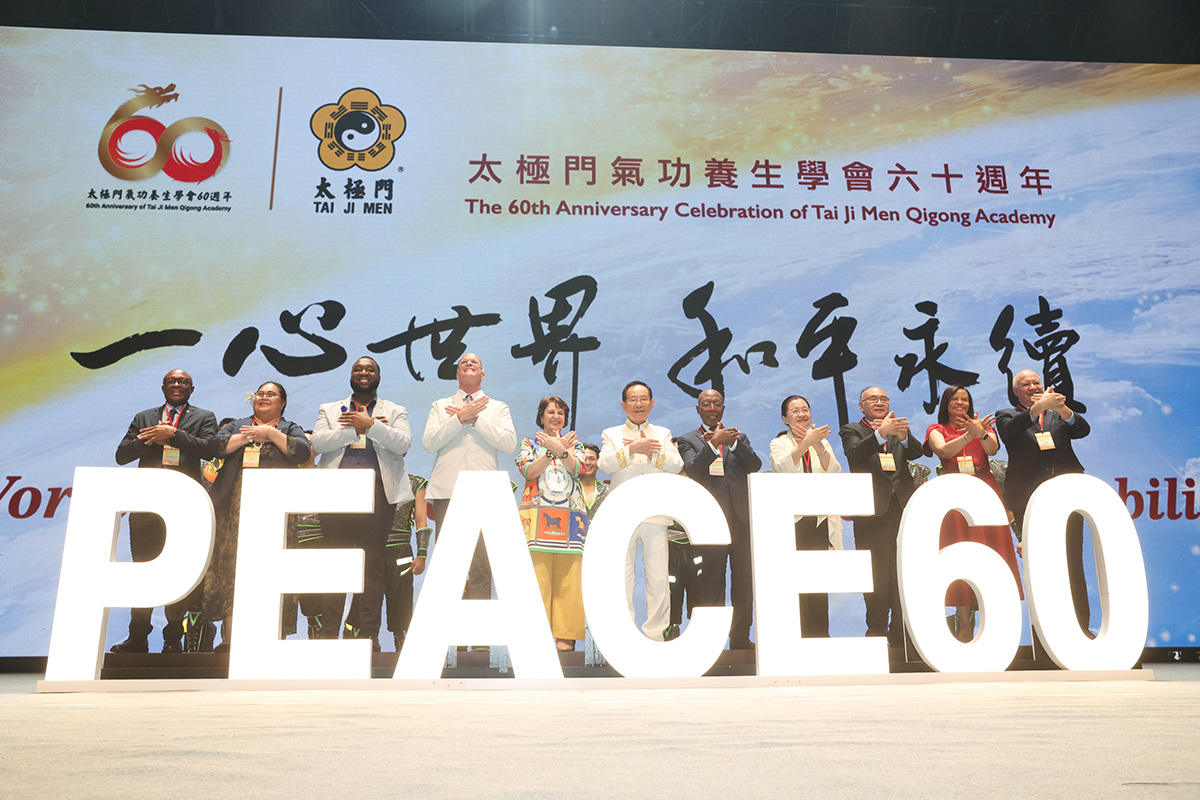
Fostering a More Humane World: The 28th Eurasian Economic Summi
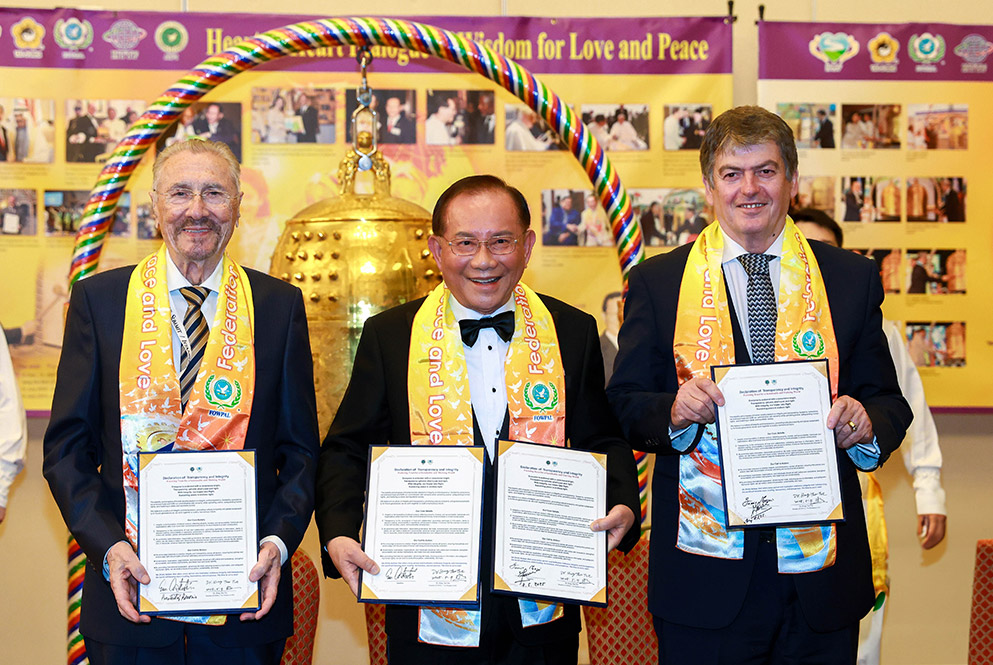
Conscience, Hope, and Action: Keys to Global Peace and Sustainability
Puppet Show I International Friendship Day 2020