World
Following His Visit to China, Lee Jae-myung to Visit Japan on the 13th to Meet Takaichi; Japan–South Korea–China Relations in the Spotlight

The governments of Japan and South Korea announced simultaneously on the 9th that South Korean President Lee Jae-myung will travel to Nara Prefecture, the hometown of Japanese Prime Minister Sanae Takaichi, from the 13th to the 14th for a two-day official visit, during which talks will be held in Japan. This trip is part of the regular reciprocal “shuttle diplomacy” between Japanese and South Korean leaders, aimed at continuing the improvement of bilateral relations in recent years and strengthening coordination amid a complex regional security environment.
The Blue House stated that the talks are expected to cover regional and international issues, as well as ways to enhance cooperation in areas directly related to people’s livelihoods, including the economy, society, and culture. The South Korean side hopes that the meeting will create opportunities for humanitarian cooperation on historical issues between the two countries, and discussions may also include China’s export control measures affecting Japan. How Lee Jae-myung, who has just concluded a visit to China, will manage relations among South Korea, China, and Japan has become a focus of public attention.
Against the backdrop of continued pressure from China, the Takaichi cabinet has launched this year’s “Takaichi diplomacy.” In addition to President Lee Jae-myung of South Korea and Italian Prime Minister Giorgia Meloni visiting Japan next week, Defense Minister Shinjiro Koizumi and Finance Minister Satsuki Kataoka are scheduled to visit the United States, while Foreign Minister Toshimitsu Motegi will travel to the Middle East. Amid deteriorating Japan–China relations and adjustments in U.S. diplomatic priorities, Japan is strengthening cooperation with like-minded countries through intensive diplomacy to enhance its international presence.
- 198 reads
Helping Young Families Achieve Homeownership Dreams: Trump Plans to Ban Wall Street Investment Firms from Hoarding Homes
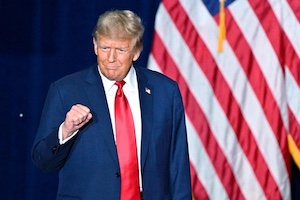 Media reports say that U.S. President Donald Trump on the 7th plans to roll out another new housing policy. He told the media that he would ban large institutional investors from purchasing additional single-family homes and urged Congress to legislate on the matter. Media analysis suggests this move is an opening step by the Trump administration to address the U.S. housing crisis, with the aim of helping young families realize their dreams of homeownership.
According to the reports, since the 2008 financial crisis, tens of thousands of single-family homes in the United States have gone into foreclosure. Wall Street investment firms took advantage of the situation by buying these properties and renting them out. At the peak in 2022, investors purchased as much as one-quarter of all single-family homes on the market, a factor widely seen as exacerbating the tightening of housing supply. Housing rights advocates point out that institutional investors often bid with all-cash offers, making it difficult for first-time buyers to compete, further reducing the number of homes available for sale and driving up local housing prices.
The reports also note that Trump’s proposed measure would not only impact real estate investments by private equity funds but also place greater pressure on homebuilders, signaling that the government is actively responding to public concerns over high housing costs. If implemented, the policy would introduce new uncertainties for builders and the broader housing market. However, some media analysts argue that on a national level, these investment firms own only about 3% of residential housing, so the overall impact on the U.S. housing market is likely to be limited.
- 181 reads
Snowstorm Sweeps Across Europe: Netherlands Cancels 600 Flights, Transportation Paralyzed; 5 Dead in France

Recently, severe snowstorms and intense cold weather have swept across multiple countries in Europe, causing significant disasters. Airports in the Netherlands have already canceled over 400 flights, with an expected 600 more flights also being forced to cease operations. Both road and rail transportation have been severely affected, leaving thousands stranded at airports. France has also been hit by snowstorms, leading to multiple traffic accidents and at least five fatalities.
France continues to be enveloped in frigid weather, with snowfall in the Paris region and across the country, followed by freezing night temperatures. Six small airports in the west and north have been closed due to icy conditions. In the southwest department of Landes, two accidents resulted in three deaths due to icy roads. In the Paris region, two individuals also lost their lives—one in a collision with a heavy truck, and the other when a taxi skidded on the snow and fell into the Marne River. Bus services in Paris were suspended but have gradually resumed, although the situation remains chaotic.
To clear snow from the runways, Charles de Gaulle Airport announced that 40% of flights would be canceled on the morning of the 7th. Orly Airport is also planning to cancel one-quarter of flights during the same period. The meteorological department has warned that the severe weather is expected to continue until the 7th. Landmark sites in France, such as the Eiffel Tower and the Palace of Versailles, have been covered in heavy snow.
French Transport Minister Philippe Tabarot stated that snow is expected again on the evening of the 6th through the 7th and urged the public to avoid driving if possible. The French meteorological department has issued an orange alert for 38 administrative regions, and multiple railway lines have announced suspensions.
The Netherlands has also been continuously affected by snowstorms, with streets blanketed in snow. Amsterdam, being one of the major transit hubs in Europe, has seen transportation paralyzed for five consecutive days due to the stormy conditions and low temperatures. Schiphol Airport is facing the worst situation, having canceled over 400 flights on the 7th, with another 600 flights expected to be grounded. A large number of passengers are stranded at Amsterdam Airport, unable to transfer to subsequent flights. KLM Royal Dutch Airlines has warned that, due to extreme weather and supply delays, de-icing fluid is nearly exhausted.
This morning, temperatures in southern and eastern Germany fell below minus 10 degrees Celsius, with many areas covered in snow, including regions close to the North Sea. Meteorologists predict a wave of storms will hit on the 9th, potentially bringing heavy snowfall to the north and east.
The United Kingdom has also experienced its coldest temperatures since winter began, with some areas receiving up to 15 centimeters of snow. The meteorological unit estimates that a new wave of storms is imminent. The UK Met Office has issued snow and ice warnings for areas including Scotland and Northern Ireland, warning that the next storm is expected to bring strong winds and snow starting on the 8th local time.
- 184 reads
Fighting Childhood Obesity: UK Introduces Ban on Junk Food Advertising
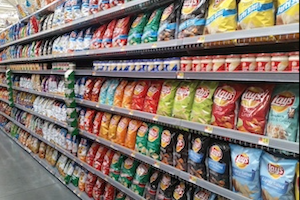
To curb the increasingly severe problem of childhood obesity, the UK government has described this policy as a “world-leading health initiative” and announced that it will implement the strictest food advertising restrictions in the world starting January 5. The new measures aim to significantly reduce young people’s exposure to advertisements for foods high in fat, sugar, and salt (HFSS), creating a healthier food environment for children and seeking to correct dietary habits at their source.
Under the new rules, UK television channels will face advertising time restrictions, with a complete ban on unhealthy food advertisements before 9:00 p.m., during peak viewing hours. On digital platforms such as YouTube, Facebook, and Instagram, the policy goes even further, introducing a “24-hour ban” on all paid junk food advertising. As early as the end of 2024, the UK had already imposed higher sugar taxes on sugary drinks, milkshakes, and sweetened yogurts, gradually establishing a stringent nutrition management system.
In addition, local governments are authorized to restrict fast-food outlets from opening or operating near schools. Government officials note that nearly one-third of school-age children in the UK are currently overweight, a situation that not only harms public health but also places a heavy financial burden on the healthcare system.
Although the food and advertising industries have expressed concerns about potential economic impacts, the medical community and public interest groups have widely praised the policy. They argue that children are highly susceptible to the influence of attractive advertising, which can trigger impulsive consumption, and view the legislation as a major milestone in protecting the health of future generations. The UK’s move has attracted international attention, and its effectiveness is expected to serve as an important reference for other countries when shaping health policies.
- 180 reads
Trump Vows to Take Over Greenland as Denmark Urges an End to Threats

A recent U.S. military raid on Venezuela that reportedly led to the capture of President Nicolás Maduro has sent shockwaves around the world. In the aftermath, U.S. President Donald Trump once again reiterated that Greenland should be incorporated into U.S. territory. Danish Prime Minister Mette Frederiksen issued a stern warning that any U.S. attempt to annex Greenland by force would amount to the collapse of NATO. Greenland’s Prime Minister, Múte Bourup Egede, also responded, saying Trump’s remarks were disrespectful to Greenland and stressing that the island is not a commodity for sale.
In an interview with The Atlantic, Trump again claimed that “the United States needs Greenland.” Concerns were further heightened after the wife of one of Trump’s aides posted an image on social media showing the U.S. flag draped over Greenland. In a statement, Denmark’s prime minister described such rhetoric as “utterly absurd” and urged the United States to stop threatening its allies and other peoples. Greenlandic officials added that comparing Greenland to U.S. military intervention in Venezuela was completely wrong and unacceptable.
Leaders in both Denmark and Greenland have called for calm and unity, emphasizing that Greenland cannot simply be conquered. Trump, however, told reporters aboard Air Force One that from a national security perspective, the United States needs Greenland, and hinted that the issue would be revisited in the coming months. His remarks have intensified fears that Washington may take action regarding Greenland in the near future, potentially dealing a further blow to NATO and the European security order.
- 176 reads
Lee Jae-myung Arrives in Beijing for Four-Day Visit, Meets Xi Jinping for Second Time in Two Months
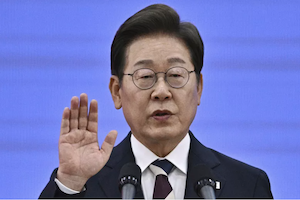
South Korean President Lee Jae-myung arrived in Beijing on the 4th to begin a four-day visit to China, marking the first visit by a South Korean president since 2019. On the 5th, Lee is scheduled to meet Chinese President Xi Jinping, attend a business forum, and hold talks with Premier Li Qiang, before traveling to Shanghai on the 6th.
More than 200 leading South Korean business figures are accompanying the delegation, including Samsung Electronics Chairman Lee Jae-yong, SK Group Chairman Chey Tae-won, and Hyundai Motor Group Chairman Chung Eui-sun. Discussions are expected to cover supply chain investment, the digital economy, and cultural exchanges.
According to reports, the Lee–Xi meeting will focus on trade, economic cooperation, and security issues, with Seoul hoping Beijing will play a stabilizing role amid rising regional tensions. Analysts note that recent U.S. military action against Venezuela, North Korea’s renewed missile tests, and heightened China–Japan friction over a potential Taiwan contingency have made the geopolitical environment more sensitive. This will be the second meeting between Lee and Xi within two months, signaling Beijing’s intent to strengthen economic cooperation and tourism exchanges with South Korea.
The trip is also Lee’s first visit to China since taking office in June last year, coinciding with a period of heightened global tensions after U.S. President Donald Trump confirmed U.S. strikes on Venezuela and North Korea launched multiple ballistic missiles on the 4th. Analysts suggest that amid strained China–Japan relations, Beijing may be more inclined to deepen engagement with Seoul to keep supply chains running smoothly.
Markets are closely watching three key issues from the Xi–Lee talks: whether South Korea will propose concrete measures to narrow its trade deficit with China, how both sides will manage sensitive issues such as North Korea and Taiwan, and Washington’s response. Whether Beijing will ease restrictions on South Korean content and tourism has also drawn attention, as Seoul adopts a more cautious diplomatic strategy while balancing its ties with the United States and Japan.
- 197 reads
Iran Protests Continue as Trump and Senior Tehran Officials Trade Barbs
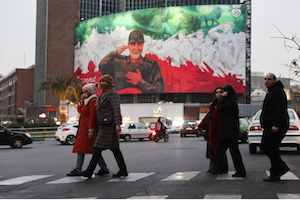
As Iran’s currency, the rial, has plunged sharply, inflation has surged and living conditions have deteriorated, large-scale economic and anti-government protests have erupted across multiple parts of the country. The demonstrations have entered their sixth day, spreading from the capital Tehran to several other towns and cities, and have led to clashes with security forces. At least seven people have been killed, with dozens injured or detained, marking the most significant wave of unrest since the nationwide protests sparked by the death of Mahsa Amini in 2022.
Protesters are no longer focused solely on economic grievances. Some crowds have chanted overtly anti-government slogans, while police and security forces have at times responded with live ammunition, drawing heightened domestic and international attention.
U.S. President Donald Trump posted on his social media platform Truth Social, stating: “If Iran shoots peaceful protesters as it usually does, the United States will come to rescue them. Our bullets are loaded and ready.” The remarks were widely interpreted as a direct warning to the Iranian government, implying that Washington could resort to military or other forms of action if necessary to protect demonstrators. Following Trump’s comments, the U.S. State Department publicly shared videos of the protests and voiced support for the “courage and determination” shown by the Iranian people.
Senior Iranian official Ali Larijani, a former speaker of parliament and currently secretary of the Supreme National Security Council, accused the United States and Israel of inciting the protests. He warned that “U.S. interference in Iran’s internal affairs will lead to chaos across the entire region and the destruction of American interests. The American people should take care of their own soldiers.”
Iran’s Foreign Ministry condemned Trump’s remarks as provocative and threatening, accusing Washington of escalating regional tensions. Officials said that if the United States were to intervene, Iran would respond with swift, comprehensive and decisive countermeasures.
Some reports also noted that Iran’s leadership views the United States and its regional military presence as potential “legitimate targets,” and has not ruled out retaliation should such actions be deemed hostile.
Iran’s ambassador to the United Nations has submitted a formal letter of protest to the UN secretary-general and the Security Council, describing the U.S. president’s statements as “reckless and inflammatory threats,” and urging the international community to condemn the remarks to prevent further deterioration of the situation.
The current wave of protests was triggered by economic hardship and currency depreciation but has quickly evolved into broader social and political discontent. While bearing similarities to the protests following Mahsa Amini’s death in 2022, the unrest has not yet spread to every province nationwide. U.S.-Iran tensions have been steadily rising since U.S. airstrikes on Iranian nuclear facilities last year, and the latest protests and war of words have once again intensified the confrontation between the two sides.
- 136 reads
FOWPAL Hosts Global Virtual Event for World Mental Health Day 2025
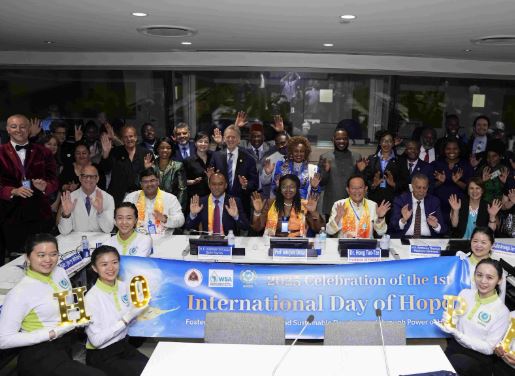
- Read more
- 1115 reads
Switzerland Adds Stalking Offence to Criminal Code in 2026, with Penalties of Up to Imprisonment

The Swiss federal government has announced that, starting from January 1 this year, stalking behavior will be formally incorporated into the Swiss Criminal Code. Under the new provisions, anyone who persistently follows or harasses another person may face a maximum sentence of up to three years’ imprisonment or a fine in lieu of imprisonment. The main objective is to strengthen protection for victims in response to the continued rise in such cases in recent years.
According to a 2022 survey by the Swiss Crime Prevention agency (SKPPSC), about 2% of the national population had experienced stalking within the past five years. Such incidents occur across all segments of society, affecting both men and women in various gender combinations.
From a gender distribution perspective, women are more likely to become victims. Based on statistics from the Canton of Bern in 2023, 87% of stalking victims were women, 41% of perpetrators were former partners, and cases of men stalking women were significantly more common than women stalking men.
Analysis of motivations indicates factors such as revenge, hatred, and a strong need for recognition or attention. Most stalking cases are not short-lived; they may last for months or even years, and in extreme cases for decades. With technological advancements, methods of harassment have also become more diverse.
SKPPSC emphasizes that early reporting is crucial for protecting victims. Once the police or relevant authorities intervene, many stalking cases come to an end. Early intervention also reduces the risk of victims suffering severe and long-term harm. Victim support centers are currently available throughout Switzerland, providing immediate assistance and legal counseling.
- 1582 reads
Explosion at Alpine Bar in Switzerland on New Year’s Eve Causes Heavy Casualties

In the early hours of New Year’s Day, an explosion and fire broke out at a bar in the Alpine ski resort of Crans-Montana in Valais, Switzerland. Local media and police reported severe casualties at the scene. The incident occurred during a New Year’s Eve party, with an estimated crowd of more than 100 people. Police said dozens may have been killed and more than 100 injured.
Witnesses said the fire spread rapidly, and panic during attempts to escape led to crowd surges. The interior of the bar was chaotic. The injured were transported by emergency services to nearby hospitals, with some in critical condition. Authorities said the exact cause of the explosion is still under investigation, and accidental factors have not been ruled out. Police also stated that terrorism is unlikely, and the current focus is on identifying the deceased and providing medical care.
Swiss officials announced a five-day national mourning period, as the government and rescue agencies work to handle the aftermath. The Valais police chief said identifying the victims could take several days and that families have been notified. Authorities have cordoned off the affected area and imposed flight restrictions in the surrounding airspace to facilitate rescue and investigative operations.
- 132 reads
Human Rights

Fostering a More Humane World: The 28th Eurasian Economic Summi

Conscience, Hope, and Action: Keys to Global Peace and Sustainability
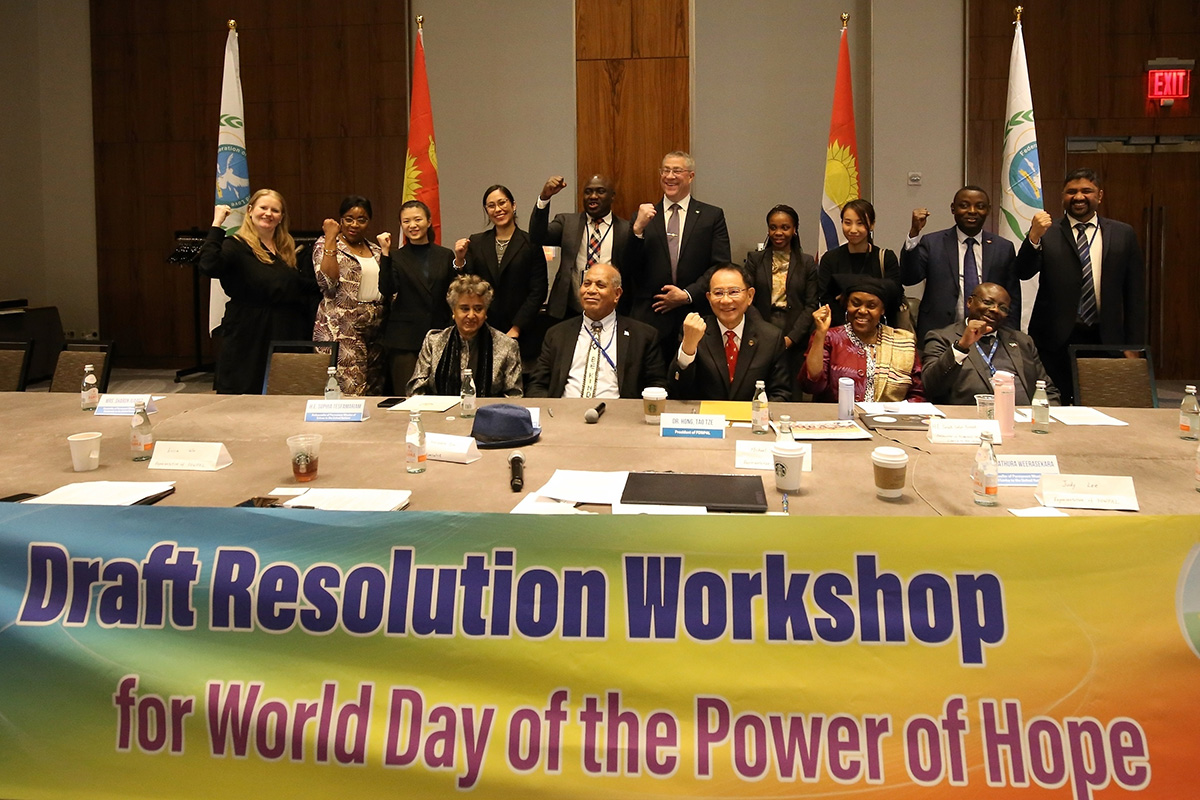

Puppet Show I International Friendship Day 2020