World
Torrential Rains Devastate Southeast Asia, Leaving Over 600 Dead

Days of torrential rain have caused severe disasters across Southeast Asia, with more than 600 deaths reported in Indonesia, Thailand, and Malaysia. Indonesia has suffered the heaviest losses, with 435 fatalities. Massive landslides and floods have struck three provinces including West Sumatra, cutting off transportation and communications and leaving some areas completely isolated. Authorities have deployed helicopters to air-drop supplies and assist stranded residents. According to official statistics, 406 people remain missing, over 210,000 have been displaced, and some disaster-hit regions have even reported incidents of looting.
Thailand’s Ministry of Public Health reported that the death toll has risen to 170, with 102 people injured. The southern province of Songkhla has been hit the hardest. Hat Yai, the largest city in the province, recorded 335 millimeters of rainfall on November 21 alone—a 300-year record for the area. Flooding triggered by the torrential rains has severely disrupted residents' daily lives, and rescue operations are still underway.
Malaysia has reported three deaths, with around 18,700 people still sheltered in emergency evacuation centers. Meteorological authorities have lifted the tropical storm warning, and weather conditions in most areas are expected to gradually improve. The Ministry of Foreign Affairs stated that over 6,200 Malaysian tourists stranded in Thailand were assisted in evacuating last week, while one Malaysian national remains missing in West Sumatra.
Notably, Sri Lanka was also struck by Cyclone Ditva, which caused 334 deaths, left nearly 400 people missing, and affected more than one million people.
- Read more
- 192 reads
Netanyahu, Facing Legal Troubles, Seeks Pardon from Israeli President
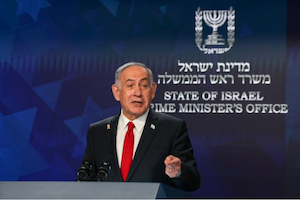
The office of Israeli President Isaac Herzog confirmed on the 30th that Prime Minister Benjamin Netanyahu has formally submitted a request for a presidential pardon in hopes of ending the years-long corruption proceedings against him. Netanyahu denies all charges and has entered a plea of not guilty.
According to reports, former U.S. President Donald Trump previously sent a letter to Herzog urging him to grant Netanyahu a pardon.
Herzog’s office stated that this “unusual and far-reaching” request is now under review, and the president will make a decision “responsibly and honestly” after gathering input from all sides. As for requests for comment, Netanyahu’s office has yet to respond.
- 161 reads
Peru Declares State of Emergency as Migrant Surge Hits Border
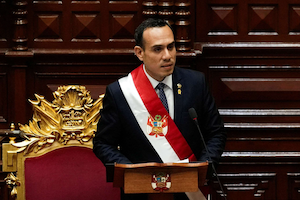
Peruvian President José Jerí announced on the 28th that the Tacna region in the country’s south, which borders Chile, will be placed under a 60-day state of emergency. During this period, the Peruvian military will assist the police in tightening border controls. Peru stated that the move is mainly intended to address a potential influx of migrants and security threats stemming from Chile’s political situation.
The trigger for this development is Chile’s upcoming presidential election and the tough anti-immigration rhetoric of far-right candidate José Antonio Kast. During the campaign, Kast repeatedly expressed strong anti-immigrant positions, even issuing an ultimatum to the roughly 330,000 undocumented migrants in Chile, warning that if elected, illegal migrants must leave voluntarily within a few months or face deportation. Many of these undocumented migrants are Venezuelans fleeing their country’s economic collapse. Kast’s remarks have caused panic among them, prompting large numbers to try to cross the border into Peru before the Chilean government takes action.
Media outlets and government agencies in the Peruvian border region have reported that dozens of migrants are already stranded at Chilean border checkpoints, eager to enter Peru but lacking the necessary documents. The Peruvian government is concerned that a surge of migrants could bring a range of security and social challenges.
Chile, one of the most stable and affluent nations in South America and the region’s first OECD member, has experienced a major influx of migrants in recent years. Most come from Venezuela, along with others from Colombia, Ecuador, and Bolivia. Rising concerns over migrant-related crime and pressure on public resources have fueled domestic discontent, making immigration a central issue in this presidential election. Peru’s border emergency highlights not only the ongoing migration crisis across South America but also the diplomatic strains and humanitarian challenges that unilateral actions can create in the absence of regional consensus.
- 181 reads
In Response to Russian Threats, France to Reinstate Voluntary Military Service Next Year

French President Emmanuel Macron on the 27th formally announced that, in response to increasingly serious international threats, France will reinstate the voluntary military service system—abolished nearly 30 years ago—to encourage young people to enlist and strengthen the nation’s defense capabilities.
The program is scheduled to begin in the summer of 2026, recruiting 3,000 volunteers aged 18 to 19, with an upper age limit of 25. Both men and women may apply, and the service period will be ten months. A small number of older applicants with specialized backgrounds—such as in medicine or engineering—may also participate. Monthly pay will be at least 800 euros (about NT$30,000). The number of recruits will increase each year, with plans to expand to 10,000 by 2030 and 50,000 by 2035. The total budget for the program is 2 billion euros (about NT$73.5 billion).
Recruitment will be entirely voluntary and candidates will be selected based on the needs of the armed forces. To strengthen reserve capabilities, volunteers will only be assigned to missions within France in order to enhance national defense readiness. France currently has 200,000 active-duty soldiers and 47,000 reservists; these numbers are expected to grow to 210,000 and 80,000 respectively by 2030.
- Read more
- 206 reads
Australia’s Under-16 Social Media Ban Takes Effect in December; Civil Group Files Suit to Stop It

Media reports say that starting December 10, Australia will require social media platforms such as Facebook, Instagram, and TikTok to shut down the accounts of users under 16 years old. Platforms that fail to comply could face fines of up to 49.5 million AUD (about 1 billion NTD). On the 25th, the digital rights group *Digital Freedom Project* announced that it had taken legal action in an attempt to block the ban from taking effect.
According to the reports, the Digital Freedom Project stated that it had filed a lawsuit in the High Court of Australia together with two 15-year-old teenagers, arguing that the regulation constitutes unequal treatment in terms of freedom of expression. The group claims the ban directly infringes on young people’s right to political communication, depriving millions of young Australians of access to the “modern town square.”
Reports also note that Snapchat has announced that starting this week, users will be required to verify their age. Verification can be completed through an Australian bank account, government-issued ID, or by taking a facial photo through which a third party will estimate the user’s age range. Australia’s regulation banning children and teens under 16 from using social media has drawn significant global attention.
---
- 170 reads
Zelensky Agrees to Core Terms of Peace Deal; Sensitive Issues Still Await Face-to-Face Talks with Trump

Ukrainian President Volodymyr Zelenskyy on the 25th held a virtual meeting with the 35-member countries of the “Coalition of the Willing,” including the U.K., France, and the U.S. Secretary of State, Marco Rubio, to discuss progress on the U.S.-initiated Russia-Ukraine ceasefire peace agreement. Zelenskyy expressed willingness to exchange views directly with Donald Trump and hoped to continue working with Europe and the United States to advance the ceasefire within the established framework discussed in Geneva.
Zelenskyy emphasized that “Ukraine must be involved in discussions regarding its own security guarantees.” He argued that the U.S. and Russia should not make decisions without Ukraine present; otherwise, future implementation may be difficult. He reiterated that unless Russia signals willingness to cease fire, the West should continue to provide military assistance to Ukraine, maintain sanctions against Russia, and make proper use of frozen Russian assets.
Among the 28 provisions drafted by U.S. and Russian officials, the possibility of NATO troops being stationed on Ukrainian territory was excluded. However, the leaders of the U.K. and France insisted that deploying a multinational ground force in Ukraine would help deter further aggression. This has caused serious divisions among Western allies: Sweden, Denmark, and Australia signaled willingness to participate, while Poland, Greece, and Italy expressed opposition. Zelenskyy hopes European and American countries can establish a viable framework for deploying the “Reassurance Force Ukraine of the Coalition of the Willing” and proceed with signing a memorandum of understanding (MOU).
The online meeting on the 25th took place just hours after Ukraine and the United States reached a “consensus” on the core terms of the peace agreement during bilateral talks. The most sensitive issues in the agreement remain unresolved and await an in-person meeting between Zelenskyy and Trump, the date of which has not yet been announced. Zelenskyy stated, “I am ready to meet with President Trump—there are still some sensitive issues to discuss, and we believe having European leaders present might be helpful,” suggesting he may travel to the U.S. together with other European leaders.
- 167 reads
Trump Launches “Genesis Mission” to Accelerate AI Research

U.S. President Donald Trump signed an executive order on November 24, officially launching the “Genesis Mission,” aimed at accelerating the development and application of artificial intelligence (AI) technologies and strengthening America’s leadership in the global AI race.
According to foreign media reports, Michael Kratsios, the Director of the White House Office of Science and Technology Policy, stated that the initiative will coordinate research across government agencies, fully integrate AI tools, and open federal databases and provide access to the Department of Energy’s national laboratory computing resources. These efforts are expected to significantly shorten the time required to achieve scientific breakthroughs.
A senior official, speaking anonymously, revealed that the Genesis Mission will collaborate with private-sector companies such as Nvidia, Dell, HPE, and AMD to enhance the supercomputing capabilities of national laboratories. The initiative aims to advance innovation in materials engineering, health sciences, and energy, thereby boosting productivity and lowering prices through technological innovation in response to voter concerns over rising living costs.
However, the energy-hungry data centers required for AI development have sparked concerns about strain on the power grid. Energy Secretary Jennifer Granholm emphasized that one of the mission’s ultimate goals is to increase energy supply, improve grid efficiency, and reduce energy costs. “We will curb the continued rise in energy prices and ultimately put downward pressure on electricity rates,” she said.
Department of Energy Chief of Staff Paul M. Dabbar noted that the Genesis Mission highlights the Trump administration’s strong focus on the AI technology race, calling it as significant as the Manhattan Project and the space race. Trump has repeatedly underscored the strategic value of AI, planning to make it a top priority in Washington, and intends to relax regulations through executive action while promoting unified federal standards to prevent states from enacting their own separate legislation. Reportedly, Trump is prepared to file lawsuits against state-level AI regulations deemed unconstitutional.
- 139 reads
U.S. Government Efficiency Office to Be Dissolved; Official Says Remarks Misinterpreted
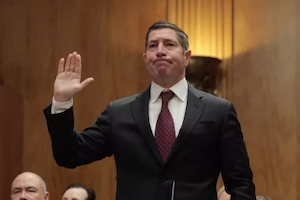
Scott Kupor, Director of the U.S. Office of Personnel Management (OPM), recently confirmed in an interview that the “Department of Government Efficiency” (DOGE)—established by President Donald Trump at the beginning of his term and led by Elon Musk—is set to be dissolved. He noted that DOGE is no longer a “centralized entity,” and that some of its functions have been taken over by OPM. However, Kupor later clarified on social media that the Reuters report had taken his remarks out of context, stressing that DOGE remains operational and continues to advance deregulation efforts and combat fraud and waste.
DOGE was created in January, with Trump declaring its mission to pursue “major structural reforms,” including budget cuts and the elimination of bureaucratic agencies, and was originally slated to operate through July 2026. Musk co-led the office with entrepreneur Vivek Ramaswamy, but resigned after only four months due to friction with White House officials and public criticism of Trump’s policies. Following his departure, the office’s future came under scrutiny, and some staff members began leaving or seeking new positions.
Reports from Reuters and other media outlets indicate that Trump has recently referred to DOGE in the past tense, and staff have been gradually transferring to other government entities, including the newly established “National Design Studio” launched in August. Acting director Amy Gleason also moved in March to become an adviser at the Department of Health and Human Services. Although no formal dissolution has been announced, many observers believe DOGE has steadily faded from the center of government operations.
- 151 reads
Guinea-Bissau Elects New President as People Hope for Stability After Years of Turmoil

Western African nation Guinea-Bissau headed to the polls on the 23rd after three weeks of relatively calm campaigning, as voters chose a new president in hopes of ending years of political turmoil. However, the exclusion of the country’s largest opposition force has cast a political shadow over the election.
According to AFP, roughly 860,000 registered voters are selecting from 12 candidates, with “stability” emerging as the central theme of the race. Since gaining independence from Portuguese colonial rule, Guinea-Bissau has experienced repeated political upheaval, including four coups and several attempted coups, leaving the nation persistently fragile.
Improving living conditions is among citizens’ most urgent demands, as public services—including healthcare, education, and infrastructure—are in dire need of upgrades. Employment, anti-poverty measures, combating corruption, and curbing drug trafficking are also major voter concerns. With a population of just 2.2 million, nearly 40% of residents live in extreme poverty, placing the country among the poorest in the world. Persistent instability has also turned Guinea-Bissau into a key transit hub for drug smuggling between Latin America and Europe, further complicating governance efforts.
Polling stations were open from 7 a.m. to 5 p.m. local time (0700 GMT), and preliminary results are expected no later than the 27th. Incumbent President Umaro Sissoco Embaló, 53, is considered the frontrunner, and if re-elected, he would become the first president to serve two consecutive terms since the country adopted multiparty democracy in 1994.
His main challenger, opposition candidate Fernando Dias, is backed by the powerful but disqualified African Party for the Independence of Guinea and Cape Verde (PAIGC). This election marks the first time in the nation’s history that the PAIGC did not appear on the ballot. The party led Guinea-Bissau to independence in 1974 and dominated politics for decades. PAIGC leader Domingos Simões Pereira recently returned from exile, but the Supreme Court ruled that both the party and Pereira had missed submission deadlines for legislative and presidential candidacies, which resulted in their disqualification.
- 144 reads
Trump Urges Ukraine to Cede Territory for Peace, Putting Zelensky in a Dilemma
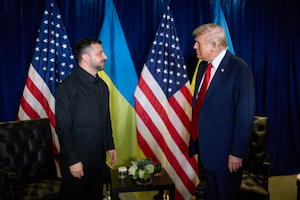
In recent days, the Trump administration has presented Ukraine and Russia with a draft peace proposal containing roughly 28 points, aiming to end the full-scale conflict that has continued since 2022. Once the proposal was revealed by Western media, it immediately triggered strong reactions from Kyiv and its allies.
The first to feel the shock was undoubtedly Ukrainian President Volodymyr Zelensky. For him, this so-called “peace” proposal appears both as a possible exit from a long and exhausting war and as a knife pressed against his throat. Pressure from the United States, anxiety from allies, and public outrage at home have combined to create an unprecedented dilemma, forcing Ukraine to make decisions within an extremely short timeframe.
The Trump administration’s plan has been described as “pragmatic but tilted toward Russian interests.” It calls on Ukraine to relinquish control of parts of its eastern territory—such as Donbas—reduce its military to 600,000 troops, and abandon its bid to join NATO. Frozen Russian assets would serve as the main source of future reconstruction funds. The U.S. has signaled it wants a response within a short deadline. The core idea is an immediate ceasefire and cessation of hostilities, with conditions resting on significant strategic concessions from Ukraine. For a country ravaged by war, “peace” is undeniably tempting—but the price may be national dignity, long-term security, and territorial integrity.
Responding to the proposal, Zelensky admitted that Ukraine is facing “one of the most difficult moments in its history,” saying he is being forced to choose between “losing the dignity of the nation” and “losing one of its most important international partners.” He knows the United States is irreplaceable for Ukraine. The Trump administration has hinted that if Kyiv outright rejects the plan, future military aid and intelligence support may be reduced or reconsidered. While European allies generally support Ukraine, their military capacity and political will have limits and cannot quickly compensate for a potential U.S. shortfall.
However, within Ukraine, trading land for peace has always been taboo. Since the war began, countless families have lost loved ones, and cities have been turned into ruins. Abandoning territory not only means acknowledging gains Russia achieved through force; it may also be seen as “betraying the fallen.” Polls have consistently shown that most Ukrainians oppose ceding territory, even under dire wartime conditions. If Zelensky accepts the plan, he will face intense public backlash and fierce attacks from political opponents—potentially destabilizing his leadership.
European nations find themselves in a similar bind. Although some leaders privately acknowledge that the U.S. proposal could serve as a starting point for negotiations, they insist that any agreement must not legitimize Russia’s use of military force to redraw European borders. Germany and France argue that Ukraine’s security must be institutionally guaranteed; otherwise, any ceasefire would be only a temporary pause before renewed conflict. Excessive Western concessions now, they warn, could undermine future security in Eastern Europe and even the broader NATO framework.
Meanwhile, Russia’s stance has remained relatively predictable. Moscow has long sought Ukraine’s demilitarization and neutrality, and it aims to solidify control over eastern regions. For Russia, certain elements of the U.S. plan amount to partial realization of its wartime objectives. If Ukraine accepts, Russia could legitimize its territorial gains through a “peace agreement.” If Ukraine refuses, Moscow could exploit any rift between Kyiv and Washington to strengthen its position both on the battlefield and diplomatically.
The most likely scenario moving forward is that Ukraine will present a revised version of the proposal before the deadline—avoiding a direct rejection while seeking stronger security guarantees and adjustments on territorial issues. This would prolong negotiations and force the U.S., Europe, and Ukraine to renegotiate a less contentious framework. If the Trump administration proves willing to revise certain terms—especially regarding territory and NATO—some form of “phased peace” may still emerge.
But if Ukraine ultimately refuses the deal and the U.S. responds by scaling back aid, the battlefield situation could worsen. Over the past year, Ukrainian forces have faced ammunition shortages and compressed defensive lines. Reduced assistance could allow Russian forces to make additional gains in the short term. This would push Ukraine into even more difficult choices—potentially forcing it to negotiate later from an even weaker position.
If Ukraine ultimately accepts the agreement, the war may quickly de-escalate and open the door to large-scale reconstruction. Yet such a peace would be fraught with concerns: if Russia regains strength in the future, or if Ukraine’s security architecture lacks firm guarantees, conflict could return. Trust in the government, social cohesion, and political stability within Ukraine would also face serious tests.
The controversy surrounding this peace proposal marks a new turning point in the Ukraine war. Zelensky’s decision is not merely a strategic calculation—it is a high-stakes political gamble that will shape the country’s destiny. In the coming weeks, as the proposal is revised, allies adjust their positions, and Russia issues its responses, the entire trajectory of the war may shift. How a nation balances survival, security, and dignity will remain at the center of global attention.
- 159 reads
Human Rights

Fostering a More Humane World: The 28th Eurasian Economic Summi

Conscience, Hope, and Action: Keys to Global Peace and Sustainability

Puppet Show I International Friendship Day 2020