Science
Nano-paper filter removes viruses

The illustration shows the nanofibers in white and the virus in green.
- Read more
- 438 reads
Heat-conducting polymer cools hot electronic devices at 200 degrees C

This scanning electron microscope image shows vertical polythiophene nanofiber arrays grown on a metal substrate. The arrays contained either solid fibers or hollow tubes, depending on the diameter of the pores used to grow them.
- Read more
- 490 reads

Research Clarifies Health Costs of Air Pollution from Agriculture
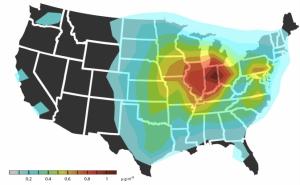
The map shows increase in annual mean surface concentration of particulate matter resulting from ammonia emissions associated with food export. Populated states in the Northeast and Great Lakes region, where particulate matter formation is promoted by upwind ammonia sources, carry most of the cost.
- Read more
- 373 reads
Scientists solve riddle of celestial archaeology
2520Exoplanet%25201%2520small.jpg" width="300" height="240" alt="WD%20Exoplanet%201%20small.jpg" />
Artist’s impression of debris around a white dwarf star.
- Read more
- 364 reads
Seasonal Arctic summer ice extent still hard to forecast, study says
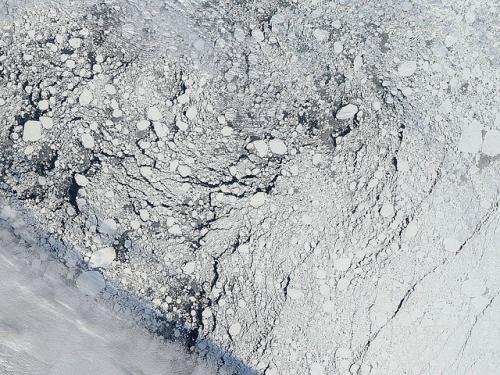
An image of an area of the Arctic sea ice pack well north of Alaska, captured by the MODIS instrument on NASA's Aqua satellite on Sept. 13, 2013, the day before the National Snow and Ice Data Center estimated Arctic sea ice to have reached its minimum extent for the year. A cloud front can be seen in the lower left, and dark areas indicate regions of open water between sea ice formations.
- Read more
- 392 reads
Nestor: unravelling the universe’s mysteries from the bottom of the sea
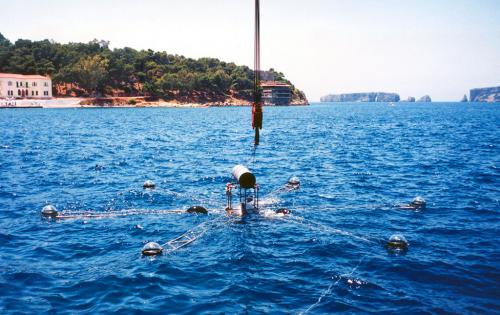
In Pylos an underwater telescope is being developed to help track neutrinos.
- Read more
- 397 reads
Revolutionary solar cells double as lasers

This is an image of the laboratory in which the research was conducted.
- Read more
- 369 reads
Harper Government Announces Support for U of S Nanoscience Research: Uses for New Nanostructured Coatings Range from Biomedical to Oil Sand Sectors
The $183,946 investment from Western Economic Diversification Canada (WD) will help Canada Research Chair in Nanoengineering Coating Technologies and Professor of Mechanical Engineering, Qiaoqin Yang, and her team purchase specially-made equipment that will apply the coatings to the surfaces of the components for testing and demonstration. Four industry-specific coating prototypes will be tested, for projects such as solar energy systems, artificial joints, and mining and oil sands equipment. The coatings will be comprised of new, extremely durable advanced materials.
- Read more
- 396 reads
High-quality nanometric bilayers prepared by aqueous solutions

Quality comparison of the 15 nanometres layers obtained by PAD (chemical deposition) or PLD (pulsed laser deposition).
- Read more
- 479 reads
Human Rights
Fostering a More Humane World: The 28th Eurasian Economic Summi

Conscience, Hope, and Action: Keys to Global Peace and Sustainability
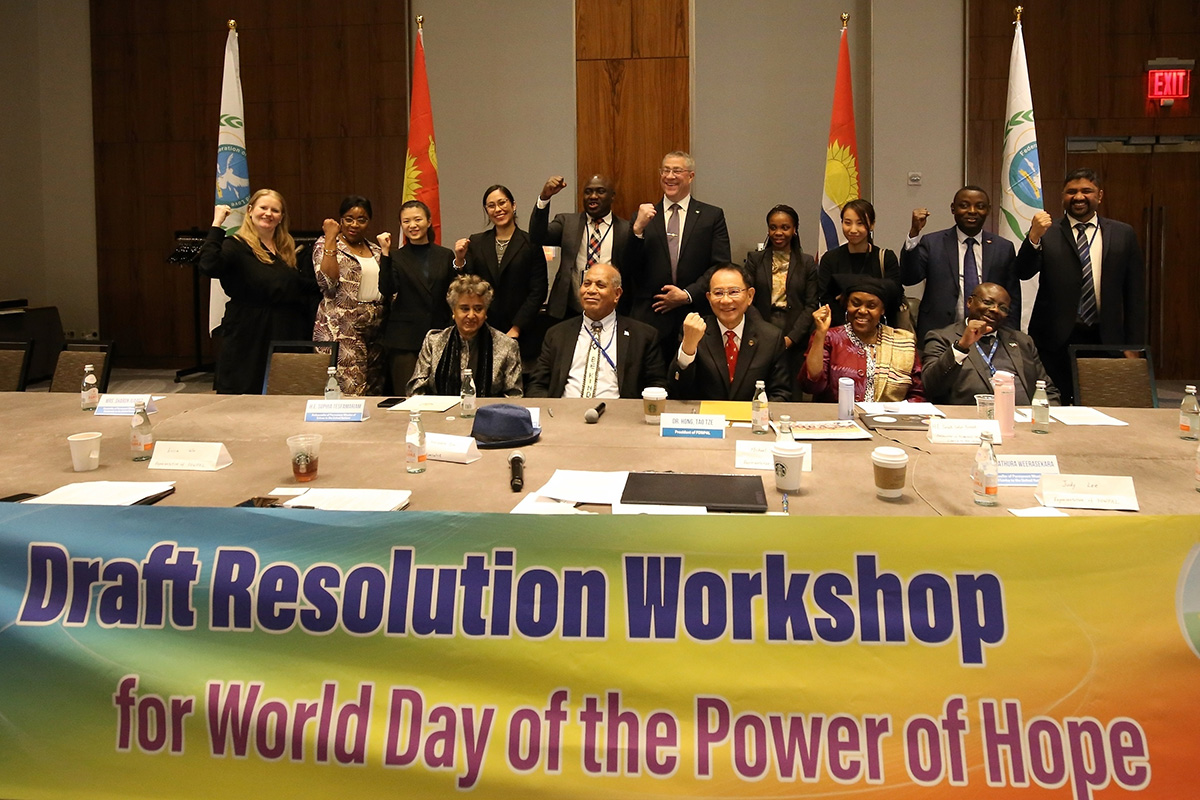
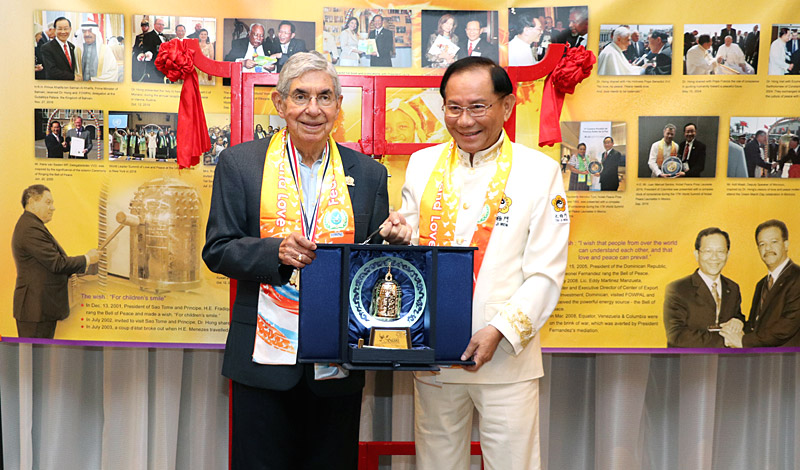
Ringing FOWPAL’s Peace Bell for the World:Nobel Peace Prize Laureates’ Visions and Actions
Protecting the World’s Cultural Diversity for a Sustainable Future


Puppet Show I International Friendship Day 2020