Divisions Over EU Defense and Ukraine Aid Budgets Prevent Consensus
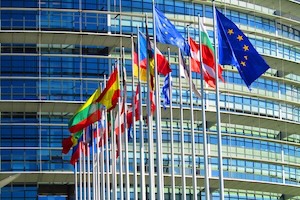
Leaders of the 27 European Union member states convened a two-day special summit in Brussels, Belgium,starting on the 26th to negotiate the seven-year financial budget for 2028 to 2034 as well as funding for Ukraine. The total budget reaches €1.582 trillion (approximately NT$57.3 trillion), of which €740 billion (approximately NT$2.68 trillion) is earmarked for areas including agricultural subsidies, regional development,migration, fisheries, border management, and internal security. Due to disagreements among several nations over agricultural subsidies, fiscal spending, and the cost-sharing of aid to Ukraine, a 12-hour marathon negotiation ultimately failed to reach a consensus.
Factions at the summit were deeply divided. Net contributors such as Germany, the Netherlands, and Sweden—countries that pay more into the budget than they receive—argued that the EU budget should be scaled back and spending priorities shifted toward defense and competitiveness. Conversely, a bloc of 17 countries led by France and Italy opposed cuts to agricultural and regional aid, advocating for continued agricultural subsidies and infrastructure funding for poorer nations, insisting that these funds should account for two-thirds of the budget.
Funding for Ukraine was a central issue in the budget talks. Over the next seven years, €88.9 billion (approximately NT$3.22 trillion) is slated to be provided as a dedicated Ukraine reserve fund to support Kyiv’s EU accession and future reconstruction. Member states including Bulgaria, the Czech Republic, Hungary, and Slovakia opposed the Ukraine aid package. In response, Germany stated that it would veto the EU's next proposed seven-year budget unless all member states participate in the Ukraine aid loans, aiming to compel joint contributions. Germany also expressed a desire to switch to qualified majority voting for future EU budget matters related to Ukraine aid to prevent vetoes by individual countries.
Because the EU's seven-year budget requires unanimous approval from all member states, European Council President António Costa urged leaders to approach discussions with an open mind, expressing hope that the budget could be finalized at the next summit scheduled for December 17–18. However, several leaders,including German Chancellor Friedrich Merz, French President Emmanuel Macron, and Hungarian Prime Minister Péter Magyar, expressed a pessimistic outlook regarding the prospects of the negotiations.
- 14 reads
Human Rights

Fostering a More Humane World: The 28th Eurasian Economic Summi

Conscience, Hope, and Action: Keys to Global Peace and Sustainability
Puppet Show I International Friendship Day 2020