Germany May Elect First Female President as Bavarian Leader Gains Merz's Backing
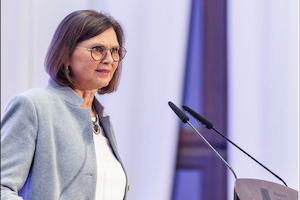
Germany's search for its next president is gradually taking shape. German media recently reported that Ilse Aigner, the current speaker of the Bavarian State Parliament and a member of the Christian Social Union (CSU), has gained the support of Chancellor Friedrich Merz's Christian Democratic Union (CDU), making her a leading contender for the next federal presidency. If elected, Aigner would become Germany's first female head of state since the Federal Republic was established in 1949.
According to Reuters, the CDU and its Bavarian sister party, the CSU, have reportedly reached a consensus on nominating Aigner. Merz is expected to convene meetings with party leaders on November 9 and 10 to formally discuss and confirm the candidate. The CSU had previously put forward Aigner's name, but the CDU's delayed endorsement had caused disagreements between the two conservative sister parties.
Aigner, 61, has extensive political experience. She served as Germany's Federal Minister of Food, Agriculture and Consumer Protection from 2008 to 2013 under former Chancellor Angela Merkel. She later returned to Bavarian politics and has served as speaker of the Bavarian State Parliament since 2018. She has also served as a member of the Bundestag and has been active in both state and federal politics for many years.
Beyond support from the conservative camp, Aigner has also received positive signals from politicians across party lines. Lars Klingbeil, co-leader of the Social Democratic Party (SPD), said his party would welcome and support Aigner's candidacy if the CDU and CSU formally endorsed her. Some Green Party politicians have also previously expressed support, suggesting that her candidacy could gain backing from different political camps.
Merz previously said he hoped Germany's next president would be a woman and indicated a preference for a centrist candidate. Since the Federal Republic was founded in 1949, all German federal presidents have been men. If elected, Aigner would break a 77-year record of male-only presidencies.
Although Germany's president does not directly exercise executive power, the office carries important constitutional responsibilities and symbolic influence. The president represents the country at international events, signs legislation and formally appoints government officials. During political crises or periods of deep social division, the president can also play an important role in promoting national unity. In recent years, Germany has faced growing political polarization, the rise of far-right movements and contentious immigration debates, making the next president's role in bringing society together a subject of public attention.
Under the current schedule, the Federal Convention is expected to elect Germany's next president on January 30, 2027. The convention consists of members of the Bundestag and an equal number of delegates representing Germany's 16 federal states, with approximately 1,260 members expected to participate. Incumbent President Frank-Walter Steinmeier will complete his second term on March 18, 2027, and is constitutionally barred from seeking another term.
Aigner's reported support from the major parties in the governing coalition, along with her potential cross-party appeal, has brought her candidacy into the spotlight. However, formal nomination is still subject to confirmation by the CDU leadership, and the final decision will be made through a vote at the Federal Convention. Whether Germany will welcome its first female federal president is expected to become clear early next year.
- 19 reads
Human Rights

Fostering a More Humane World: The 28th Eurasian Economic Summi

Conscience, Hope, and Action: Keys to Global Peace and Sustainability


Puppet Show I International Friendship Day 2020