Bolivia Declares National Emergency as Droughts and Floods Strike Country
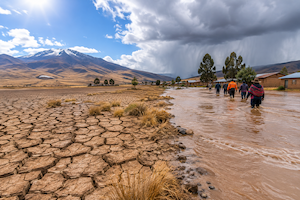
Bolivian President Rodrigo Paz declared a nationwide state of emergency on November 1 to mobilize resources and strengthen disaster relief efforts in response to extreme weather conditions associated with the El Niño phenomenon.
According to Agence France-Presse (AFP), Paz announced the emergency measure in a televised address, saying Bolivia is currently experiencing both floods and droughts linked to El Niño. Under the emergency decree, the government will deploy additional rescue personnel to the worst-affected areas and call on various agencies to coordinate disaster response efforts. He warned that El Niño could trigger severe climate impacts, including prolonged droughts and flooding, stressing the need to mobilize resources from across the country.
According to a report released by the Bolivian government last week, drought has affected six of the country's nine departments, impacting approximately 78,000 households and resulting in the loss of more than 75,000 head of cattle. El Niño refers to the abnormal warming of sea surface temperatures in the central and eastern equatorial Pacific Ocean, which alters global wind patterns, atmospheric pressure and rainfall, potentially triggering extreme weather events.
Last week, the United Nations warned that the current El Niño event could reach unprecedented intensity, posing serious threats to Latin America, eastern and southern Africa, Asia and the Pacific region.
Neighboring countries have also experienced weather-related disasters. In Peru, rising temperatures and frequent wildfires have killed at least 12 people. Meanwhile, Chile's capital, Santiago, recorded its wettest October on record last month.
- 12 reads
Human Rights

Fostering a More Humane World: The 28th Eurasian Economic Summi

Conscience, Hope, and Action: Keys to Global Peace and Sustainability

Puppet Show I International Friendship Day 2020