Russian FM Backs India for Permanent UNSC Seat, Opposes Western Expansion
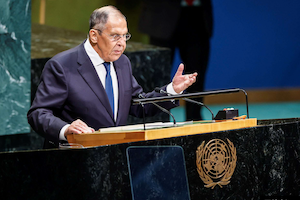
Speaking at the United Nations General Assembly on the 27th, Russian Foreign Minister Sergey Lavrov expressed support for India becoming a permanent member of the United Nations Security Council (UNSC). He advocated that UNSC reforms should prioritize enhancing the representation of the Global South and opposed adding new permanent seats for Western countries.
According to The Times of India, during the BRICS summit held in New Delhi earlier this month, Russia and China publicly backed India and Brazil's bids to become permanent members of the UNSC. In his UNGA address, Lavrov pointed out that UNSC reforms should focus on the representation of Asia, Africa, and Latin America, enabling the Global South to play a more significant role in international governance.
As reported by Asian News International (ANI), Lavrov stated that the reforms should not allow Western nations to acquire additional permanent seats. He criticized countries such as Germany and Japan for trending toward militarism and revanchism, arguing that they should not be granted this power. Meanwhile, the Hindustan Times noted that Lavrov reaffirmed his support for India and Brazil as permanent members, emphasizing that African interests must also be a key consideration in UNSC reforms.
Beyond Russia, India has garnered public support from multiple countries during the UN General Assembly. Mauritian Foreign Minister Dhananjay Ramful and Portuguese Prime Minister Luis Montenegro both called for UNSC reforms to enhance representation and expressed support for India's bid for a permanent seat.
Currently, the Security Council consists of 15 member states: five permanent members with veto power—the United States, China, France, Russia, and the United Kingdom—and 10 non-permanent members serving two-year terms. Under the United Nations Charter, any UNSC reform involving a charter amendment must first be passed by a two-thirds majority of the UN General Assembly and subsequently ratified by two-thirds of the member states. Furthermore, it requires the unanimous approval of all five permanent members, setting an extremely high threshold for reform.
- 10 reads
Human Rights
Fostering a More Humane World: The 28th Eurasian Economic Summi
Conscience, Hope, and Action: Keys to Global Peace and Sustainability
Puppet Show I International Friendship Day 2020