Iran President: Supreme Leader Backs New Plan to Reopen Strait of Hormuz, Shipping to Resume in 7 Days
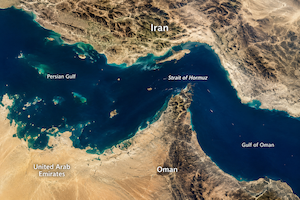
Iranian President Masoud Pezeshkian said on September 26 that Tehran’s latest proposal had been coordinated with Supreme Leader Mojtaba Khamenei and had received his support. Under the plan, the strategic Strait of Hormuz would be reopened within seven days, subject to conditions including a ceasefire and the lifting of some U.S. sanctions, as part of efforts to end the nearly seven-month conflict between Iran and the United States.
Iranian Foreign Minister Abbas Araghchi earlier revealed during the United Nations General Assembly that Tehran had conveyed a “seven-day plan” to the United States through Qatar. Iran said that if Washington accepts the conditions, the two sides could immediately begin implementing the timetable, with normal maritime traffic through the Strait of Hormuz resuming on the seventh day.
According to the Iranian side, the proposal calls not only for an end to hostilities on various fronts across the Middle East, but also for the lifting of the U.S. maritime blockade of Iran, an easing of oil sanctions and the unfreezing of some Iranian assets held overseas. Once these conditions are met, Iran would reopen the Strait of Hormuz, followed by further negotiations on issues including its nuclear program.
In an interview with CBS, Pezeshkian said Iran would fulfill its commitments if the United States accepts the latest proposal. He also stressed that an atmosphere of distrust currently exists between Iran and the United States. Tehran therefore wants to establish a framework acceptable to both sides before moving forward with broader diplomatic negotiations.
However, U.S. President Donald Trump publicly rejected Iran’s proposal on September 26. Trump said he had turned down the “deal” and indicated that Iran wanted the Strait of Hormuz reopened immediately. The U.S. position highlights major differences between the two sides over the sequence and conditions for negotiations.
The Strait of Hormuz, located between Iran and Oman, is a crucial shipping route for oil and natural gas exports from the Persian Gulf. Recent tensions have severely disrupted maritime traffic and affected energy markets. Whether the strait can return to normal operations could therefore have implications not only for U.S.-Iran diplomacy, but also for global energy supplies and oil prices.
Iran continues to say it is willing to resolve the crisis through diplomacy. However, following Washington’s rejection of the latest proposal, it remains uncertain whether the two sides can reestablish a negotiating framework and when normal shipping through the Strait of Hormuz might resume. The outcome will depend on whether they can narrow their differences over a ceasefire, sanctions, the maritime blockade and Iran’s nuclear program.
- 14 reads
Human Rights

Fostering a More Humane World: The 28th Eurasian Economic Summi

Conscience, Hope, and Action: Keys to Global Peace and Sustainability

Puppet Show I International Friendship Day 2020