Major Disaster as Nepal Glacier Collapses: French Experts Warn Alps at Risk
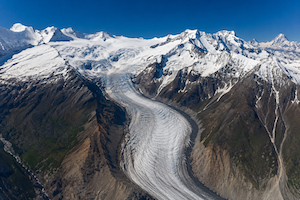
The recent major glacier collapse disaster in the border region between Nepal and Tibet, China, triggered massive floods, mudslides, and ice-rock avalanches, leaving hundreds dead and thousands missing. It has also forced the world to once again confront the mounting disaster risks in mountainous regions driven by climate change. Experts warn that similar phenomena of glacier and mountain instability are not unique to the Himalayas; Alpine regions, including France, Switzerland, Italy, and Austria, face identical threats.
On August 26, a massive ice and rock collapse occurred in the Rasuwa district of northern Nepal. A vast amount of ice, snow, rocks, and debris instantly surged into the river valley, triggering fierce floods. The torrent rapidly advanced downstream along the riverbed, destroying roads, bridges, homes, and hydroelectric facilities. Preliminary assessments by the United States Geological Survey (USGS) suggest the disaster was likely a massive debris flow and flood triggered by rapid slope instability.
The scale of the disaster continues to expand. Current statistics from Nepal and Tibet indicate that the death toll has exceeded 600, with thousands still missing. The Nepalese government estimates that post-disaster reconstruction could require around $4 billion to $5 billion, equivalent to nearly 10% of the country's economic output. Roads, bridges, and energy infrastructure have suffered severe damage, while search and rescue operations face immense challenges due to treacherous mountainous terrain and severed transport links in certain areas.
Scientists point out that while the disaster was initially thought to be linked to an earthquake, subsequent satellite imagery and geological analyses revealed it was likely an ice-rock avalanche caused by a large-scale collapse of high-altitude glaciers and rock masses. The massive ice-rock mass hit the valley floor, forming a violent debris torrent. Water levels in some rivers rose by approximately 9 meters in just 30 minutes, illustrating the highly sudden nature and extremely short warning time characteristic of such alpine disasters.
The French newspaper Le Parisien noted that the disaster in Nepal has prompted the French Alps to re-examine their own glacial risks. Struck by climate warming in recent years, glaciers in the Alps have been rapidly retreating, accompanied by the thawing of permafrost. This has gradually weakened mountainsides that formerly relied on ice and permafrost for stability.
European glaciologist Olaf Eisen warned that Europe is one of the fastest-warming regions globally. Continuously rising temperatures are driving glacial retreat and permafrost thaw, further undermining the geological structure of high-altitude areas. This is especially true for zones situated at altitudes of roughly 2,500 to 3,000 meters, including parts of the mountains in France, Italy, Austria, and Switzerland, which face elevated risks of glacier collapses, rockfalls, mudslides, and floods. Eisen pointed out that while the scale of the recent disaster in Nepal far exceeds that of some recent glacier collapses in the Alps, it does not mean Europe is free from similar risks. When heatwaves or heavy rainfall coincide with the instability of glaciers and permafrost, they can serve as the final straw triggering massive mountain collapses.
Changes in Switzerland in recent years are particularly alarming. Since 1850, approximately 1,000 glaciers in Switzerland have vanished. In 2025, Swiss glaciers lost about 10% of their ice volume in just two years—a loss equivalent to what occurred over the 30-year period from 1960 to 1990. Rapid ice melt signifies not only changes to water resources and landscapes but also means that mountains previously anchored by ice, snow, and permafrost could lose their structural support.
The Alps have witnessed multiple glacier and rock collapse incidents in recent years. In 2025, a rock and glacier collapse occurred in Blatten, Switzerland; although local residents were evacuated beforehand, a 64-year-old man was still killed. In 2022, a massive ice chunk broke off the Marmolada glacier in Italy's Dolomites, resulting in the deaths of 11 mountaineers.
In France, glaciers near Chamonix are under close surveillance. Experts explain that meltwater pockets can form at the base of some glaciers. When high temperatures or intense rainfall cause a sudden spike in water pressure, it can weaken the bond between the glacier and the bedrock, potentially causing the ice mass to slide off abruptly.
The successive heatwaves in the summer of 2026 have subjected the Alpine glaciers to severe tests. France and Western Europe have been hit by multiple heatwaves this year. Swiss glacier monitoring agencies noted that the rate of glacial meltwater is abnormally fast, and 2026 could potentially become one of the worst years for ice melt in modern history.
Experts believe that the most critical warning from the Nepal disaster is that high-altitude regions are entering a more unstable era. Global warming not only shrinks glacier areas but also alters the freezing and thawing cycles inside mountains, disrupting the pre-existing balance among rocks, glaciers, and permafrost. As extreme weather events like heatwaves and torrential rains become more frequent, glacial retreat and mountain instability can interact, forming sudden ice-rock avalanches, glacial lake outburst floods, and mudslides. Once these disasters occur, they often spread rapidly from the high mountains down to populated river valleys, leaving residents and rescue teams with exceedingly limited reaction time.
Therefore, experts urge that countries must not solely rely on post-disaster rescue operations. Instead, they should strengthen holistic monitoring of glaciers, permafrost, and mountainsides, establish transnational real-time early warning systems, and incorporate infrastructure such as roads, hydroelectric plants, tourist areas, and valley settlements into long-term risk assessments.
- 123 reads
Human Rights
Fostering a More Humane World: The 28th Eurasian Economic Summi

Conscience, Hope, and Action: Keys to Global Peace and Sustainability

Puppet Show I International Friendship Day 2020