Trump Family Improperly Profits $1.4 Billion from Crypto; Nearly 70% of Americans in Poll Suspect Trump's Decisions Benefit Personal Interests
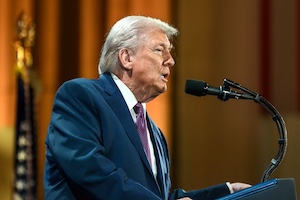
According to the latest Reuters/Ipsos poll, a majority of Americans believe President Donald Trump and his family are using cryptocurrency to profit, raising strong concerns that Trump allows private commercial interests to influence national policy. The survey of 1,166 U.S. adults found that 63% consider it "inappropriate" for Trump and his family to profit from crypto ventures. Nearly 70% believe his private business interests substantially shape presidential decision-making. Views vary across party lines: two-thirds of independent voters share these doubts, along with 90% of Democrats who believe Trump’s policies serve personal interests, and half of Republican supporters who hold the same concern.
The controversy stems from financial disclosures showing that in 2025 alone, Trump and his family earned more than $1.4 billion in massive gains from digital assets, including the World Liberty Financial crypto platform and the "$TRUMP" meme coin. In stark contrast, an estimated one million retail investors—who entered the market following heavy promotion by the Trump family, particularly his son Eric Trump—suffered roughly $3.8 billion in wiped-out wealth, intensifying public criticism that Trump is using his public office for private gain.
The issue escalated further with the Office of the Comptroller of the Currency (OCC) granting conditional preliminary approval for World Liberty Financial to convert into a national trust bank. Democratic Senator Elizabeth Warren condemned the move as one of the most shameless acts of self-enrichment in the history of the U.S. financial system. Former White House ethics lawyer Richard Painter noted that Trump holding vast private banking interests alongside regulatory authority creates a depth of conflict of interest "unprecedented" in U.S. history. White House spokesperson Anna Kelly rejected all allegations, stating that Trump's investments are placed in an independent third-party trust and involve no conflict of interest.
With upcoming congressional midterm elections, this negative perception could deal a blow to the governing Republican Party. A late-July CNN poll indicated that 66% of respondents did not trust Trump to prioritize national interests over personal interests. Additionally, 49% of voters viewed the Republican Party as corrupt, compared to 41% for the Democratic Party. Voter anxiety and anger over government corruption are poised to influence the midterm political landscape and reshape the balance of power in U.S. politics over the next two years.
- 104 reads
Human Rights

Fostering a More Humane World: The 28th Eurasian Economic Summi

Conscience, Hope, and Action: Keys to Global Peace and Sustainability


Puppet Show I International Friendship Day 2020