U.S. Budget Deficit Widens as Customs Refunds Over $100 Billion in "Liberation Day" Tariffs
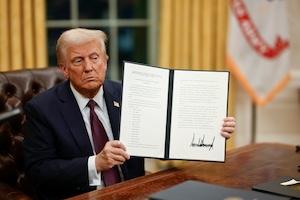
U.S. Customs officials submitted a report to the U.S. Court of International Trade (CIT) on August 4, confirming that the government has refunded approximately $100 billion in tariffs collected under the previously imposed "Liberation Day" tariffs. The refunds follow a February 2026 ruling by the U.S. Supreme Court, which found that President Donald Trump had unlawfully exceeded his authority by invoking the International Emergency Economic Powers Act (IEEPA) to impose sweeping tariffs. The Court ordered the federal government to return the collected duties to the importers who had paid them.
The U.S. Customs and Border Protection (CBP) launched an online integrated management portal known as CAPE in April to allow importers to submit refund claims. The refunds are being paid directly to the businesses and small business owners that originally paid the tariffs; individual consumers are not eligible to apply. However, some companies are expected to pass part of the refunded costs on to customers through lower prices or compensation programs. The returned funds have already strengthened many corporate balance sheets during the second quarter of this year, with analysts estimating that they could boost annual corporate profits by as much as 5%.
The $100 billion in refunds represents roughly 60% of the $165 billion in tariffs previously collected by the government. The repayments have also had a significant fiscal impact, with recent federal customs revenue turning negative and contributing to the expansion of the federal budget deficit to $1.37 trillion during the first nine months of the current fiscal year.
In response, the Trump administration has shifted to alternative legal authorities—including Section 301 of the Trade Act of 1974—to reimpose tariffs on dozens of countries over issues such as forced labor and industrial overcapacity, aiming to preserve its trade protection agenda. Legal challenges against this new round of tariffs are already underway, with attorneys general from 25 states jointly filing lawsuits alleging that the administration is attempting to circumvent the Supreme Court's ruling in order to continue its tariff-based revenue policy.
- 124 reads
Human Rights

Fostering a More Humane World: The 28th Eurasian Economic Summi

Conscience, Hope, and Action: Keys to Global Peace and Sustainability

Puppet Show I International Friendship Day 2020