Migrant Surge Hits Spain's North African Enclave, Drawing Condemnation from EU Leaders
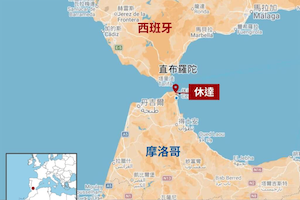
A massive influx of migrants from Morocco into Ceuta, Spain's North African enclave, has triggered one of the country's most serious border crises in recent years and thrust the European Union's migration policy back into the spotlight. Within just a few days, tens of thousands of people attempted to enter Ceuta by sea and land, leaving dozens dead or injured. In response, the Spanish government deployed additional police, military personnel and coast guard forces while working with Morocco to accelerate the return of migrants. European Commission President Ursula von der Leyen and several EU leaders issued strong statements, stressing that the bloc's external borders "must not be breached," calling for a crackdown on human trafficking networks, and urging member states to show unity in addressing the crisis.
According to the Spanish government, the migrant surge has been concentrated in Ceuta. Many migrants were reportedly influenced by false information circulating on social media claiming that once they reached Ceuta, they would be free to travel to mainland Spain and the Schengen Area. As a result, thousands risked swimming across the border or climbing over border fences. Authorities said at least 60 people died during the crossings, with many minors among those involved. Reception facilities in Ceuta were quickly overwhelmed, creating a severe humanitarian emergency.
Following the outbreak of the crisis, Spain rapidly deployed additional security forces and coast guard units to restore order along the border. Authorities also installed a floating sea barrier approximately 500 meters long off the coast of Ceuta to deter illegal crossings. At the same time, Spain and Morocco strengthened cooperation, resulting in the return of more than 48,000 migrants to Morocco within several days, helping ease pressure at the border. The Spanish government emphasized that Ceuta is not a "gateway" to mainland Europe, noting that newly arrived migrants cannot freely enter the Schengen Area and are not covered by Spain's recently concluded migrant regularization program.
Von der Leyen described the scenes of mass illegal crossings in Ceuta as "unacceptable," saying that dangerous illegal crossings must stop immediately and that human smuggling networks must be dismantled. She also called on EU member states to accelerate the return of individuals who do not qualify for legal residence. The European Commission president announced that EU commissioners had been tasked with maintaining close contact with both Spain and Morocco to help manage the situation, stressing that cooperation with Morocco remains essential for protecting the EU's southern external border. European Council President Antonio Costa also expressed support for Spain, reaffirming that the EU's external borders are a shared responsibility and urging member states to stand together rather than leave frontline countries to shoulder the burden alone.
The crisis has also exposed divisions within the EU over migration policy. Italian Prime Minister Giorgia Meloni criticized Spain's immigration policy as overly lenient and announced the temporary reinstatement of border checks for non-EU travelers arriving from Spain. France, Denmark, Poland and the Czech Republic also voiced concerns over Spain's handling of the situation and called for a review of the EU's external border management system. Meanwhile, countries including Ireland and France argued that the issue should not be politicized and supported addressing the crisis through coordinated action at the EU level.
In response to the situation, the European Union has convened an emergency meeting of interior ministers to discuss strengthening external border controls, improving migrant return mechanisms, and expanding cooperation with Morocco and other North African countries. Analysts say the Ceuta crisis underscores that migration routes across the Mediterranean and North Africa remain among the EU's most pressing security and humanitarian challenges, while once again placing migration at the center of political debate across the bloc.
- 68 reads
Human Rights
Fostering a More Humane World: The 28th Eurasian Economic Summi
Conscience, Hope, and Action: Keys to Global Peace and Sustainability
Puppet Show I International Friendship Day 2020