Yoon Suk Yeol Given 18-Month Prison Term, Suspended for Three Years in Election Law Case
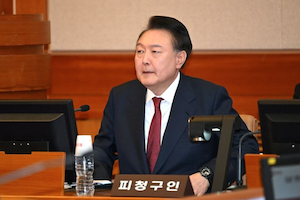
On July 27, the Seoul Central District Court found former South Korean President Yoon Suk Yeol guilty of violating the Public Official Election Act by making false statements during the 2022 presidential election concerning Jeon Seong-bae, better known as the "Geonjin Monk," and related allegations. The court sentenced Yoon to 18 months in prison, suspended for three years, in its first-instance ruling. The court said that false information disseminated by a presidential candidate during televised debates and media interviews could significantly influence voters' judgment and therefore warranted criminal liability. Yoon's legal team immediately filed an appeal following the verdict.
Under South Korea's Public Official Election Act, a candidate who receives a final conviction resulting in a fine of 1 million won (about NT$22,000) or more, or a prison sentence, for election-related offenses may lose his or her elected office. If Yoon ultimately loses all appeals, his victory in the 2022 presidential election could be invalidated, marking the first such case in South Korea's constitutional history. In addition, his party, the People Power Party (PPP), would be required to return approximately 39.7 billion won (about NT$850 million) in state election subsidies, dealing a major blow to the party's finances.
The court accepted prosecutors' arguments that Yoon, through his wife Kim Keon Hee, had maintained long-term ties with Jeon Seong-bae and had made false statements regarding the controversy during the election campaign. Earlier, on July 9, Yoon had already received a final seven-year prison sentence on charges including obstruction of arrest and abuse of power. The latest conviction further increases the legal and political pressure facing the former president.
Political observers say the final outcome of the election law case will not only determine Yoon's political future but could also reshape the prospects of the People Power Party and the broader landscape of South Korean politics.
- 58 reads
Human Rights
Fostering a More Humane World: The 28th Eurasian Economic Summi
Conscience, Hope, and Action: Keys to Global Peace and Sustainability
Puppet Show I International Friendship Day 2020