Exam Leak Sparks Nationwide Protests as "Cockroach People's Party" Forces Education Minister Out
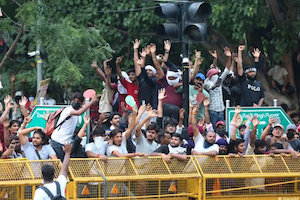
India's nationwide National Eligibility cum Entrance Test (NEET) paper leak scandal, which erupted in May, triggered a youth-led protest movement known as the Cockroach Movement, with demonstrators demanding the resignation of Education Minister Dharmendra Pradhan. After weeks of large-scale protests, Pradhan announced his resignation on July 25, becoming the first senior cabinet minister in Prime Minister Narendra Modi's 12 years in office to step down as a direct result of sustained public demonstrations. Following the announcement, tens of thousands of people gathered at Jantar Mantar in New Delhi to celebrate, singing the national anthem and chanting, "Long Live India."
The political crisis began after the NEET examination papers were leaked. Authorities canceled the exam results and ordered a retest, affecting around 2 million candidates. More than a dozen students were reportedly driven to suicide due to the immense pressure. Public outrage intensified as the government refused to hold senior officials accountable. Anger further escalated after the Chief Justice of India reportedly referred to some unemployed young people as "cockroaches," prompting many youths to reclaim the label and launch a nationwide protest movement. A symbolic political group, the Cockroach People's Party (CJP), soon emerged.
The CJP was founded by Abhijeet Dipke, a 30-year-old master's student at Boston University. Frustrated by what he saw as the government's and judiciary's dismissive attitude toward young people, Dipke posted on social media, "What if all the cockroaches united?" The post unexpectedly went viral. Young Indians embraced memes, AI-generated cockroach mascots, and online campaigns, rapidly expanding the movement. Its demands soon grew beyond education reform to include employment opportunities, economic justice, and greater government accountability.
Demonstrations spread across major Indian cities. Police used tear gas and batons to disperse protesters, but the crackdown failed to quell public anger. Although Modi pledged to severely punish those responsible for the exam leak, his assurances did little to ease the growing unrest. Pradhan eventually resigned, saying he respected the demands of young people and wanted to prevent the situation from being exploited by what he described as "anti-national forces."
The Indian government later accepted several of the protesters' key demands, including reforming the national examination system, dropping criminal charges against student protesters, and providing compensation to the families of students who died in connection with the scandal. The CJP subsequently declared an end to the demonstrations but stressed that it would continue advocating for education reform and democratic accountability.
International media have described the youth-led Cockroach Movement as a major blow to Modi's image as a strongman leader, highlighting widespread frustration among India's younger generation over educational fairness, unemployment, and government accountability. Analysts say the episode represents one of the rare occasions in recent years that the Modi government has backed down in the face of sustained street protests, underscoring the growing political influence of India's Generation Z.
- 87 reads
Human Rights
Fostering a More Humane World: The 28th Eurasian Economic Summi
Conscience, Hope, and Action: Keys to Global Peace and Sustainability
Puppet Show I International Friendship Day 2020