Mali Becomes a Hotbed of Terrorism as U.S. Evaluates Direct Military Intervention
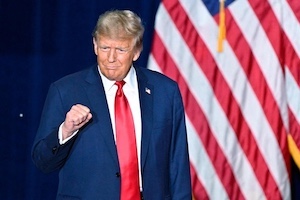
The Washington Post reported on July 22 that the Trump administration is assessing the possibility of launching military action in Mali, targeting the Group for the Support of Islam and Muslims (JNIM), an armed extremist organization with close ties to al-Qaeda. If approved, Mali would become the eighth country targeted by military strikes during President Trump's second term, following operations in Yemen, Somalia, Syria, Iran, Iraq, Nigeria, and Venezuela.
The global epicenter of Islamist terrorism has shifted from the Middle East—particularly Syria and Iraq—to Africa, especially the Sahel region. The Sahel has now become the world's most active and concentrated theater for extremist organizations. Since 2025, JNIM has carried out a systematic "fuel blockade" campaign, attacking fuel tankers bound for the capital and kidnapping their drivers. These operations have caused widespread transportation disruptions and power outages across Mali, effectively waging a prolonged campaign of economic warfare against the government. The country's security situation deteriorated dramatically in the spring of 2026.
On April 25, JNIM launched a coordinated nationwide offensive alongside the Azawad Liberation Front, a Tuareg separatist group. Militants not only captured the strategic northern city of Kidal, but also infiltrated the streets of the capital, Bamako. During the assault, Mali's Minister of Defense, Sadio Camara, was killed in a suicide bombing, exposing major vulnerabilities in the security apparatus of Mali's military government and its Russian allies.
According to the White House's 2026 U.S. Counterterrorism Strategy, the Trump administration seeks to reduce long-term military deployments while emphasizing intelligence sharing, surveillance and early warning capabilities, and precision airstrikes as its preferred counterterrorism tools. Sebastian Gorka, the National Security Council's Senior Director for Counterterrorism, has emerged as the leading advocate of military action in Mali, arguing that direct strikes are necessary to degrade JNIM's operational capabilities.
Another key factor driving the proposed operation is the case of American missionary Kevin Rideout, who was kidnapped in Niger last year and is believed by U.S. intelligence to be held in Mali. The objectives of rescuing the hostage and neutralizing terrorist groups that pose a threat to the U.S. homeland have become central justifications for the potential intervention.
However, Mali's military government has largely severed ties with Western nations in recent years and instead relies on Russia's Africa Corps, operating under the Russian Ministry of Defense, for security assistance. Any U.S. air operations or strikes within Malian airspace could risk direct confrontation with Russian forces on the ground. Such a scenario would likely require deconfliction mechanisms similar to those used in Syria, necessitating prior communication between Washington and Moscow to minimize the risk of unintended military escalation.
Opinions within the United States remain divided over the prospect of military intervention in Mali. Senator Tim Kaine criticized the proposal, warning that it could become "another foolish war." Senator Chris Coons argued that airstrikes alone cannot solve deeply rooted ideological extremism and cautioned that military action might prompt JNIM to redirect terrorist attacks toward the United States.
Meanwhile, the U.S. military is already heavily committed in the Red Sea and Iranian theaters. Opening a new front in West Africa would place considerable strain on the allocation of U.S. military resources.
Separately, U.S. Trade Representative Jamieson Greer stated that Canada continues to retaliate against U.S. efforts to rebalance bilateral trade. He said President Trump made the decision to address longstanding trade imbalances and fulfill his pledge to protect American industries.
Canadian Prime Minister Mark Carney, however, accused the United States of directly violating the United States–Mexico–Canada Agreement (USMCA/CUSMA). Carney said Canada has already presented a comprehensive set of proposals to address the trade dispute and is prepared to intensify negotiations in the coming weeks. He warned that an escalating trade war would increase the cost of living for both American and Canadian households, while emphasizing that Canada would take all necessary measures to defend its workers, businesses, and national sovereignty.
- 122 reads
Human Rights

Fostering a More Humane World: The 28th Eurasian Economic Summi

Conscience, Hope, and Action: Keys to Global Peace and Sustainability
Puppet Show I International Friendship Day 2020