East Coast Heat Wave Disrupts July 4 Events
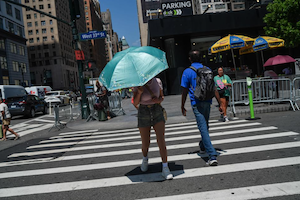
A powerful heat wave swept across the U.S. East Coast during the Independence Day holiday, forcing the cancellation or modification of Fourth of July celebrations and causing power outages in New York. With heat index values reaching as high as 46°C (115°F), more than 185 million Americans were placed under heat alerts.
According to Reuters, the Associated Press, and other media outlets, the extreme heat was caused by a strong heat dome that brought prolonged high temperatures and humidity across the eastern United States. Cities including Washington, D.C., Philadelphia, New York, and Boston recorded temperatures above 38°C (100°F), with dangerous humidity pushing the heat index above 43°C (110°F) in many areas.
In Philadelphia, organizers canceled the annual Salute to Independence parade after determining that the extreme heat posed a safety risk to participants and spectators. Although officials had considered shortening the parade route and starting earlier, they ultimately decided to cancel the event. Some outdoor concerts were also postponed or canceled, while fireworks and indoor activities continued as scheduled.
In New York City, soaring electricity demand from widespread air conditioner use strained the power grid, leaving approximately 17,000 customers without electricity at one point. Utility crews worked to restore service, while the PJM Interconnection, which manages the regional power grid across 13 eastern states, urged residents to conserve electricity to reduce peak demand.
Other cities, including those in New Jersey and the Boston area, also adjusted or canceled Independence Day events because of the extreme heat. In Washington, D.C., several people required medical treatment for heat-related illnesses during celebrations on the National Mall.
The U.S. National Weather Service continued to issue excessive heat warnings, urging people to stay hydrated, avoid prolonged outdoor exposure, and watch for signs of heat exhaustion and heat stroke. Climate experts noted that climate change is making extreme heat waves more frequent, longer-lasting, and more intense.
- 86 reads
Human Rights

Fostering a More Humane World: The 28th Eurasian Economic Summi

Conscience, Hope, and Action: Keys to Global Peace and Sustainability

Puppet Show I International Friendship Day 2020