Japan’s Imperial Succession Crisis: Takaichi Cabinet Moves to Expand Imperial Family Through Legal Reform
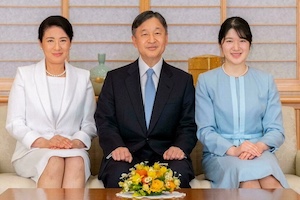
In response to the rapidly shrinking number of members of Japan’s Imperial Family and growing concerns over the line of succession, Prime Minister Sanae Takaichi’s cabinet is expected to formally approve a draft amendment to the Imperial House Law on June 26. While the proposed legislation aims to secure the number of imperial family members, it deliberately avoids addressing the possibility of a female emperor. This has reignited debate between public opinion and long-standing tradition, leaving Princess Aiko—the only child of Emperor Naruhito and one of the most popular members of the Imperial Family—legally excluded from the line of succession.
The key provisions of the amendment are intended to increase the number of imperial family members. Female members of the Imperial Family would be allowed to retain their imperial status after marrying commoners, should they choose to do so. The bill would also permit the Imperial Family to adopt male-line descendants aged 15 or older from one of the eleven former collateral branches that lost their imperial status following postwar reforms in 1947, thereby restoring them to imperial membership.
Although Takaichi is Japan’s first female prime minister, she has taken a highly conservative stance on imperial succession. She firmly upholds the tradition of patrilineal succession, arguing that the Japanese Imperial Family’s uninterrupted male-line inheritance across 126 generations is a historically unparalleled legacy and the foundation of the Emperor’s legitimacy and authority.
Notably, the draft legislation makes no provision for allowing a female emperor. As a result, the future of the Imperial succession currently rests solely on 19-year-old Prince Hisahito. However, public opinion sharply contrasts with the government’s position: recent polls show that 93.1% of Japanese support allowing a female emperor, while 88.9% also support the possibility of a matrilineal emperor—one who inherits the throne through the female line. This significant gap between the cabinet’s position and public sentiment reflects broader expectations for gender equality and the modernization of the Imperial Household, and critics warn that it could worsen the succession crisis in the future.
Emperor Naruhito also made a rare public comment on the issue, emphasizing that the fundamental principle of the Imperial Family is to "share the people's joys and sorrows." His remarks have been widely interpreted as a subtle expression of concern that the cabinet’s reform proposal fails to reflect public opinion.
The government aims to pass the legislation before the current Diet session concludes on July 17. However, key questions remain unresolved, including the details of the bill and how the government will strike a balance between preserving the Imperial Family’s centuries-old hereditary tradition and responding to the expectations of modern Japanese society.
- 1858 reads
Human Rights

Fostering a More Humane World: The 28th Eurasian Economic Summi

Conscience, Hope, and Action: Keys to Global Peace and Sustainability

Puppet Show I International Friendship Day 2020