US-Iran Agreement Revealed: Trump Pledges $300 Billion in Private Funding to Rebuild Iran
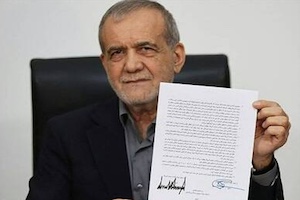
The United States and Iran are set to formally sign a ceasefire framework agreement on the 19th, potentially ushering in at least 60 days of an official truce and the reopening of the Strait of Hormuz. The most eye-catching element of the deal is a massive $300 billion Reconstruction and Development Fund. Financed entirely by private-sector capital, the fund aims not only to attract global investment back into Iran but also to serve as a key lever for Middle East peace and global energy market stability.
The $300 billion fund is intended for private investment in Iran, with 100% of the financing coming from the private sector and no government budget funds involved. The investment will cover sectors such as energy, logistics, manufacturing, and transportation. In addition to the United States, companies from Gulf Arab states, Asia, South America, and Africa have already pledged to participate.
The concept behind the Reconstruction and Development Fund is for regional countries to support the rebuilding of war-damaged infrastructure through loan guarantees, lines of credit, or direct investment. However, this initiative is entirely separate from negotiations over U.S. sanctions relief and the release of frozen Iranian assets, as the two processes have different objectives and timelines. The fund will only be established and become operational after a final agreement is signed. During the 60-day negotiation period, the management team will work with Iran and prospective investors to plan and define eligible projects.
Iran is one of the Middle East's major economies. It possesses the world's second-largest natural gas reserves and fourth-largest oil reserves, along with a population of more than 92 million, many of whom are young and well educated. The country also has a diversified industrial base and significant potential in petrochemicals, mining, tourism, and agriculture. However, due to U.S. and international sanctions over the past four decades, Iran has largely been excluded from global capital markets and has attracted very little large-scale foreign investment.
- 184 reads
Human Rights
Fostering a More Humane World: The 28th Eurasian Economic Summi
Conscience, Hope, and Action: Keys to Global Peace and Sustainability
Puppet Show I International Friendship Day 2020