Court Strikes Down Trump's $100,000 H-1B Visa Fee
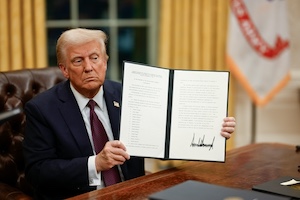
A federal court has overturned U.S. President Donald Trump's policy requiring employers to pay a $100,000 fee when applying for H-1B work visas. U.S. District Judge Leo Sorokin ruled today that the federal government exceeded its authority by imposing the fee without congressional approval.
According to ABC News, Judge Sorokin issued a 42-page opinion invalidating the policy, stating: "The President has no power to tax unless authorized by an act of Congress."
The ruling is widely regarded as a significant turning point in U.S. immigration policy for highly skilled workers and is expected to have major implications for industries such as technology, healthcare, and education, which rely heavily on foreign professional talent.
In September 2025, the Trump administration introduced the $100,000 H-1B visa surcharge through a presidential proclamation. The fee was imposed in addition to the existing application costs, which were only a few thousand dollars. The White House argued that the measure would raise the cost of hiring foreign workers, protect employment opportunities for American workers, and encourage employers to prioritize U.S. citizens.
However, the policy immediately sparked controversy. A coalition of 20 states, including California, filed a lawsuit arguing that the surcharge exceeded executive authority. Critics contended that the fee imposed a substantial burden on businesses and undermined the ability of hospitals, schools, and research institutions to recruit highly qualified professionals. Technology companies and business organizations also warned that the policy could weaken the United States' competitiveness in attracting top global talent.
In his ruling, Judge Leo Sorokin of the U.S. District Court for the District of Massachusetts stated that the $100,000 surcharge was effectively a form of taxation. Under the U.S. Constitution, the authority to levy taxes rests with Congress, not the executive branch. The judge further found that the policy violated the Administrative Procedure Act and therefore lacked legal validity.
As a result of the court's decision, the U.S. Department of State and U.S. Citizenship and Immigration Services will no longer be permitted to collect the fee from new applicants. Analysts say the ruling will reduce hiring costs for employers seeking foreign professionals and help restore recruitment efforts and international competitiveness, particularly in the technology, healthcare, and higher education sectors.
Supporters of Trump criticized the decision, arguing that the President should have broad authority to protect the American labor market. They also maintained that some companies have long abused the H-1B visa program. The White House indicated that it expects to appeal the ruling, meaning the case could eventually be reviewed by a federal appellate court.
- 108 reads
Human Rights

Fostering a More Humane World: The 28th Eurasian Economic Summi

Conscience, Hope, and Action: Keys to Global Peace and Sustainability

Puppet Show I International Friendship Day 2020