South Korea Local Election Hit by Ballot Shortage; Seoul Polling Station Besieged for 35 Hours
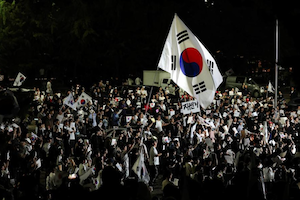
A ballot shortage disrupted South Korea’s 9th local elections, prompting protests outside a vote-counting center and renewed scrutiny of the country’s election administration.
Voting for South Korea’s ninth local government and local council elections was held nationwide on June 3. According to the National Election Commission (NEC), 67 polling stations across the country required emergency ballot deliveries after running short of ballots, while 22 polling stations temporarily suspended voting due to the shortage.
One of the most serious incidents occurred at Polling Station No. 2 in Jamsil 7-dong, Songpa District, Seoul, where voting was interrupted because of insufficient ballots. The polling station ultimately extended voting hours until 10 p.m. However, after voting concluded, demonstrators questioning the fairness of the election blocked the transportation of ballot boxes.
As election officials prepared to move the ballot boxes to a counting center, protesters argued that ballots from the affected polling station should not be counted, insisting that a re-election should be held to ensure fairness after voting had been suspended due to the shortage. The standoff continued until the morning of June 5, when police deployed approximately 1,000 officers to forcibly remove protesters and transport the ballot boxes to the counting center. Opposition parties later criticized the process after reports emerged that no official election observers accompanied the ballot boxes during transit.
Television footage showed protesters gathering outside Seoul’s SK Olympic Handball Gymnasium, chanting slogans such as “Hold the election again.” The presidential office issued a statement on June 4 saying that the Election Commission should take responsibility for the ballot shortage. Shortly afterward, NEC Chairman Roh Tae-ak publicly apologized and announced his resignation.
Seoul Mayor Oh Se-hoon also condemned the incident, describing the ballot shortage as “unacceptable” and arguing that it had infringed upon citizens’ voting rights. He called for the dissolution of the Election Commission and urged the appointment of a special prosecutor to investigate the matter.
South Korea employs multiple voting methods, including mail-in and early voting systems. As a result, election authorities typically print ballots based on projected turnout rates. The Korea JoongAng Daily reported that in Seoul’s Gangnam District, official ballots were printed for only about 55 percent of registered voters. Because voter turnout exceeded expectations, several polling stations ran out of ballots.
Further controversy emerged after investigations revealed that the Election Commission had budgeted for printing ballots equal to 110 percent of the total number of registered voters, yet the actual number of ballots printed was reportedly only about half of that figure.
With senior election officials resigning, police launching investigations, and both ruling and opposition parties demanding a full inquiry, the controversy is expected to remain a major political issue. Many observers believe the incident could become a turning point for electoral reform in South Korea.
Some members of the public argue that while alternative voting methods offer greater convenience, concerns remain regarding secrecy, efficiency, and electoral integrity. How to balance accessibility with public confidence in the voting process is likely to remain a subject of debate.
- 493 reads
Human Rights

Fostering a More Humane World: The 28th Eurasian Economic Summi

Conscience, Hope, and Action: Keys to Global Peace and Sustainability
Puppet Show I International Friendship Day 2020