South Korea’s 9th Local Elections: Ruling Party Wins Landslide Nationwide but Falls Short in Seoul
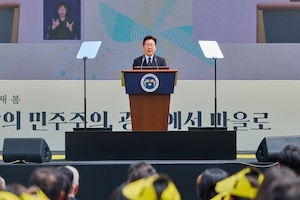
South Korea held local elections on June 3, widely regarded as a “midterm evaluation” of the Lee Jae-myung administration after one year in office. The final results were announced on June 4. The ruling Democratic Party of Korea (DPK) secured 12 of the country’s 16 top-level local government positions, achieving a landslide victory nationwide. However, in the highly symbolic Seoul mayoral race, the party suffered a setback as Oh Se-hoon of the main opposition People Power Party (PPP) emerged victorious. Although the ruling party dominated the nationwide elections, losing Seoul cast a shadow over its otherwise overwhelming success.
According to the vote count, the DPK swept 12 regions, including Busan, Incheon, Gyeonggi Province, and Gangwon Province. In the concurrent by-elections for the National Assembly, the ruling party won 9 of the 14 contested seats. Election administration problems were also reported. In Seoul, as many as 14 polling stations experienced ballot shortages, with some districts preparing only enough ballots for half of their registered voters. This left many voters waiting in line unable to cast their ballots, prompting allegations of electoral misconduct and triggering protests.
Before the election, multiple opinion polls and exit polls predicted a victory for DPK candidate Jeong Won-oh, who at one point held a lead of 5.4 percentage points. However, PPP candidate Oh Se-hoon ultimately edged out Jeong with 49.15% of the vote compared with Jeong’s 48.13%, a margin of just over one percentage point. As a result, Oh became the first politician in South Korean history to win a fifth consecutive term as Mayor of Seoul, further strengthening his position as a leading contender in the next presidential election. The polling error also highlighted the influence of the so-called “Shy Conservative” phenomenon. Experts noted that amid controversies surrounding martial law and court rulings related to the president’s impeachment, many conservative voters concealed their political preferences in opinion surveys but ultimately mobilized on election day, helping drive opposition victories in key constituencies such as Seoul.
The ruling party’s overwhelming nationwide victory suggests strong public approval of the government’s performance, particularly in areas such as growth in AI semiconductor exports and stock market stability. The results are expected to provide momentum for the administration’s six major structural reform initiatives, including housing market stabilization and financial sector reform. At the same time, policymakers are likely to reassess housing-related concerns reflected in the Seoul vote and adjust policies accordingly to accelerate the implementation of broader national objectives.
- 361 reads
Human Rights
Fostering a More Humane World: The 28th Eurasian Economic Summi
Conscience, Hope, and Action: Keys to Global Peace and Sustainability

Puppet Show I International Friendship Day 2020