U.S. Department of Justice Indicts Former Cuban Leader Over 1996 Shootdown of Two Civilian Aircraft
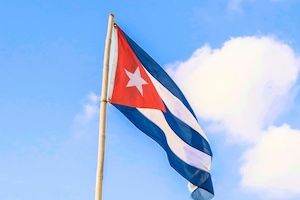
On May 20, the U.S. Department of Justice deliberately chose Miami’s Freedom Tower to unseal an indictment that had been approved on April 23 by a federal grand jury in the Southern District of Florida. The indictment charges former Cuban national leader Raúl Castro, now 94 years old, for his alleged involvement in the 1996 shootdown of two American civilian aircraft that resulted in the deaths of four people on board.
The decision to unseal the indictment on May 20 — a date commemorating Cuba’s independence from Spanish rule — at both the Miami headquarters of “Brothers to the Rescue” (BTTR), the organization to which the victims belonged, and at Freedom Tower, an important landmark for Cuban exiles, symbolized an escalation of U.S. pressure on the Cuban government.
The incident occurred on February 24, 1996, when the Cuban Air Force shot down two Cessna aircraft belonging to the Miami-based humanitarian organization “Brothers to the Rescue” (BTTR) in international airspace without warning.
At the time, the aircraft were conducting search and rescue missions for Cuban refugees at sea. Castro has been charged with one count of conspiracy to murder U.S. citizens, four counts of murder, and two counts of destruction of aircraft. If convicted, he could face the death penalty or life imprisonment. Also indicted alongside Castro were five Cuban military pilots.
The incident resulted in the deaths of four crew members: Carlos Costa, Armando Alejandre Jr., Mario de la Peña, and Pablo Morales.
The White House also issued a statement on Cuba’s Independence Day, criticizing the current Cuban Communist leadership as a “direct betrayal” of the country’s founding ideals and reaffirming continued pressure on the government in Havana. Measures cited included recent visits to Havana by CIA Director John Ratcliffe, while President Donald Trump had previously threatened to impose an oil blockade on Cuba and pursue regime change.
Acting U.S. Attorney General Todd Blanche emphasized during a press conference that regardless of rank or how much time has passed, the United States will never forget its citizens, and any leader responsible for killing Americans must be held accountable.
Cuban President Miguel Díaz-Canel dismissed the U.S. move as a “political theater”, arguing that it lacked any legal basis and served only as a pretext for military aggression against Cuba. Cuban Foreign Minister Bruno Rodríguez Parrilla reiterated that Cuba’s actions at the time were based on self-defense and mocked the U.S. initiative as driven by “nostalgia for neo-colonialism”.
Although U.S. authorities have issued a warrant for Castro’s arrest, the absence of an extradition treaty between Cuba and the United States means the move is widely viewed as carrying more symbolic significance than practical effect.
- 109 reads
Human Rights
Fostering a More Humane World: The 28th Eurasian Economic Summi
Conscience, Hope, and Action: Keys to Global Peace and Sustainability

Puppet Show I International Friendship Day 2020