Trump Announces Indefinite Ceasefire Extension While Maintaining Port Blockade, Awaits Iran Peace Proposal
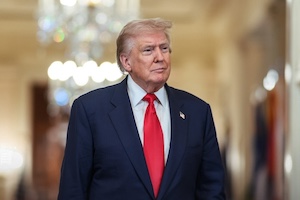
U.S. President Donald Trump formally announced on the 21st that the temporary ceasefire agreement, originally set to expire the following day, will be extended indefinitely. Trump said the decision was made in response to requests from Pakistan’s Prime Minister Shehbaz Sharif and Chief of Army Staff, Field Marshal Asim Munir, to allow Iran’s deeply divided leadership more time to reach a consensus and present a peace proposal.
However, during the ceasefire period, U.S. forces will continue enforcing a naval blockade on Iranian ports.
As negotiations have stalled, Vice President JD Vance has also indefinitely postponed his planned visit to Pakistan, pending a response from Iran’s Supreme Leader Mojtaba Khamenei to the latest proposal. Iran’s leadership remains locked in intense internal debate over negotiations with the United States. Sources indicate that civilian officials such as Parliament Speaker Mohammad Bagher Ghalibaf and Foreign Minister Abbas Araghchi favor continuing talks to reach an agreement, while Islamic Revolutionary Guard Corps (IRGC) commander Ahmad Vahidi strongly opposes making concessions as long as the blockade remains in place.
Iranian Foreign Minister Araghchi has maintained a hardline stance publicly, condemning the U.S. naval blockade as an “act of war” and a violation of the ceasefire agreement, emphasizing that Washington must lift the blockade before negotiations can resume. Meanwhile, parliamentary speaker’s advisor Mahdi Mohammadi has expressed complete distrust in Trump’s statements, arguing that the United States is merely buying time to prepare for another wave of attacks.
Global financial markets have shown some relief following news of the extended ceasefire. However, oil prices remain above $90 per barrel due to the closure of the Strait of Hormuz, with the conflict already causing a global supply shortfall of 1 billion barrels of crude oil. European Union official Apostolos Tzitzikostas warned that failure to restore freedom of navigation in the strait would have “catastrophic consequences” for both Europe and the global economy. A recent Ipsos poll further found that 51% of American respondents believe that attacking Iran is “not worth it.”
- 134 reads
Human Rights

Fostering a More Humane World: The 28th Eurasian Economic Summi

Conscience, Hope, and Action: Keys to Global Peace and Sustainability

Puppet Show I International Friendship Day 2020