The U.S. Central Command Announces Full Blockade of Iranian Ports, Emphasizing Swift and Effective Disruption of Iran’s Maritime Trade
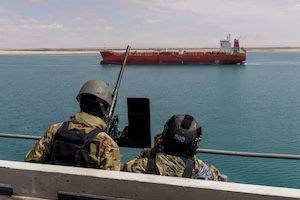
The U.S. Central Command (CENTCOM) announced on the evening of the 14th that it has “fully implemented” a military blockade targeting Iranian ports, emphasizing that U.S. forces currently maintain absolute maritime dominance in the region. Within less than 36 hours of issuing the blockade order, the U.S. military successfully halted all economic and trade activities entering and leaving Iranian waters. The United States aims to exert economic pressure to force Tehran to abandon its nuclear ambitions and cease support for terrorist organizations.
CENTCOM Commander Admiral Brad Cooper stressed that U.S. forces demonstrated strong operational capability in a very short period of time by cutting off all maritime trade associated with Iran. It is estimated that 90% of Iran’s economic activity, which depends on maritime transportation and trade, will be disrupted.
The United States has deployed more than 10,000 personnel, including U.S. Navy sailors, Marines, and Air Force members, to carry out the blockade. The operation includes over a dozen major warships, such as Arleigh Burke-class destroyers and the USS Abraham Lincoln carrier strike group deployed in the Gulf of Oman. Additionally, more than 100 reconnaissance and combat aircraft are involved, including F/A-18 Super Hornets, E-2D Hawkeye early warning aircraft, and P-8 Poseidon maritime patrol aircraft, providing continuous intelligence, surveillance, and reconnaissance (ISR) support. Within the first 24 hours, six commercial vessels complied with U.S. directives and turned back to Iranian ports in the Gulf of Oman. U.S. destroyers also intercepted two oil tankers attempting to leave Iran in the Strait of Hormuz.
CENTCOM reiterated that the blockade targets all vessels entering or leaving Iranian ports and coastal areas, including those in the Arabian Gulf and the Gulf of Oman. Ships from all countries are treated equally. However, vessels traveling to and from non-Iranian ports are not affected, and more than 20 such ships have safely passed through the strait during the blockade.
The blockade order was issued by U.S. President Donald Trump following the collapse of negotiations with Iran in Islamabad, Pakistan. The move has once again shaken global energy markets, with international oil prices rising above $100 per barrel. Iran has warned that if the blockade continues, other ports in the Gulf region will “no longer be safe.” Despite the tensions, Trump stated that negotiations are still ongoing and that new diplomatic efforts may resume in the coming days.
- 108 reads
Human Rights

Fostering a More Humane World: The 28th Eurasian Economic Summi

Conscience, Hope, and Action: Keys to Global Peace and Sustainability

Puppet Show I International Friendship Day 2020