Spain Refuses to Lend Bases for Attacks on Iran; U.S.–Spain Relations Tense, Trade May Halt
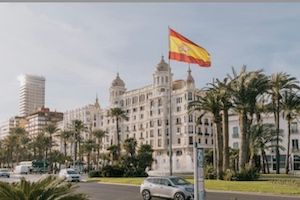
The U.S. and Israel’s “Operation Epic Fury” against Iran has created a rift between Spain and the United States. The Spanish government has formally refused to allow the U.S. to use military bases on its territory. More than ten U.S. military aircraft previously stationed at the Rota Naval Base and Morón Air Base have withdrawn from the bases. In response, Donald Trump has threatened to impose a comprehensive embargo on Spain and suspend economic and trade relations.
Spanish Prime Minister Pedro Sánchez publicly condemned the military actions taken by the United States and Israel against Iran, calling them “an unjustified and dangerous unilateral military intervention” and stating that they violate international law.
Spain’s Minister of Foreign Affairs, José Manuel Albares, also confirmed the government’s consistent position: Spain will not allow the United States to conduct any military operations that go beyond the scope of bilateral agreements or that lack authorization under the United Nations Charter.
Prior to this, tensions between the United States and Spain had already been strained after the Sánchez government refused to raise defense spending to 5% of GDP and disagreed with Washington on Middle East issues. When asked at the White House about Spain’s refusal to allow the use of its military bases, Trump harshly criticized the decision and stated that the U.S. might halt all commercial dealings with Spain, declaring that the United States “does not want to have anything to do with Spain.” U.S. Treasury Secretary Scott Bessent supported Trump, saying that the United States has the legal authority to impose an embargo on Spanish goods. However, U.S. Trade Representative Jamieson Greer said further discussions would be held regarding options to safeguard national and economic security.
In 2025, U.S. exports to Spain totaled about $26 billion, while imports were about $21 billion, with major trade items including pharmaceuticals and olive oil. If trade were interrupted, it would inevitably have a significant impact on both economies. Although the European Union hopes to maintain stable transatlantic relations, spokesperson Olof Gill emphasized that the EU will stand with all member states and is prepared to use its common trade policy to defend their economic interests. European Commission Vice-President Stéphane Séjourné stated even more clearly: A threat to any one member state is, in essence, a threat to the entire European Union.
However, European countries remain divided over the attack on Iran. German Chancellor Friedrich Merz said he understands the “dilemma” faced by the United States in responding to Iran’s nuclear threat and stated that he would “not comment on an ally’s military actions.” The position of British Prime Minister Keir Starmer appeared to shift somewhat after Iran launched a counterattack that struck a British base in Cyprus. The United Kingdom, France, and Germany then issued a joint statement saying they would take necessary defensive actions to destroy Iran’s capacity to launch missile and drone attacks.
- 274 reads
Human Rights

Fostering a More Humane World: The 28th Eurasian Economic Summi

Conscience, Hope, and Action: Keys to Global Peace and Sustainability

Puppet Show I International Friendship Day 2020