Hezbollah Launches Airstrikes on Israel in Retaliation for Iran
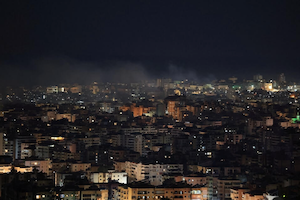
The United States and Israel have continued their attacks on Iran, prompting Tehran to launch retaliatory strikes against several countries in the Persian Gulf. The escalating conflict has triggered the most severe disruption to the global aviation industry in years. Major Middle Eastern airports — including Dubai, the world’s busiest international air hub — have been forced to cancel flights or shut down entirely.
As airlines across Europe and the Middle East implemented widespread cancellations, the skies over Iran, Iraq, Kuwait, Israel, and Bahrain were left nearly empty. Emirates, the world’s largest international airline, suspended flights indefinitely. Both Emirates and Qatar Airways — not only leading passenger carriers but also among the world’s top cargo operators — halted operations, creating far-reaching consequences.
Dubai and Doha sit at the crossroads of major Europe-Asia air routes and rely heavily on dense long-haul transit networks. When these hubs grind to a halt, passengers are stranded, while aircraft and flight crews are stuck across the globe, severely disrupting global flight scheduling. Aviation analyst John Strickland noted that the scale of these hubs means potentially hundreds of thousands of people could be stranded worldwide, with no certainty about when travel can resume. He warned that the current chaos may only be the beginning, with the duration of the disruption still unclear.
Following U.S. and Israeli strikes on Iran, the conflict quickly spread. Israel announced a new wave of airstrikes on Iran on Sunday, while Tehran launched retaliatory attacks targeting Gulf states. Explosions were reported in the skies over Dubai and Doha for two consecutive days, heightening regional tensions. Kuwait International Airport was also reportedly hit by a drone attack, leaving several employees with minor injuries.
Dubai International Airport confirmed damage to one of its boarding concourses, with footage showing passengers fleeing through smoke-filled corridors. Authorities said four staff members were injured. Damage was also reported at airports in Abu Dhabi and Kuwait. Key transit hubs in Dubai, Abu Dhabi, and Qatar’s capital Doha were either partially closed or operating under severe restrictions.
Iran’s retaliatory actions prompted multiple countries to close their airspace, throwing both air and maritime transport in the Middle East into turmoil. Thousands of flights were canceled, and several shipping companies suspended transit through the Strait of Hormuz, effectively paralyzing maritime traffic in the vital waterway. Strickland emphasized that the disruption is compounded by the highly complex nature of global flight scheduling systems.
Airlines across Europe, Asia, and the Middle East have rerouted or canceled flights to avoid closed airspace, leading to longer routes and rising fuel costs. Many carriers had already been avoiding Russian and Ukrainian airspace following the Russia-Ukraine war. With Iranian and Iraqi airspace now restricted as well, available flight corridors have narrowed even further, exacerbating the strain on global aviation.
- 113 reads
Human Rights

Fostering a More Humane World: The 28th Eurasian Economic Summi

Conscience, Hope, and Action: Keys to Global Peace and Sustainability

Puppet Show I International Friendship Day 2020