Trump Pressures Iran as Two U.S. Carrier Groups Deploy; Military Action Reportedly Weeks in the Making
 U.S.
U.S.
President Donald Trump has once again issued a stern warning to Iran, applying pressure on both diplomatic and military fronts. Multiple international media outlets, citing U.S. officials, report that the United States has deployed two aircraft carrier strike groups to the Middle East and strengthened regional troop presence and air defense systems. Observers have described the move as a “dual-carrier show of force,” signaling that Washington’s dissatisfaction with Tehran has escalated into a new phase of confrontation.
According to reports, the United States Department of Defense confirmed it has ordered carrier strike groups, including the USS Dwight D. Eisenhower and the USS Carl Vinson, to operate in and around the Persian Gulf and the Arabian Sea, accompanied by guided-missile destroyers and submarines. At the same time, U.S. Central Command has raised the alert level at its bases in Iraq and Syria.
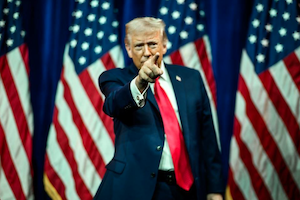
Officials in Washington told reporters that military preparations have been underway for several weeks, including precision-strike drills, logistics coordination, and consultations with allies. While the White House has not confirmed whether a specific timetable for military action has been approved, it stressed that “all options remain on the table.” Trump recently stated publicly that Iran would face “unprecedented consequences” if it fails to return to negotiations and agree to what he called a “fair deal” on its nuclear program.
Iran has responded sharply. Officials in Tehran accused the United States of escalating military intimidation and warned that any attack would trigger retaliation against U.S. bases and allied targets in the region. Iran’s Revolutionary Guard Corps has also announced a heightened state of readiness and conducted missile and drone exercises.
Analysts note that rising U.S.-Iran tensions are closely linked to developments in Iran’s nuclear program, attacks by regional armed groups on U.S. facilities, and security concerns in the Red Sea and the Persian Gulf. Although neither side has formally declared war, the scale and frequency of military deployments have heightened fears of a potential miscalculation.
The international community has urged restraint. Officials from the European Union and the United Nations reiterated that disputes should be resolved through diplomatic channels to prevent further instability in the Middle East. As U.S. forces continue to assemble and political rhetoric intensifies, developments in the coming weeks are likely to have significant implications for regional security and global energy markets.
- 170 reads
Human Rights

Fostering a More Humane World: The 28th Eurasian Economic Summi

Conscience, Hope, and Action: Keys to Global Peace and Sustainability

Puppet Show I International Friendship Day 2020