New Progress in Mercury Exploration: BepiColombo Successfully Enters Orbit
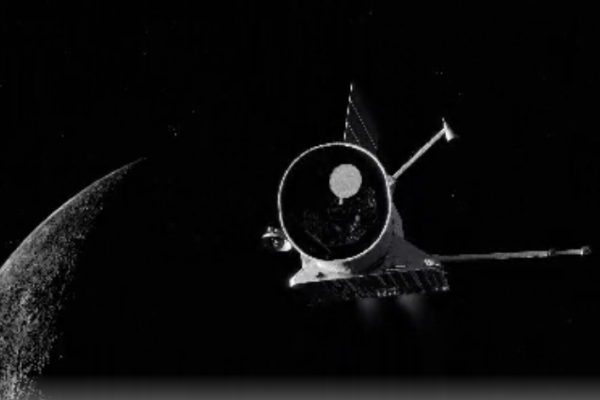
The BepiColombo mission to Mercury—a joint undertaking by the European Space Agency (ESA) and the Japan Aerospace Exploration Agency (JAXA)—successfully entered orbit around Mercury in the early hours of November 22 (Taiwan Time), following an eight-year journey through space. The mission comprises two separate spacecraft, which are scheduled to separate in December. From their respective orbits, they will investigate Mercury’s surface, internal structure, and magnetic field, providing deeper insight into the planet closest to the Sun in our solar system.
Launched from French Guiana in October 2018, the BepiColombo spacecraft has a total mass of approximately 4 metric tons and has traveled over 10 billion kilometers to date. Because Mercury is so close to the Sun, the spacecraft experiences significant gravitational acceleration as it approaches; consequently, it had to utilize planetary gravity assists multiple times to adjust its speed and trajectory. Over the course of the mission, it performed one flyby of Earth, two of Venus, and six of Mercury. The original seven-year journey was extended by about a year due to power supply issues affecting the spacecraft's propulsion system.
In the early hours of November 22 (Taiwan Time), the spacecraft initiated an orbital correction maneuver. After a 37-minute deceleration process, it was confirmed that the spacecraft had successfully entered orbit around Mercury. The two probes are scheduled to separate between December 9 and 10, proceeding into distinct orbits to carry out their respective scientific objectives.
The ESA’s Mercury Planetary Orbiter (MPO) will operate in an orbit approximately 480 kilometers from Mercury's surface, focusing on observations of surface features, chemical composition, and internal structure. Meanwhile, JAXA’s Mercury Magnetospheric Orbiter (Mio) will follow an elliptical orbit, reaching a maximum distance of approximately 11,000 kilometers from the planet. Its mission is to study Mercury’s magnetic field and magnetosphere, as well as the interactions between the solar wind and the planet's surrounding environment. The two probes are scheduled to begin their primary scientific observations in April 2027.
As the planet closest to the Sun in the solar system, Mercury experiences surface temperatures ranging from approximately -180°C to 450°C. Furthermore, its prolonged exposure to intense solar radiation poses significant challenges for the thermal insulation and protective design of the probes. Previously, only NASA’s *Mariner 10* and *MESSENGER* missions have conducted close-range exploration of Mercury. *BepiColombo* will gather further data to help scientists understand Mercury’s geological evolution, the formation of its magnetic field, and the impact of the solar wind on the planetary environment.
- 2 reads
Human Rights

Fostering a More Humane World: The 28th Eurasian Economic Summi

Conscience, Hope, and Action: Keys to Global Peace and Sustainability


Puppet Show I International Friendship Day 2020