Starship Successfully Caught and Recovered, Marking a New Milestone in Space Exploration
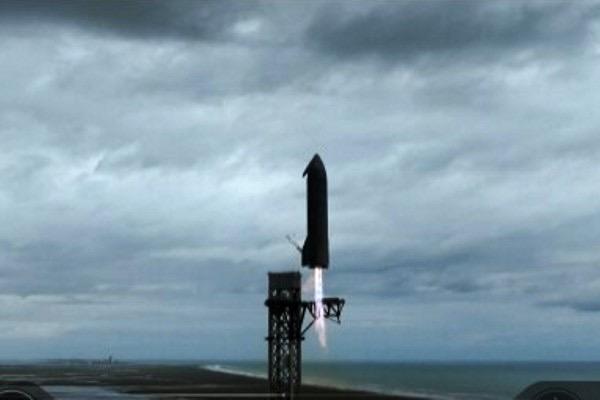
SpaceX Achieves Major Aerospace Breakthrough on the 14th Local Time! For the First Time, the U.S. space exploration company successfully used giant mechanical arms mounted on a launch tower to catch its Starship spacecraft as it returned from Earth orbit. The achievement opens up new possibilities for fully reusable rocket systems and marks a major step forward in space transportation technology.
The mission was the 15th test flight of the Starship program. The spacecraft launched from Starbase in Texas on the 13th local time. During the flight, it reached an orbit approximately 260 kilometers above Earth, completed 14 orbits around the planet, and spent more than 22 hours in flight. It also successfully deployed 26 Starlink satellites into their designated orbits. During its return, the spacecraft reentered Earth’s atmosphere at a speed of approximately 27,000 kilometers per hour. It had to withstand the intense heat generated by atmospheric friction before gradually slowing down through engine relights and attitude adjustments.
After passing through the clouds and approaching the launch site, the spacecraft shifted into a vertical position and descended slowly. It eventually maneuvered precisely between the launch tower’s two giant mechanical arms, successfully completing its recovery. Known as “Mechazilla’s chopsticks,” the system had previously recorded three successful catches of Super Heavy boosters. However, catching a spacecraft that had flown to a higher altitude and returned at a much faster speed presented a significantly greater technical challenge.
Notably, the Super Heavy booster, which was originally scheduled to be recovered during the same mission, failed to return successfully. After separating from the spacecraft, it experienced an anomaly, prompting the cancellation of the recovery procedure. The booster eventually exploded over the Gulf of Mexico, and the engineering team is still investigating the technical issues involved.
The spacecraft’s successful return to the launch tower marks another crucial step toward reusable space transportation systems. If future operations can reduce the need for rocket refurbishment and component replacement, launch costs could be lowered and mission efficiency improved. In addition, NASA plans to use Starship for its Artemis lunar missions. However, technologies such as in-orbit refueling, heat shield durability, and booster reliability remain key challenges that SpaceX must overcome in the coming years.
- 6 reads
Human Rights

Fostering a More Humane World: The 28th Eurasian Economic Summi

Conscience, Hope, and Action: Keys to Global Peace and Sustainability


Puppet Show I International Friendship Day 2020