Voyager 1 Set to Reach New Milestone as the Most Distant Human-Made Spacecraft
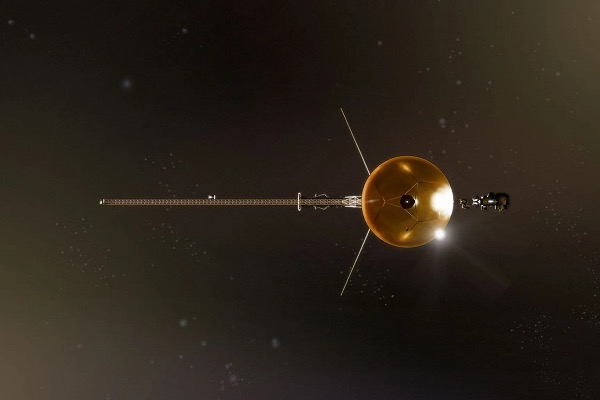
NASA’s unmanned spacecraft Voyager 1 is about to reach a new milestone in space exploration. Since its launch in 1977, Voyager 1 has continued its journey toward interstellar space, becoming the most distant human-made object from Earth. NASA estimates that the spacecraft will reach a distance of one light-day from Earth at around 5:16 a.m. Eastern Time on November 18. This means it will take 24 hours for light emitted from Earth to reach the spacecraft, which will be approximately 25.9 billion kilometers away.
Voyager 1 is currently traveling at a speed of approximately 61,000 kilometers per hour. Alan Cummings, a scientist with the Voyager project at the California Institute of Technology, noted that the spacecraft’s ability to continue operating and communicating with Earth from such an immense distance represents a major achievement in long-term space engineering. Its twin spacecraft, Voyager 2, entered interstellar space in 2018 and is expected to reach the one-light-day distance from Earth in November 2035.
Voyager 1 was launched from Florida on September 5, 1977, with its original mission focused on exploring the outer planets of the solar system. During its flybys of Jupiter and Saturn, it made several significant discoveries, including Jupiter’s rings and several previously unknown moons, as well as observations of Saturn’s moons and its G ring. In 2012, the spacecraft crossed the heliopause, officially entering interstellar space and continuing to provide scientists with valuable data about the environment beyond the solar system.
The spacecraft also carries a gold-plated copper disc known as the Golden Record. Its contents include music from Earth, natural sounds, greetings in 55 languages, and information about humanity and our planet. The record was designed to convey a message about Earth’s civilization to any extraterrestrial life that might encounter it.
To commemorate this achievement, NASA has invited people around the world to participate in the “Shine for Voyager One Light-Day” event. Participants can use flashlights to blink the Morse code signal “VGR,” the mission’s call sign. They can also visit the event website to simulate light signals using their smartphones or tablets.
NASA is also scheduled to host an online discussion on November 19, Eastern Time, to share the latest updates on Voyager 1 and Voyager 2, as well as findings from interstellar space research. The agency also plans to release a related documentary in 2027 to mark the mission’s 50th anniversary, celebrating another milestone in humanity’s expanding exploration of the universe.
- 8 reads
Human Rights

Fostering a More Humane World: The 28th Eurasian Economic Summi

Conscience, Hope, and Action: Keys to Global Peace and Sustainability

Puppet Show I International Friendship Day 2020