Starship Completes 15th Test Flight, Booster Recovery Fails but Spacecraft Successfully Reaches Orbit
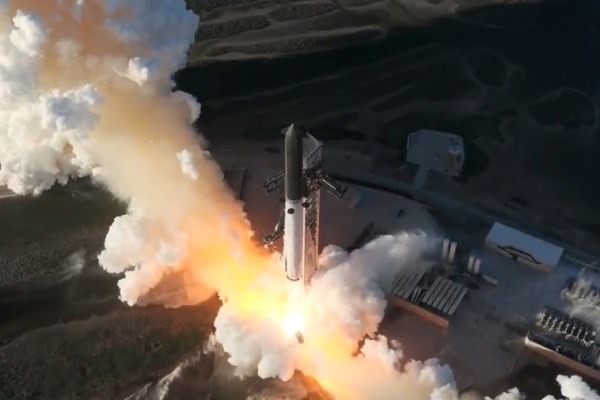
U.S. aerospace company SpaceX conducted the 15th test flight of its Starship rocket at Starbase in Texas. The massive rocket, standing approximately 124 meters tall, successfully completed stage separation after liftoff. However, its Super Heavy first-stage booster failed to return to the launch tower as planned. According to the company, navigation and flight control anomalies occurred during the booster’s return flight, prompting the safety system to abort the tower return maneuver and switch to a backup plan involving a splashdown offshore. The booster eventually exploded over the Gulf of Mexico and crashed into the sea, preventing the company from achieving its goal of recovering both stages.
The second-stage Starship continued its mission, reaching Earth orbit approximately 27 minutes after liftoff and deploying 26 Starlink satellites. The spacecraft is expected to orbit Earth at an altitude of approximately 275 kilometers, with the entire mission lasting nearly 22 hours. About seven hours into the flight, the team completed a series of inspections and found no immediate abnormalities with the heat shield or reentry conditions. The spacecraft must still pass a final deorbit assessment before a decision can be made on whether it will return to Texas and attempt to be caught midair by the launch tower’s mechanical arms. If safety requirements are not met, it may instead splash down in waters near Hawaii.
This was Starship’s 15th test flight and the first recovery attempt involving its upgraded Super Heavy booster. SpaceX has previously caught its first-stage rocket using mechanical arms three times, but the Starship spacecraft itself has yet to complete a similar maneuver. The company aims to refurbish and reuse all rocket components in the future, reducing costs and increasing launch frequency to support satellite transportation, lunar base development, and missions to Mars.
Starship’s development is also closely tied to NASA’s Artemis lunar exploration program. The U.S. National Aeronautics and Space Administration (NASA) has invested billions of dollars in contracting SpaceX to develop a crewed lunar lander and plans to conduct orbital docking demonstrations beforehand. Although the booster recovery attempt was unsuccessful, the spacecraft’s successful orbital insertion and satellite deployment marked progress. The upcoming return flight and potential tower catch will be important milestones in evaluating Starship’s technological capabilities.
- 10 reads
Human Rights

Fostering a More Humane World: The 28th Eurasian Economic Summi

Conscience, Hope, and Action: Keys to Global Peace and Sustainability


Puppet Show I International Friendship Day 2020