Swift Observatory Reenters Earth’s Atmosphere, Ending Nearly 22 Years of Space Observation
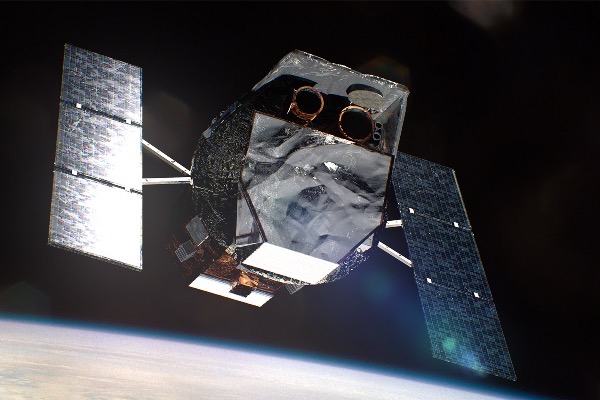
NASA’s Neil Gehrels Swift Observatory, which had been in service for nearly 22 years, reentered Earth’s atmosphere on the morning of November 4 (U.S. Eastern Time), plunging toward Earth at high speed over northern Sumatra, Indonesia. The event marked the end of its space observation mission. Originally designed to operate for just two years, the space telescope spent decades tracking high-energy cosmic explosions and making significant contributions to astronomical research. Its mission has now come to an end amid the intense heat generated by atmospheric friction.
The U.S. Space Force confirmed that the Swift Observatory reentered the atmosphere at 7:39 a.m. local time, traveling at approximately 22 times the speed of sound, about 322 kilometers north of the equator. NASA estimated that most of the spacecraft would break apart due to intense heating at high altitudes, although some components could survive reentry and fall to the ground as debris. No reports of injuries or property damage caused by falling debris have emerged so far. Earlier assessments by U.S. authorities estimated the probability of the incident causing harm to anyone on the ground at approximately one in 2,000, indicating that the overall risk was relatively low.
Launched in 2004 at a cost of approximately US$500 million, the Swift Observatory was equipped with three instruments designed to observe different wavelengths of light. Its primary mission was to detect gamma-ray bursts, but it also monitored supernovae, black holes tearing apart stars, and other high-energy astronomical phenomena. According to NASA, the mission’s accumulated observations have contributed to approximately 7,000 scientific papers, making a significant impact on astronomical research.
As the observatory’s orbital altitude gradually declined over the years, NASA partnered with a private space company in 2026 to launch a dedicated spacecraft designed to approach the Swift Observatory and boost it into a higher orbit. However, the rescue vehicle experienced an attitude-control malfunction after launch, forcing the team to abandon the mission. The Swift Observatory subsequently ceased operations in October this year.
Experts had previously warned that some high-density components of satellites may not completely burn up during atmospheric reentry. The incident has once again drawn attention to the growing problem of space debris. As the number of satellite launches and retirements continues to increase, reducing the risks associated with uncontrolled reentries and assessing the long-term effects of falling debris on the upper atmosphere have become increasingly important challenges amid the continued expansion of space activities.
- 4 reads
Human Rights

Fostering a More Humane World: The 28th Eurasian Economic Summi

Conscience, Hope, and Action: Keys to Global Peace and Sustainability

Puppet Show I International Friendship Day 2020