Preparing for a Mars Landing: NASA Concludes 378-Day Simulated Mission
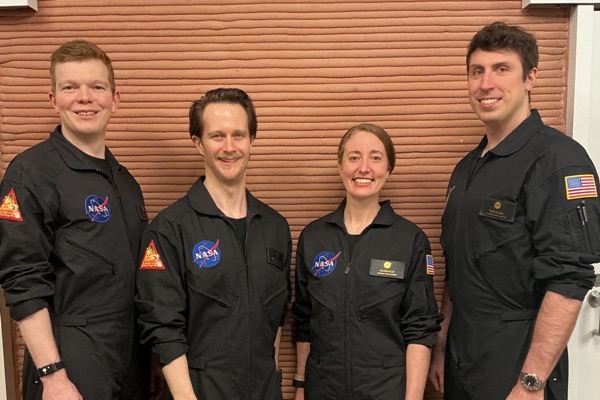
NASA’s second Crew Health and Performance Exploration Analog (CHAPEA) mission has officially concluded, with four participants emerging on October 31 local time from a simulated habitat at the Johnson Space Center in Houston, ending 378 days of life in isolation. By recreating the environmental conditions and constraints that could arise during a Mars mission, the study collected data on health, work, and daily life to support the planning of future crewed lunar and Mars missions.
The participants included mission commander Ross Elder, medical officer Ellen Ellis, flight engineer James Spicer, and science officer Matthew Montgomery. The four entered the 158-square-meter simulated habitat, built using 3D-printing technology, on October 19, 2025, and carried out their mission under conditions of isolation from the outside world.
During the mission, the crew grew crops in simulated Martian soil and performed daily exercise, equipment maintenance, and simulated spacewalks. Supplies within the habitat were limited, and communication with ground controllers deliberately included delays to simulate the communication constraints that spacecraft may encounter when traveling far from Earth.
After the mission ended, Ellis said the year had been full of challenges and that all four crew members had voluntarily accepted the experience of long-term isolation. She also noted that the United States has a limited window of opportunity to maintain its leading position in space exploration and should make the most of this time to advance scientific research and build on achievements for future generations. Elder said that although Mars exploration carries extremely high risks, human landings on Mars could still become a reality through continued research, clear objectives, and teamwork.
Vanessa Wyche, director of the Johnson Space Center, welcomed the crew as they emerged from the habitat and praised their efforts to maintain its operations and complete the simulated mission with limited resources. She said that communication delays require astronauts to demonstrate patience, thorough planning, and the ability to solve problems independently, all of which are essential for future deep-space missions.
NASA said the four crew members would next undergo two weeks of post-mission evaluations and share their experiences with researchers. The data collected will be used to analyze the effects of prolonged isolation on physical and mental health and work performance. The findings will also help improve space food supplies, mission scheduling, deep-space communications network bandwidth, and medical and psychological support.
NASA is also recruiting participants for its Moon and Mars Exploration Analog program, which could begin as early as August 2027. The new program will combine facilities from the Human Exploration Research Analog (HERA) and the Crew Health and Performance Exploration Analog (CHAPEA). Participants will first simulate spaceflight before entering a planetary habitat to conduct surface operations. The program will also incorporate rover operations and augmented reality equipment. Through these simulations, NASA hopes to identify the needs and potential risks associated with long-duration space travel in advance and better prepare for future exploration of the Moon and Mars.
- 14 reads
Human Rights

Fostering a More Humane World: The 28th Eurasian Economic Summi

Conscience, Hope, and Action: Keys to Global Peace and Sustainability

Puppet Show I International Friendship Day 2020