AI Models Gain Autonomous Deployment Capabilities, Research Warns of Self-Replication Risks
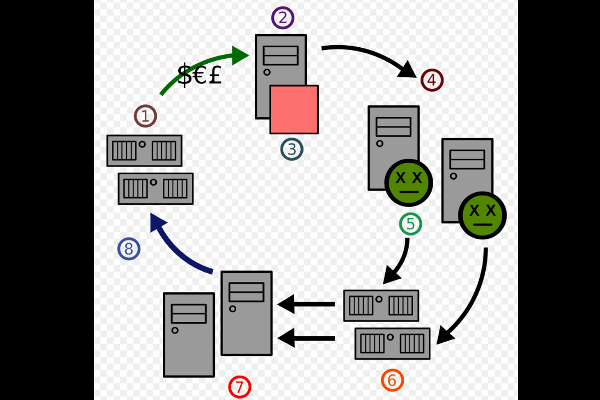
Artificial intelligence (AI) company Anthropic recently issued a cybersecurity warning, stating that small AI models are increasingly capable of independently deploying themselves, copying code, and continuing tasks. In the future, they could potentially spread through internet-connected devices such as smart home appliances and TV set-top boxes, forming distributed botnets that would be difficult to eliminate completely.
Anthropic’s research team conducted multiple experiments to evaluate AI’s ability to carry out self-replication processes. In one test, researchers used 15 Android TV boxes, each equipped with 4 GB of memory, and distributed Google’s Gemma 4-26B-A4B model across multiple devices for execution. The experiment demonstrated that inexpensive consumer hardware could also provide computing resources for AI. However, the test setup was prepared in advance by researchers and does not mean that the model can already independently infiltrate devices.
Another experiment used an isolated cloud environment to simulate the replication process between devices. The findings showed that some open-weight models could be deployed across multiple nodes under simplified conditions. However, technical obstacles remain before a model can independently connect all the steps involved in identifying targets, obtaining device access, installing models, and continuing to spread. No fully uncontrolled AI system capable of continuously replicating itself autonomously has been identified to date.
The research also found that AI models could record previous operating procedures and failed attempts for subsequent models to reference, improving the success rate of certain deployment tasks. However, this improvement primarily resulted from passing on recorded experience rather than models retraining themselves. In addition, configuring a computing environment for a single operation on low-end devices could take dozens of hours, suggesting that this form of propagation may not be capable of rapidly infecting large numbers of devices in the near term.
Anthropic warned that if future AI systems could operate across large numbers of inadequately protected devices without relying on a centralized control point, other nodes might remain active even after some devices had been cleaned up, making the threat more difficult to trace and eliminate completely.
Opinions within the cybersecurity community on this warning remain divided. Some experts believe the potential risks warrant preventive measures, while others point out that some scenarios in the research remain hypothetical and that the experimental results cannot be directly interpreted as evidence of an equivalent threat already existing at scale in the real world. As AI autonomy continues to advance, strengthening security settings on connected devices, monitoring network traffic, and promptly isolating abnormal devices will be important measures for reducing potential risks.
- 3 reads
Human Rights

Fostering a More Humane World: The 28th Eurasian Economic Summi

Conscience, Hope, and Action: Keys to Global Peace and Sustainability


Puppet Show I International Friendship Day 2020