Starship Reaches Earth Orbit for the First Time and Successfully Deploys 26 Satellites
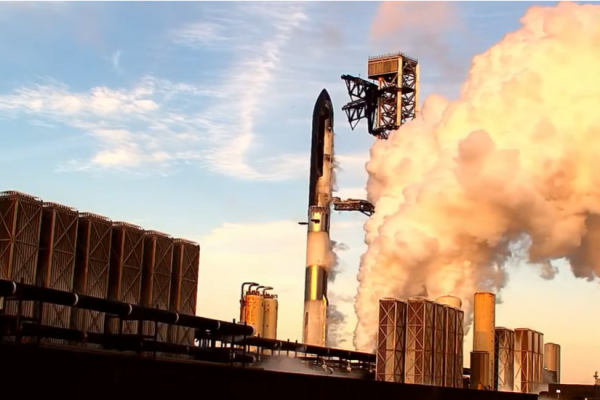
Space Exploration Technologies Corp. (SpaceX) completed the 14th test flight of its Starship at 8:49 a.m. local time on the 28th (8:49 p.m. Taiwan time on the 28th). Although an engine anomaly occurred during the flight, Starship successfully performed an orbital insertion maneuver and deployed 26 Starlink V3 satellites into Earth orbit, marking the first time Starship completed an orbital flight while carrying operational payloads.
After lifting off from Starbase in southern Texas, one of Starship’s Raptor engines malfunctioned. After reviewing flight data and system status, the mission team allowed Starship to continue on a suborbital trajectory before restarting the engine for an orbital insertion burn. The spacecraft ultimately reached an orbit approximately 270 kilometers above Earth’s surface.
Once in orbit, Starship successfully deployed all 26 Starlink V3 satellites. The mission was originally planned to last approximately 10 hours, with the spacecraft expected to orbit Earth several times before performing a deorbit maneuver. However, due to the engine issue, the mission was shortened to about three hours. After completing its primary tests, Starship performed a controlled reentry, while the Super Heavy booster also completed its return sequence and splashed down near the Gulf of Mexico.
The significance of this test flight lies in Starship’s first successful demonstration of actual orbital transportation and satellite deployment, moving beyond suborbital testing. This capability could serve as a technical demonstration for increasing the number of Starlink satellites deployed in future missions and expanding Starship’s capacity to transport large payloads.
Starship’s development is also closely connected to NASA’s Artemis lunar program. SpaceX is developing a lunar lander system based on Starship technology, and future lunar missions will require the company to address in-space refueling. SpaceX plans to use multiple Starships to transfer propellant in orbit.
Therefore, while the successful orbital insertion represents an important milestone in Starship’s development, several technologies still require further validation, including in-orbit refueling, repeated launches, and long-duration crewed flights. SpaceX will continue to accumulate relevant data through subsequent test flights as it advances Starship toward becoming a large-scale space transportation system.
- 50 reads
Human Rights

Fostering a More Humane World: The 28th Eurasian Economic Summi

Conscience, Hope, and Action: Keys to Global Peace and Sustainability


Puppet Show I International Friendship Day 2020