Study Reveals Earth Could Face Dramatic Deoxygenation in 1 Billion Years
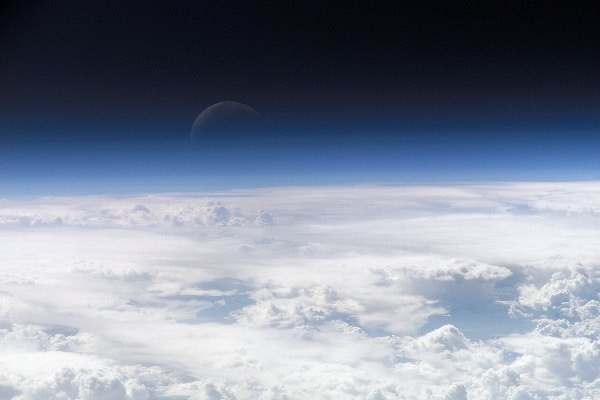
The oxygen that humans rely on for breathing is not a permanent component of Earth’s atmosphere. A new study using large-scale computer simulations to model Earth’s future has found that the planet’s oxygen-rich atmosphere may persist for only about another billion years. After that, Earth could undergo a dramatic deoxygenation process, potentially returning to an environment dominated by anaerobic microorganisms.
The study was jointly conducted by researchers from Toho University in Japan and the Georgia Institute of Technology in the United States, with the findings published in the journal Nature Geoscience. The research team developed an integrated model incorporating climate, ocean systems, and biogeochemical cycles, and ran more than 400,000 simulations under varying environmental conditions to project changes in atmospheric oxygen over the distant future.
According to the study, the key changes could be driven by gradually increasing solar radiation. As the Sun becomes brighter, Earth’s temperature will rise, affecting long-term geochemical cycles and gradually reducing the amount of carbon dioxide in the atmosphere. Once carbon dioxide levels become too low to sustain photosynthesis, plants and other photosynthetic organisms will decline. As a result, the production of oxygen through photosynthesis will also decrease, eventually triggering a rapid loss of atmospheric oxygen.
Once this transformation occurs, Earth’s atmospheric composition will change dramatically. Oxygen levels could fall to extremely low levels, while methane concentrations may increase. At the same time, the ozone layer could lose the conditions necessary for its long-term stability. Most humans, animals, plants, and other oxygen-dependent organisms would struggle to survive, potentially returning Earth to conditions resembling those of about 2.5 billion years ago, before the Great Oxidation Event.
The research team also noted that the findings could affect how scientists search for life beyond Earth. Astronomers have often regarded oxygen and ozone as important indicators when assessing whether a planet might harbor life. However, Earth’s own evolutionary history suggests that its oxygen-rich phase represents only a relatively small portion of its long history. Focusing solely on oxygen-related signals could therefore cause scientists to overlook planets where life exists in low-oxygen or oxygen-free environments.
The researchers therefore suggest that future searches for life on exoplanets should look beyond oxygen-related signals and broaden the search to include other chemical signatures that may be associated with biological activity. This could help avoid relying on a single condition to determine whether a planet is capable of supporting life.
- 61 reads
Human Rights

Fostering a More Humane World: The 28th Eurasian Economic Summi

Conscience, Hope, and Action: Keys to Global Peace and Sustainability


Puppet Show I International Friendship Day 2020