NASA Confirms New Lunar Crater in Rare Once-in-a-Century Event
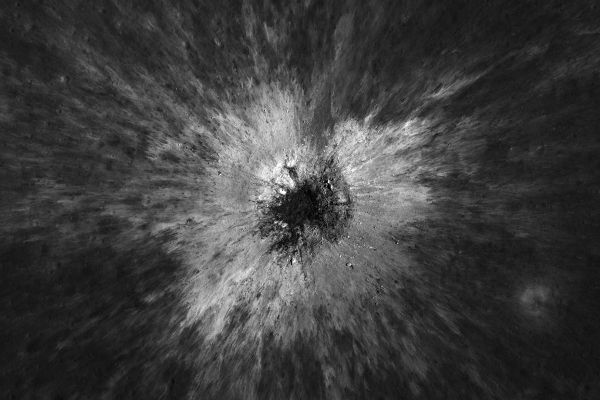
Researchers from the National Aeronautics and Space Administration (NASA) have identified a large impact crater that formed in recent years on the Moon’s surface. Measuring approximately 222 meters in diameter and 43 meters deep, the crater has been named the “McGetchin” crater. Research indicates that the impact occurred around spring 2024, with events of this magnitude occurring only about once every 132 years on average.
The study was recently published in *Science Advances*. Scientists believe the object that struck the Moon may have been an asteroid or a fragment of a comet, estimated to have been roughly the size of a three- to six-story building. The powerful impact not only created a large crater but also disturbed the lunar surface across an area spanning more than 100 kilometers, ejecting large amounts of dust and rock into the surrounding region.
NASA’s Lunar Reconnaissance Orbiter (LRO) had already captured images of the site in May 2024. However, because the spacecraft receives a vast amount of lunar surface data every day, researchers did not identify the anomaly until they reanalyzed the data in August 2025. Subsequent images were then used to confirm the formation of the impact crater.
The research team noted that the crater is approximately three times larger than similar newly formed impact craters previously identified by the Lunar Reconnaissance Orbiter, providing a rare opportunity to study large-scale impact events. Observations also showed that the ejecta from the impact was distributed over a wide area, with some debris ejected at angles higher than previously predicted by existing models.
In addition, researchers detected a low-temperature region approximately 7 kilometers wide around the crater. They believe the impact loosened the Moon’s surface soil, bringing subsurface material to the surface. The finding could help scientists better understand how lunar soil and the geological environment continue to be altered by impacts.
Because the Moon has virtually no atmosphere, space debris approaching its surface does not undergo the significant deceleration or burning caused by atmospheric friction as it would on Earth. As a result, impacts are an important factor in reshaping the lunar surface. NASA said that such observations can help scientists study the geological evolution of the Moon and provide useful information for assessing the lunar environment and impact risks for future crewed lunar missions.
- 52 reads
Human Rights

Fostering a More Humane World: The 28th Eurasian Economic Summi

Conscience, Hope, and Action: Keys to Global Peace and Sustainability


Puppet Show I International Friendship Day 2020