Hidden Code in Urine! Cats Have Their Own “Scent ID Card”
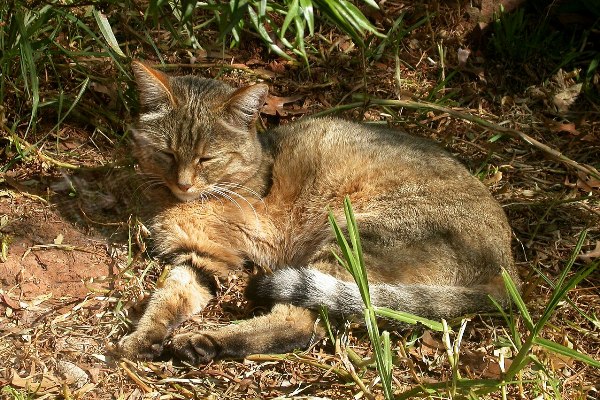
Global Mystery of How Cats Use Urine to Recognize One Another Solved for the First Time!A new study published in late August 2026 in the prestigious journal Current Biology has revealed a previously unknown chemical “code” hidden in cat urine. An international research team led by Japanese scientist Masao Miyazaki successfully identified a unique set of chemical markers that cats use to recognize one another. Researchers found that each cat’s urine contains a specific combination and proportion of 13 types of branched-chain fatty acids (BCFAs). Because these substances do not readily disperse into the air and can remain in the environment for extended periods, they effectively serve as a pet’s own “scent identification card.”
Many cat owners have seen their pets sniff something before suddenly opening their mouths slightly and staring blankly in a seemingly comical expression. This behavior, known as the “flehmen response,” is actually the cats’ way of carefully processing information left behind by other animals. Experiments confirmed that when cats encountered urine from unfamiliar individuals, they spent significantly more time sniffing and frequently displayed the characteristic flehmen response. When repeatedly exposed to samples from the same source, however, their interest gradually declined. Even more remarkably, the cats were still able to remember scents they had encountered several months earlier, demonstrating an impressive long-term memory.
This scientific breakthrough not only sheds new light on animal behavior but also solves a biological mystery that has persisted for more than a century. More than 100 years ago, scientists discovered that the kidneys of felines contain large quantities of lipid droplets, but their specific purpose remained unknown. The new study has finally shown that the kidneys function as a specialized storage facility for these unusual fatty acids. Through this remarkable physiological storage mechanism, cats can maintain stable scent signals even when their diet or physiological condition changes.
In addition to domestic cats, similar chemical compositions were also found in lions, tigers, leopards, and other feline species. However, the proportions and structures varied somewhat between species, which researchers believe may reflect evolutionary adaptations shaped by natural selection. The scientists leading the project emphasized that the findings could help humans better understand feline behavior while also potentially leading to applications such as reducing unpleasant odors from litter boxes and tracking endangered wild cats. Further research into why these fatty acids accumulate in the kidneys could even open new avenues for treating urinary system diseases in both animals and humans.
- 71 reads
Human Rights
Fostering a More Humane World: The 28th Eurasian Economic Summi

Conscience, Hope, and Action: Keys to Global Peace and Sustainability


Ringing FOWPAL’s Peace Bell for the World:Nobel Peace Prize Laureates’ Visions and Actions

Protecting the World’s Cultural Diversity for a Sustainable Future


Puppet Show I International Friendship Day 2020