H3 Rocket No. 9 Launches, Michibiki-7 Successfully Enters Orbit
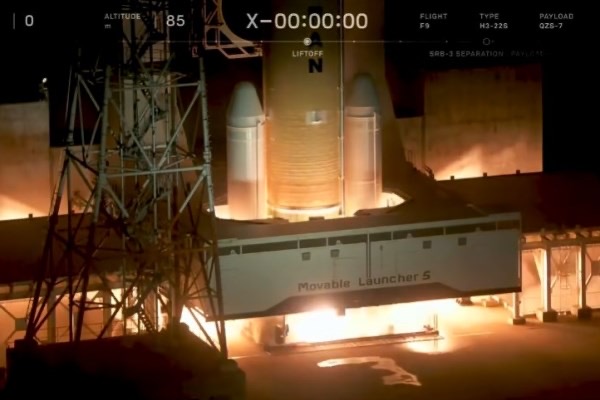
Japan’s Aerospace Exploration Agency launched the ninth H3 rocket carrying the Quasi-Zenith Satellite System satellite “Michibiki-7” from the Tanegashima Space Center in Kagoshima Prefecture at 4:23 a.m. local time on August 11. The rocket followed its planned flight path and successfully deployed the satellite about 30 minutes after liftoff, confirming that it had entered its designated orbit and that the mission was successful.
The Michibiki satellite series is primarily used to strengthen Japan’s positioning services, functioning similarly to the GPS and helping improve positioning accuracy for devices such as car navigation systems and smartphones. The system can also support disaster prevention and response, including the transmission of disaster information during emergencies such as earthquakes. The Japanese government aims to gradually establish an independently operated satellite network to reduce its reliance on overseas positioning systems.
Japan currently has five Michibiki satellites in operation. With the addition of Michibiki-7, the number of operational satellites has increased to six. The government had originally set a goal of establishing a seven-satellite constellation to ensure continuous access to high-precision positioning signals. It also plans to expand the network further to improve the overall stability of the system. The new satellite is expected to undergo approximately seven months of testing before officially providing positioning services.
The mission was also influenced by an accident during last year’s launch. The H3 No. 8 rocket lifted off in December 2025, but the satellite separated prematurely and failed to enter its intended orbit. An investigation by Japanese authorities determined that the failure was related to an abnormality in the satellite mounting structure, and improvement measures were subsequently proposed to prepare for the relaunch.
Since its first launch in 2023, the H3 rocket has continued to build up flight experience, with seven successful missions out of nine launches so far. With the successful deployment of another major satellite, Japan is gradually restoring the H3’s ability to undertake commercial and national space missions. In fiscal 2026, the rocket is also scheduled to carry out other important launches, including the Martian Moons Exploration (MMX) mission and resupply missions to the International Space Station .
- 93 reads
Human Rights

Fostering a More Humane World: The 28th Eurasian Economic Summi

Conscience, Hope, and Action: Keys to Global Peace and Sustainability


Puppet Show I International Friendship Day 2020