SpaceX Rocket Debris Crashes Into the Moon Today; Massive Crater and Dust Cloud Become the Focus of Observation
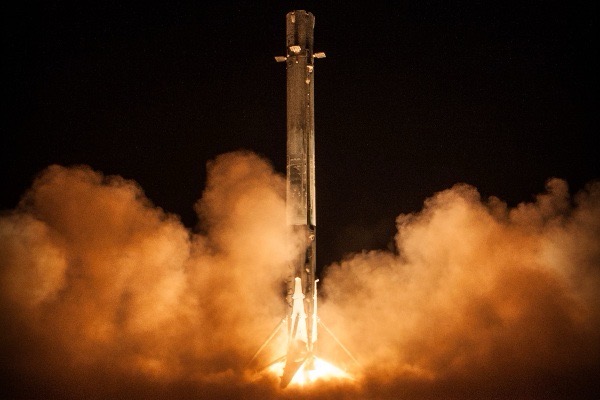
A rocket stage from the U.S. aerospace company SpaceX, left in space after completing a previous lunar mission, is expected to impact the Moon this afternoon (August 5, Taipei time). The unplanned collision has drawn the attention of the global astronomical community. According to current orbital calculations, the Falcon 9 second stage will approach the Moon at a speed of approximately 2.4 kilometers per second, striking an area on the western side of the Moon’s near side, near Einstein Crater.
The Falcon 9 rocket was launched in mid-January 2025 to deliver Firefly Aerospace’s Blue Ghost-1 lunar lander and Japanese company ispace’s lunar exploration payloads to the Moon. After completing its primary mission, the rocket stage was neither scheduled to return to Earth nor placed into an orbit that would permanently carry it away from the Moon. Instead, it continued traveling through cislunar space before gradually being pulled onto a collision course with the lunar surface by the Moon’s gravity.
Astronomers estimate that the several-ton rocket debris will release an impact energy roughly equivalent to three tons of TNT when it strikes the Moon. The collision is expected to create a crater measuring several dozen meters across and eject lunar rocks and fine dust into the surrounding area. Although the impact may produce a brief flash of light, observing it from Earth will be extremely difficult because the impact site is on the sunlit side of the Moon and the flash will last only a very short time.
Researchers from multiple countries are currently tracking the rocket stage using telescopes and orbital data in hopes of monitoring changes before and after the impact. In addition to studying the newly formed crater, scientists also hope the event will provide valuable insights into how lunar surface materials respond to high-speed impacts.
Although the impact was not an intentional lunar experiment conducted by SpaceX, it highlights a growing challenge brought about by the rapid expansion of space exploration. As governments and private companies continue to increase the number of lunar missions, the amount of human-made objects entering cislunar space will inevitably rise. How to manage unrecoverable rocket stages and minimize their potential impact on future lunar exploration activities is becoming an increasingly important issue for the space industry.
- 75 reads
Human Rights

Fostering a More Humane World: The 28th Eurasian Economic Summi

Conscience, Hope, and Action: Keys to Global Peace and Sustainability


Puppet Show I International Friendship Day 2020