Starship Lifts Off on 13th Test Flight, Deploys 20 Starlink Satellites for the First Time
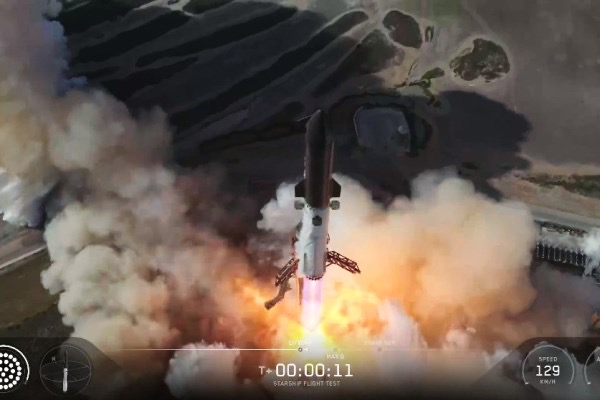
SpaceX’s giant Starship rocket lifted off from its launch site in southern Texas at approximately 6:50 p.m. local time on July 24 (6:50 a.m. Taipei time on July 25), marking the company’s 13th integrated test flight. In addition to further evaluating the performance of the next-generation launch system, the mission also deployed 20 new-generation Starlink satellites into a suborbital trajectory for the first time, gathering valuable operational data for future expansion of the Starlink network and more complex space missions.
Following liftoff, the rocket’s two stages separated as planned. The Super Heavy booster carrying the upper-stage spacecraft then began its return toward the Gulf of Mexico. Although several engines experienced anomalies during the booster’s landing burn, causing it to impact the ocean at a higher-than-expected speed, more engines successfully reignited compared with previous tests, demonstrating continued progress in recovery technology.
The upper-stage spacecraft successfully completed multiple mission objectives, including deploying 20 third-generation Starlink satellites in space, maintaining communications with ground controllers, and transmitting telemetry data. Some of the satellites were equipped with cameras to help engineers observe the spacecraft’s thermal protection system during flight, providing valuable information for achieving greater reusability in future missions.
After approximately one hour of flight, Starship re-entered Earth’s atmosphere and splashed down in the Indian Ocean as planned. One of the mission’s primary objectives was to evaluate the spacecraft’s attitude control and thermal protection performance during high-speed atmospheric re-entry.
The mission marked SpaceX’s 13th Starship test flight since 2023 and served as another key milestone in validating the company’s continuously upgraded next-generation launch system. Beyond expanding the Starlink satellite network, Starship is also expected to support NASA’s crewed lunar exploration program. In the long term, SpaceX aims to make the massive launch vehicle fully and rapidly reusable while enabling the construction of large-scale space infrastructure.
- 94 reads
Human Rights

Fostering a More Humane World: The 28th Eurasian Economic Summi

Conscience, Hope, and Action: Keys to Global Peace and Sustainability


Puppet Show I International Friendship Day 2020