Decoding a 12-Billion-Year-Old Interstellar Comet, Three Times Older Than the Solar System
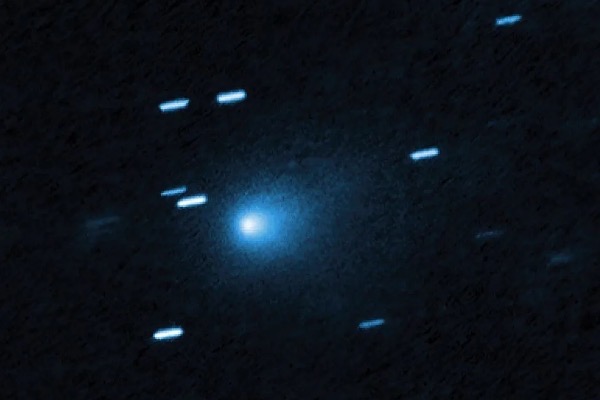
The latest international astronomy study, published in the journal Nature, suggests that the interstellar comet 3I/ATLAS may have formed approximately 10 to 12 billion years ago, making it far older than our 4.5-billion-year-old Solar System and one of the oldest known interstellar objects ever identified.
3I/ATLAS is the third confirmed interstellar object detected by humanity. Thanks to its relatively high brightness, scientists have been able to use advanced instruments to analyze its chemical composition and trace its formation environment and evolutionary history. The research team utilized data collected by NASA’s James Webb Space Telescope and Chile’s Atacama Large Millimeter/submillimeter Array (ALMA) to study isotopes within the comet. Their analysis revealed that its deuterium content is significantly higher than that found in known Solar System comets, indicating that it formed in an extremely cold environment, with temperatures possibly as low as −243°C (−405°F).
In addition, researchers found that the comet’s carbon isotope ratios differ markedly from those observed in Solar System bodies, suggesting that its parent planetary system followed a distinct chemical evolutionary path. Scientists speculate that the comet may have originated during the Cosmic Noon era—the period when star formation activity in the Milky Way was at its peak—and then spent billions of years traveling through interstellar space before eventually entering our Solar System.
Despite its frigid birthplace, the study detected a variety of organic molecules and life-related volatile compounds within the comet. Researchers believe these findings could provide valuable insights into the conditions necessary for prebiotic chemistry and help scientists better understand the evolution of planetary systems beyond our own.
Astronomers note that 3I/ATLAS is gradually moving away from the Solar System, making future observations increasingly challenging. However, with next-generation facilities such as the Vera C. Rubin Observatory now coming online in Chile, scientists expect to discover many more interstellar visitors in the years ahead, helping to uncover the early history of the Milky Way and the broader story of cosmic evolution.
- 116 reads
Human Rights

Fostering a More Humane World: The 28th Eurasian Economic Summi

Conscience, Hope, and Action: Keys to Global Peace and Sustainability

Puppet Show I International Friendship Day 2020