After More Than 11 Years of Service, MAVEN Concludes Its Historic Mars Mission
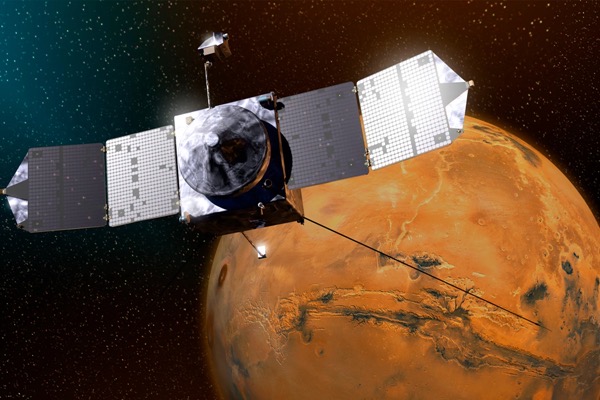
NASA announced on June 3 that the MAVEN spacecraft, which had been conducting long-term scientific observations of Mars, can no longer be recovered and has officially ended its mission after more than 11 years of operation. Originally designed as a relatively short-term project, the mission far exceeded its expected lifespan and provided a wealth of data that has greatly enhanced humanity’s understanding of the Martian environment.
MAVEN, short for Mars Atmosphere and Volatile Evolution, was launched in 2013 and entered orbit around Mars the following year. It became the first mission specifically dedicated to studying the structure of the planet’s upper atmosphere and how it has evolved over time. According to NASA, MAVEN last transmitted data to Earth on December 6, 2025. After passing behind Mars, the spacecraft was expected to re-establish communications but never sent another signal. Engineers spent nearly six months attempting to regain contact through the Deep Space Network, but all recovery efforts were unsuccessful.
Based on the available evidence, experts believe MAVEN may have experienced an attitude-control anomaly that caused it to spin faster than intended. As a result, its solar panels were unable to maintain optimal exposure to sunlight, gradually reducing its power supply and ultimately leading to the loss of communications. NASA noted, however, that the root cause of the failure remains under investigation.
During its operational lifetime, MAVEN achieved numerous scientific milestones. Through long-term observations, scientists gained valuable insights into the effects of the solar wind on Mars and confirmed that significant amounts of the planet’s atmosphere have gradually escaped into space over billions of years. These findings have helped explain how Mars may have evolved from a warmer, wetter world in its early history into the cold and arid planet seen today.
In addition to its scientific objectives, MAVEN also served as a communications relay, helping surface missions transmit data back to Earth. Spacecraft such as the Curiosity and Perseverance rovers benefited from its support. NASA stated that although MAVEN can no longer conduct observations or relay data, it remains in orbit around Mars. Current estimates suggest that its orbit could remain stable for several decades, with the spacecraft not expected to enter the Martian atmosphere and impact the surface for another 50 to 100 years.
The mission team emphasized that the vast amount of scientific data collected by MAVEN will continue to support future research and provide valuable guidance for upcoming Mars exploration efforts, including potential human missions to the Red Planet. Although MAVEN’s journey has come to an end, its contributions to Mars science will continue to have a lasting impact for years to come.
- 176 reads
Human Rights

Fostering a More Humane World: The 28th Eurasian Economic Summi

Conscience, Hope, and Action: Keys to Global Peace and Sustainability


Puppet Show I International Friendship Day 2020