Mixed Results for Space Mission: Blue Origin Achieves Milestone with Successful Rocket Recovery
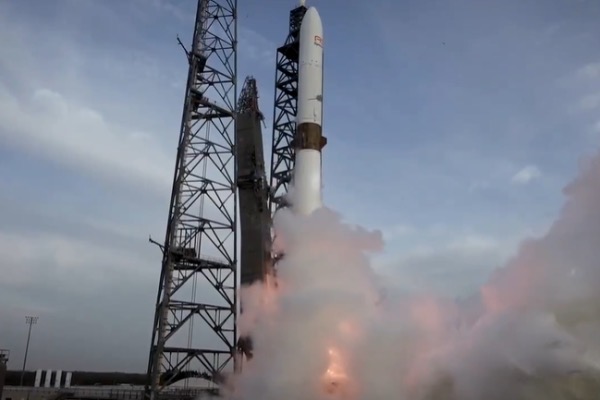
On April 19 local time, the U.S.-based Blue Origin carried out a new rocket launch mission. While it achieved a key breakthrough in reusability technology, the satellite onboard failed to reach its intended orbit, resulting in a mixed outcome of success and setback.
The mission was conducted using Blue Origin’s heavy-lift rocket “New Glenn,” which launched from Cape Canaveral, Florida. This marked the rocket’s third flight. The initial phase of the launch proceeded smoothly, with the first-stage booster successfully returning and landing on an ocean recovery platform about ten minutes after liftoff. This completed a reusability verification and is seen as an important step toward reducing launch costs.
However, issues arose in the later stage. The communications satellite “BlueBird 7,” developed by AST SpaceMobile and carried aboard the rocket, successfully separated and activated its systems. Yet it was inserted into an orbit that was too low. Unable to use its own propulsion to reach the required operational altitude, a decision was ultimately made to deorbit the satellite.
Industry experts note that reusable rocket technology has become a key factor in the commercial launch market. In this mission, Blue Origin’s successful booster recovery and reuse validation mark progress in its competition with SpaceX. However, the failure to accurately deploy the satellite also highlights the need for improvement in orbital control and mission integration. Notably, the recovered booster had been used in a previous mission and was named “Never Tell Me the Odds.”
Despite the setback in this single mission, AST SpaceMobile stated that the loss would be covered by insurance and would not affect its overall satellite deployment plans. The company will continue advancing its low Earth orbit satellite network. Blue Origin, for its part, emphasized that it will keep optimizing rocket performance and mission precision to enhance overall launch reliability.
- 136 reads
Human Rights
Fostering a More Humane World: The 28th Eurasian Economic Summi

Conscience, Hope, and Action: Keys to Global Peace and Sustainability
Ringing FOWPAL’s Peace Bell for the World:Nobel Peace Prize Laureates’ Visions and Actions

Protecting the World’s Cultural Diversity for a Sustainable Future

Puppet Show I International Friendship Day 2020